

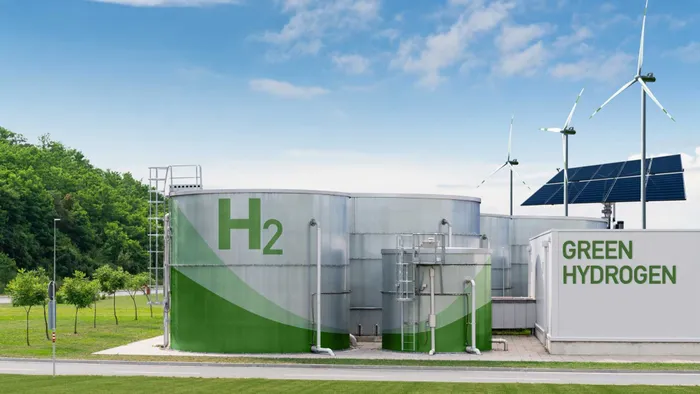
Discover how green hydrogen is emerging as a pivotal technology in South Africa's energy transition, offering new opportunities for economic revitalisation and climate resilience.
Image: File
South Africa’s energy transition is often framed through the lens of electricity, coal, and renewables and nuclear power.
But there is a new kid on the block - green hydrogen production, which is emerging as one of the technologies poised to shape the future energy landscape.
Green hydrogen is particularly valuable in sectors that are difficult to decarbonize through direct electrification. Its main applications include heavy industries like steelmaking, cement, and chemical production which we are needed for in the built environment, energy storage and in the maritime sector for fuel cells amongst others.
Hydrogen also presents opportunities to develop new export markets and industrial value chains. South Africa is seeking to sustainably exploit this technology for both economic revitalisation and climate resilience, these prospects are significant and we are positioning ourselves as a global hub for green hydrogen production, leveraging abundant solar/wind resources and platinum reserves.
The Department of Science and Innovation, launched the Hydrogen Society Roadmap, aiming to create a hydrogen-based economy.
The roadmap targets 500,000 tonnes of green hydrogen per year by 2030 and plans to deploy 10 GW of electrolysis capacity in the Northern Cape by 2030, expanding to 15 GW by 2040.
But the real measure of success will not simply be how much South Africa produces or exports this new resources. It will be whether its exploitation contributes meaningfully to jobs, skills development, and shared prosperity. This is why discussions around environmental and social safeguards are becoming increasingly central to South Africa’s hydrogen commercialisation agenda.
Large-scale industrial developments have not always delivered equitable outcomes for communities living near project sites.
Whilst we have frameworks like the Environmental Impact Assessment (EIA) Guideline for green hydrogen projects and the Green Hydrogen Potential Atlas as tools to facilitate investment and ensure sustainable development, identify optimal production sites, and guide responsible project planning, too often, communities have been consulted late in the process, after major decisions have already been made.
If green hydrogen projects are to succeed over the long term, this pattern must change. Community engagement cannot be treated as a mere compliance exercise during the project approval stage.
Experience increasingly shows that social buy-in is not only ethically important, but also essential for project sustainability.
Developers who overlook the social dimension of energy projects risk delays, disputes, and long-term reputational challenges. In contrast, projects that build genuine partnerships with communities tend to be more resilient and more successful.
Last week, Presidential Climate Commission and the United Nations Industrial Development Organization (UNIDO) convened a Green Hydrogen workshop focused on environmental social safeguards, and gender and social inclusion.
Stakeholders emphasised the importance of accountability in ensuring that commitments made to communities are honoured by both developers and government.
One proposal gaining traction is the appointment of independent observers who can monitor the implementation of social sustainability commitments within hydrogen projects.
Such mechanisms can help strengthen transparency and trust, ensuring that agreements related to community benefits, environmental protection and social inclusion are implemented in practice, not just on paper.
Another important consideration is how communities can participate more directly in the economic benefits of hydrogen developments. Approaches such as community ownership models, local development funds and structured benefit-sharing mechanisms can help ensure that large-scale investments translate into tangible local gains.
Another dimension that cannot be overlooked is inclusion. South Africa’s hydrogen economy must actively address youth unemployment and gender inequality. New industries bring new opportunities for technical training, entrepreneurship, and innovation. Ensuring that young people and women can access these opportunities will be critical to building an inclusive hydrogen economy.
These approaches recognise that communities are not simply stakeholders to be managed; they are partners in development. Therefore, must be at the centre of these projects. When communities see real benefits whether through employment opportunities, skills development programmes, local procurement, or community investment funds projects gain legitimacy and long-term stability.
At the same time, it is important to manage expectations honestly. Developers cannot solve every social challenge within a community, nor should they be expected to replace the role of government in delivering public services. Clear communication about what developers can realistically provide, and where government intervention is required, is essential to maintaining trust and avoiding misunderstandings.
If South Africa approaches green hydrogen with people at the centre of planning and decision-making, the sector could become more than just a new energy industry. It could become a platform for skills development, industrial renewal, and community empowerment.
Green hydrogen will not solve every challenge within the green transition. But it is an important piece in a much larger puzzle.
By combining technological innovation with inclusive governance and meaningful community participation, South Africa has an opportunity to ensure that this emerging sector contributes not only to decarbonisation, but also to a more equitable and sustainable future.
Bridgette Setshedi, Climate Mitigation Manager at the Presidential Climate Commission.

Bridgette Setshedi, Climate Mitigation Manager at the Presidential Climate Commission.
Image: Supplied.
Follow Business Report on Facebook, X and on LinkedIn for the latest Business and tech news.