

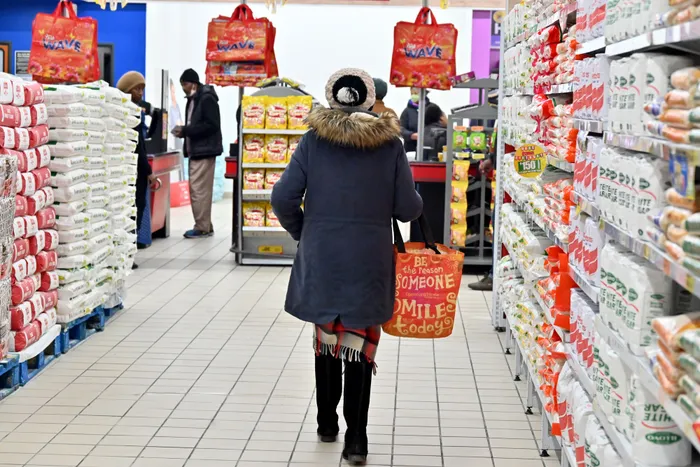
Consumers are paying more every time they buy a plastic shopping bag, with industry experts warning that higher levies and stricter regulations could push costs even higher.
Image: Ayanda Ndamane / Independent Newspapers
South African consumers are paying more than ever for plastic shopping bags, with industry experts warning that rising environmental levies, increasing manufacturing costs and stricter regulations could leave shoppers carrying an even heavier financial burden.
Traderbag, a supplier of customised sustainable paper shopping bags, has called on retailers to rethink their reliance on plastic bags, arguing that the shift towards paper packaging seen in online retail demonstrates that practical alternatives already exist.
Declan Cherry, a director at Traderbag, said physical retailers had been slower to embrace paper despite its growing acceptance elsewhere.
"For online retail, packaging is part of the delivery experience. When a parcel arrives at a customer's home, the packaging represents the brand. Physical retail has been slower because plastic bags are cheap, familiar and already built into store operations. That is exactly why this topic needs to be revisited. If online retail can move towards paper at scale, then physical retail can too, provided the solution is practical, affordable and reliable," Cherry said.
Plastic shopping bags have become a routine purchase for many South Africans, yet Traderbag believes few consumers realise how much they are paying each time they reach the checkout.
The plastic bag levy has risen from 8 cents in 2016 to 32 cents in 2026. However, retailers often charge significantly more than the levy itself, with shoppers paying anything from the statutory amount to more than R1 per bag.
Cherry said there was little transparency around how these charges were calculated.
"From a consumer point of view, there is very little transparency. The final till price may include the levy, the bag cost, distribution, handling and retailer margin. But if the charge is being positioned as environmental, consumers should have more clarity on where that money goes and whether it is reducing plastic waste."
He added that the current levy may only represent part of the overall cost to consumers.
"It is also possible that the 32 cent levy is only the start. Because it is charged at manufacturer level, the final price paid by the consumer may increase as the bag moves through the supply chain, with additional costs and margins added before it reaches the till."
Environmental concerns remain significant. According to Greenpeace, South Africans use an estimated eight billion plastic carrier bags every year, yet only about 1% are recycled.
Cherry questioned whether the levy had achieved its intended environmental objectives.
"The plastic bag levy was introduced to reduce litter and support recycling, yet there has long been concern that the money is not properly ring fenced for pollution reduction. Industry commentary has repeatedly pointed out that nearly R2 billion had been raised by 2018 and 2019, with concern that it had not been directed clearly enough towards environmental outcomes."
The industry is also facing tighter recycled content regulations. Plastic carrier bags were required to contain 75% post consumer recycled material from 2025 and must contain 100% recycled content from January next year. Businesses that fail to comply could face substantial penalties.
Cherry warned that sourcing enough high quality recycled material would present a major challenge.
"The challenge is not only whether 100% post consumer recyclate is technically possible, but whether there is enough consistent, high quality recycled material available at scale. Large retailers need reliable supply, consistent strength, print quality and pricing. Remember you can only recycle plastic around two to three times before it is unusable."
He also noted that enforcement remained difficult because plastic bags are high volume, low value products and that authorities had already identified non compliance within the plastic bag levy supply chain.
Traderbag managing director Daniel Cherry said retailers should prepare now rather than waiting for higher costs or tighter regulation.
"South Africa has already increased carbon tax rates and fuel related environmental levies, which shows that government is willing to use taxation to both influence environmental behaviour and raise revenue."
He added that businesses that delayed adopting alternatives could face significant commercial risks.
"Retailers should act now because waiting elevates risk. If levies increase or regulations tighten, businesses still heavily dependent on plastic could face sudden cost pressure and operational disruption. Retailers that test paper alternatives now will be better prepared, both commercially and reputationally."
Follow Business Report on Facebook, X and on LinkedIn for the latest Business and tech news.