


Stanley Mathabatha.
Image: Facebook / ANC Limpopo
Cde Stan Greetings, ordinary member of the African National Congress.
Ward 27, Vuyani Mabaxa Branch, Zone 10, Greater Johannesburg Region.
Over the week Cde Stan Itshekhetseng, writing entirely in his personal capacity and I had a deep banter with a bounty of expletives that crystallised the arguments to squeeze out a more formidable position that we can work with towards a resolution.
The debate left the fainthearted with mouths dry.
We continued to exchange up to Sunday morning and both of us are satisfied with the analytical framework and its content.
In this column allow me the space to narrate what my counter was to Cde Stan.
His argument was I have amnesia of the apartheid era and accused me of language that was “uncoothed” - my own words, Stan steps more carefully on words - I do not.
My argument was disgusted reflection about the current and by no means apologising for apartheid.
Cde Stan’s position is apt because it resonates with the current discussions that go far back to slavery and President Motley on Wednesday 17th delivered a message to the collective of colonial powers when she said Barbados is owed US$4.9 trillion (BDS$9.8 trillion) in reparatory damages by slave-owning countries, and she called for global conversation on payment of debt for colonial slavery.
“We’re not expecting that the reparatory damages will be paid in a year, or two, or five because the extraction of wealth and the damages took place over centuries. But we are demanding that we be seen and that we are heard,” she said during a lecture at the London School of Economics.”
So Cde Stan’s attempt to scalp my cranial features was useful in that during the course of the discourse, it provided us with the space to use these new instruments of power I have deployed to shine on apartheid and hold its structures to account.
And these instruments have also farreaching applications as Out-In instruments of accountability.
The value of the exchange scrathed where it hurts.
My response to Stan was “I hold your lived memory in the highest regard. Some Cdes shared your post without naming the author, I know your pen without seeing the words. This is how intimately I have followed your sharp ink.
You have not shunned unleashing the most deserving critique and for that I respect you.
That cristalises contradictions and advances social progress.”
Marie-Curie argues correctly that we should learn more so tha we should fear less.
Knowledge flushes out poitical ghosts marauding as revolution.
You may argue that my language is revulsive and performative, and comrade that is where you get it wrong and I would not encourage you to look into the dictionary because you are smarter than that and it will be letting you free too lightly, so let me re-enter the ring, because you deserve a good fight because that banter of friends cannot be left to decay, it will be a disservice to a nation.
If I was arguing with a fool, I would leave it at that, but I will not allow you to do the bidding for fools, because you are not one of them, and without softing your blow and seeking a merciful rejoinder, I am hardening my fist and armoury to get the best out of you and not camoufladged arguments.
We deserve better and whilst your arguments are clear, they however lower the bar for accountability and diminsh the value of not memry, but steal from memory the motif force for its progress. In fact your arguments posper neo liberalism which blossom in distinguishing rigour in evidence and language of delivery. So, having been privileged by this government in sharpening my rigour of evidence and language of delivery, I will not restrain myself in using this asset.
So let us stop hiding behind the comfortable shield of academic politeness.
Your critique, while beautifully written, commits a fundamental error: it mistakes my sharp use of language for performative theatre, and in doing so, completely misses the point of my capacity to crunch numbers and my duty to argue them in the public square.
When the Lehohla Ledger speaks, it does not do so from a "high horse" or from a distance; it speaks from the unassailable fortress of a dense census mesh spanning 1996, 2001, 2011, and 2022. My competence to enter the political fray is not an abandonment of statistical science—it is the ultimate fulfillment of it.
Here is where your argument falls short:
You argue that a former Statistician-General should deliver a "neutral statistical truth" using sterile, administrative vocabulary. But what you call "neutrality," I call complicity. For over two decades, our populace has been drowned in "administrative dust"—a language of backlogs, sliding timelines, and process improvements that deliberately hides a looming crisis.
When a policy ignores raw empirical evidence, and when planning shifts from forensic reality to compliance-driven "thumb-sucking euphoria," it is not merely an "administrative delay".
It is an offense against logic and human dignity.
To describe a policy that leaves a community without water or gridlocks an economy as "stupid" or "foolish" is not an insult; it is a precise diagnostic label. It identifies the active, driving force behind the failure of those to whom public trust was placed.
Combining rigorous evidence with uncompromising language is not performance—it is a forensic tool used to flush out bureaucratic circumlocution.
We are witnessing a dangerous game where cold, hard facts are intentionally twisted for political gerrymandering and selfish ends.
Policymakers use soft, evasive language to normalize structural failure, asking the poor to eat slogans and survive on press statements.
I refuse to allow the state to hide its self-inflicted wounds behind a veil of polite administrative jargon.
When specialised state capacities are disrupted, or when syndicates infiltrate the very structures meant to protect our people, calling it "foolish policy" is the only honest posture. It forces an uncomfortable, direct interface between the mathematics of the census mesh and the politicians who try to dodge its conclusions.
You ask for statistics with memory, and I have given you exactly that, backed by 2,752 rigorous analytical instruments designed for absolute metadata transparency.
But memory without accountability is just nostalgia. I cannot stand a posture of passive observation while the architecture of a national comeback is sabotaged by incompetence.
The slave ration was indeed accompanied by the chain, and we must never confuse the hardship of freedom with the comfort of slavery.
But freedom demands a state capable of implementation, led by evidence and ethical leadership. When that state fails its people due to a reckless disregard for data, an intellectual's duty is to call it out loudly, clearly, and in a vocabulary that the populace can instantly understand.
So, my friend and comrade who correctly more than a decade ago started conversations about the direction South Africa is going, let us not soften the truth with meaningless language, pass the salt, review the mesh data for Diepkloof and Daveyton, and tell me: should we coddle the bureaucrats with polite language while the numbers show the house is on fire?
Dr. Pali Lehohla is the former Statistician-General of South Africa, Director of the Pan African Institute for Evidence (PIE), and the founder of the Lehohla Ledger. He is a Professor of Practice at the University of Johannesburg and a Research Associate at Oxford University.
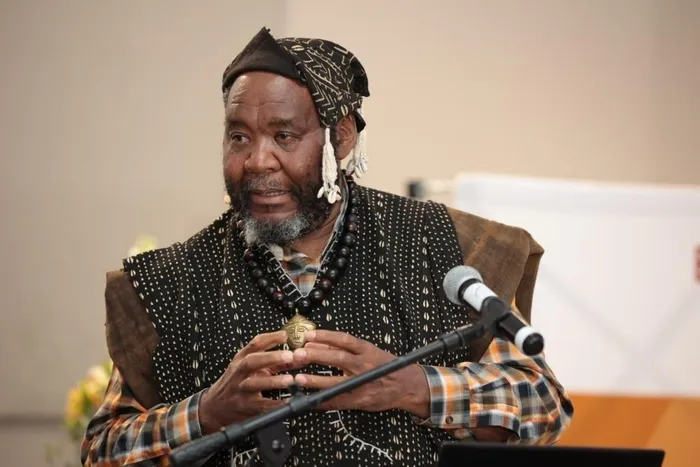
Dr. Pali Lehohla is the former Statistician-General of South Africa, Director of the Pan African Institute for Evidence (PIE), and the founder of the Lehohla Ledger. He is a Professor of Practice at the University of Johannesburg and a Research Associate at Oxford University.
Image: Supplied
Follow Business Report on Facebook, X and on LinkedIn for the latest Business and tech news.