

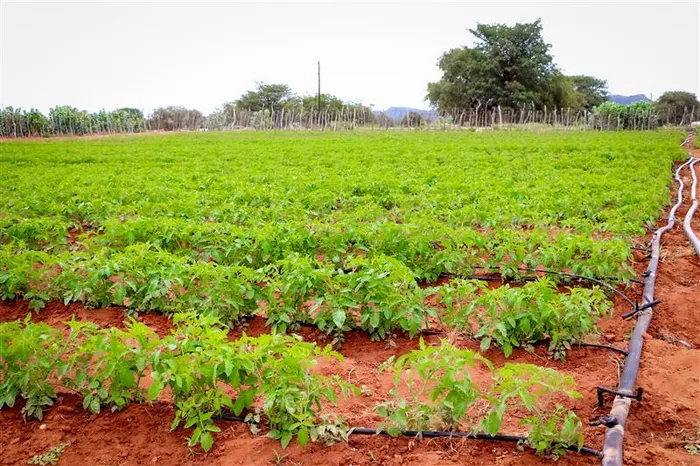
The Agbiz/IDC Agribusiness Confidence Index (ACI) released on Wednesday for Q2 indicated a decline of 4 points to 45 points, which is the lowest level since Q2 2024.
Image: File Supplied
Confidence in South Africa's agricultural sector has fallen to its lowest level in two years as concerns over Foot-and-Mouth Disease (FMD), geopolitical tensions and the prospect of adverse weather conditions weigh heavily on agribusiness sentiment.
The latest Agbiz/IDC Agribusiness Confidence Index (ACI), released on Wednesday, declined by four points to 45 in the second quarter of 2026, following a sharp 18-point drop in the first quarter.
The reading is now at its lowest level since the second quarter of 2024 and remains below the neutral 50-point mark, indicating that agribusinesses remain pessimistic about business conditions.
According to Agbiz chief economist Wandile Sihlobo, the decline reflects a combination of domestic and international challenges facing the sector. Sihlobo said said that the factors underpinning the subdued sentiment were broad.
“Survey respondents cited the impact of the Middle East conflict on energy and fertiliser prices as a major concern (the Q2 survey was conducted before the announcement of the US-Iran agreement),” he said.
“The lingering impact of foot-and-mouth disease, which continues to impose immense financial pressure on the cattle industry, remains a major challenge despite accelerated vaccine imports.”
Sihlobo noted that lower global sugar and wheat prices were also weighing on sentiment, while delays in domestic import tariff adjustments had limited support for affected industries.
Adding to the uncertainty are forecasts suggesting that El Niño weather conditions could return during the 2026/27 production season, raising concerns about drought risks after favourable La Niña conditions boosted production in recent months.
The weakness in confidence was particularly evident in investment-related indicators. The capital investment subindex plunged by 20 points to 33, marking its lowest level since 2006.
Sihlobo said the sharp decline reflects the cautious mood within the sector, despite ongoing investment by farmers in machinery such as tractors and combine harvesters.
The export volumes subindex also deteriorated significantly, dropping 13 points to 38.
“Concerns about the impact of the Middle East conflict on logistics, along with rising shipping costs, are the primary challenges here,” Sihlobo said.
However, he pointed out that actual export activity has remained relatively strong despite these concerns.
Confidence in general economic conditions recorded one of the steepest declines, falling by 33 points to 28, its lowest level since the third quarter of 2023.
“This is unsurprising, as the war in the Middle East has added uncertainty to macroeconomic conditions,” Sihlobo said.
Despite the gloomy outlook, several indicators showed resilience within parts of the agricultural sector.
The turnover subindex increased by 17 points to 67, supported by strong harvests across grains, oilseeds, fruits and vegetables. The net operating income subindex also improved, rising seven points to 50. The market share subindex climbed eight points to 61, while the employment subindex rose 16 points to 56.
“This is also unsurprising as the South African agricultural sector continues to create more jobs,” Sihlobo said.
He highlighted that farm employment increased by 3% year-on-year in the first quarter of 2026 to 960,000 jobs, while also recording a 1% increase compared with the final quarter of 2025.
General agricultural conditions improved markedly, with the relevant subindex increasing by 22 points to 61.
“This improvement is primarily driven by the field crops and horticulture subsectors, which benefited from the La Niña rains,” he said. “Meanwhile, the cattle industry and the pork producers remain constrained by animal diseases.”
Financial indicators also showed some improvement. The debtor provision for bad debts index fell six points to 33, reflecting improved harvest outcomes, while the financing costs index dropped sharply by 45 points to 17.
Looking ahead, Sihlobo warned that the continued spread of foot-and-mouth disease remains one of the sector’s biggest threats.
“While the pace of importing vaccines has been encouraging, the challenge of foot-and-mouth disease continues to linger,” he said.
“The livestock and pig industries are under immense financial pressure due to the disease, and these results reflect the challenge at hand. What remains key is a speedy vaccination process that will get us off the current worrying path.”
BUSINESS REPORT