

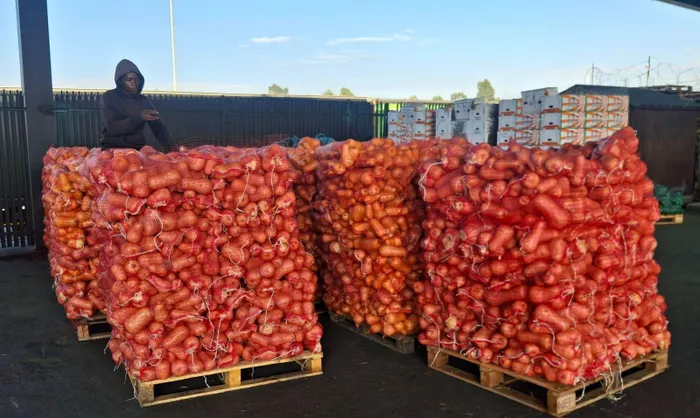
The chamber’s survey found that 75% of respondents experienced rising input costs in April 2026, while 95% expected costs to increase further over the next six months.
Image: Timothy Bernard / Independent Newspapers
Rising tensions in the Middle East and surging global oil prices are beginning to weigh heavily on South Africa’s trade environment, with businesses warning that escalating fuel and input costs are squeezing margins, weakening demand and threatening employment prospects.
According to the latest Trade Conditions Survey released by the South African Chamber of Commerce and Industry (Sacci) on Thursday, worsening global trade conditions linked to instability in the Middle East have already filtered through supply chains and are placing mounting pressure on businesses across the economy.
Sacci said the impact of higher crude oil prices was becoming increasingly visible at the fuel pump and in operational expenses for companies, even though broader inflation had not yet fully reflected the shock.
“These exogenous developments not only affected crude oil prices but have been filtering through the supply chain. This price destabilisation has not yet affected the inflation rate markedly but had a direct effect at the fuel pump for households and businesses,” it said.
The chamber’s survey found that 75% of respondents experienced rising input costs in April 2026, while 95% expected costs to increase further over the next six months.
The deterioration in trade conditions was reflected in the sharp decline in the Trade Activity Index (TAI), which dropped to 43 in April from 50 in March, moving deeper into contraction territory. Only 35% of traders reported better business conditions compared with April last year.
The survey showed that the sales volumes index fell from 58 to 50, while the new orders index plunged from 56 to 40 as businesses and consumers reacted to higher fuel prices and increased uncertainty.
Sacci warned that trade conditions were expected to weaken even further over the next six months, with rising input prices emerging as the single biggest obstacle facing businesses.
The survey comes amid growing concern about inflationary pressures in the South African economy following recent fuel price increases linked to geopolitical instability around Iran and the Strait of Hormuz.
Official data cited by Sacci showed that electricity tariffs surged by 19% year-on-year in March 2026, while diesel prices increased by 34% in April compared with a year earlier.
Although consumer inflation remained relatively subdued at 3.1% in March and producer inflation stood at 2.3%, economists warned that inflation expectations were beginning to rise rapidly.
Dawie Roodt, Efficient Group chief economist, said the survey highlighted growing fears that inflation could accelerate if businesses begin adjusting prices in anticipation of higher future costs.
“Basically what this report is saying is that inflation expectations are rising worldwide and in South Africa. That is even more important than actual inflation because people think inflation is going to go up and they start increasing prices in the expectation of higher inflation,” Roodt said.
He added that the South African Reserve Bank (Sarb) would likely take note of the worsening inflation outlook and may consider tightening monetary policy sooner rather than later.
“The Sarb would be aware of that, and that's part of the reason. It would be better for the Sarb to start hiking interest rates earlier in the cycle to address inflation expectation the sooner they do this the less they need to tighten monetary policy.”
BUSINESS REPORT