

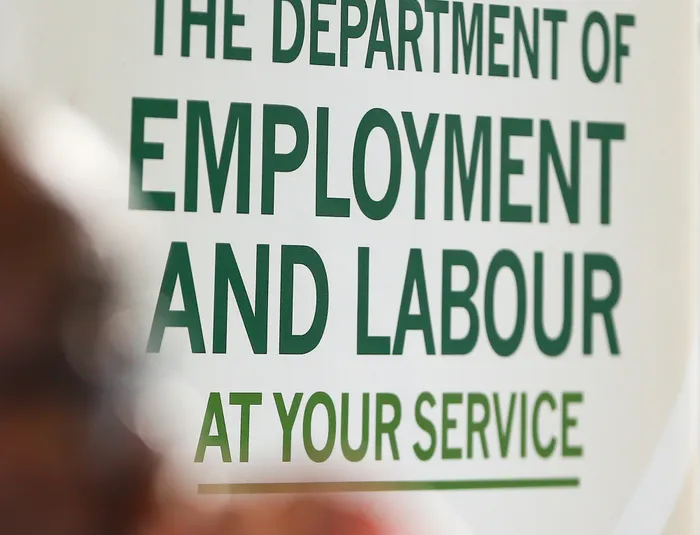
The recent Supreme Court ruling on the Van der Vyver Transport case has exposed the ongoing chaos and maladministration faced by workers at the Compensation Fund, prompting COSATU to demand urgent reforms for a fairer system.
Image: Leon Lestrade/ Independent Newspapers
The recent Supreme Court of Appeal ruling on the Van der Vyver Transport case shone a long overdue spotlight into the chaos and maladministration that thousands of workers experience time and again at the Compensation of Occupational Injuries and Diseases Fund (CF).
The Congress of South African Trade Unions (Cosatu) is heartened that the Supreme Court called for an independent investigation into the deeply worrying state of affairs at the CF.
This is a demand that the Federation has been making for many years.
Employers experience endless challenges when attempting to register their employees with the CF, be it online or in person.
This results in many employers simply giving up and leaving their workers unprotected should they be injured or even die during the course of their work.
When workers apply for relief after a workplace injury or disease, all too often they are not met with relief or assistance, but endless queues, bewildering red tape and outright bureaucratic indifference.
A visit to anyone of the Department of Employment and Labour’s Labour Centres will show workers in desperate need of urgent relief, subjected to days of endless queues and even then, they may still not find the help they need and are entitled to by law.
Countless workers reach out to Cosatu and employers for assistance to unlock these bureaucratic obstacles. We have seen time and again workers battling to access relief for years at a time.
Tragically the same shameful experience is felt by workers when applying for their Unemployment Insurance (UI) benefits.
Newspaper headlines have shown time and again how workers’ UI and CF contributions when invested to generate interest to ensure the sustainability of these two important Funds, being treated as a slush fund for corrupt politicians, officials and businesspersons. Whilst there has been some progress in tackling the scourge of corruption and state capture in the Funds, by no stretch can we say this battle has been won.
These painful experiences undermine the progressive objectives of the Funds and the tireless efforts of the majority of their staff to ensure that workers and their families receive the relief they are entitled to timeously.
The Funds are a key anchor of South Africa’s social security umbrella with the CF providing compensation to workers injured or who have been affected by a disease during the course of their work as well as their families in the event of their death.
Recent progressive amendments to it have extended cover to more than 1 million domestic workers as well as relief for workers affected by post-traumatic stress disorder (important for security personnel as well as mineworkers and women who experience gender-based violence at work.
Proposed amendments in the current labour law reforms include extending such cover to atypical workers, e.g. actors, performers and platform employees.
The Unemployment Insurance Fund (UIF) provides severance pay for workers who’ve lost their jobs, reduced time relief for workers at struggling companies who may not be able to pay salaries whilst undergoing restructuring as well as maternity leave pay.
Recent amendments included providing paid parental and adoption leave as well as maternity leave for mothers who experienced still born births and third trimester miscarriages.
As with the CF, new proposals include extending UI protection to atypical workers such as Uber drivers plus doubling severance pay from one to two weeks per year worked.
As we saw during Covid-19 when the economy was placed under lockdown, the UIF played a key role by releasing over R65 billion to help 5.7 million workers take care of their families, prevent millions of job losses and stimulate economic growth.
What was also brought to the fore during COVID-19 were how archaic the UIF and CF systems were and remain.
Subsequent reports by the Auditor-General how shown how these porous systems enable corruption inside and outside the Funds to take place.
They have been at the heart of why employers struggle to register their staff and why workers have to queue for days and still battle to receive their relief.
COSATU has raised this matter time and again with government at Nedlac, in Parliament, in bilaterals and publicly over the past six years.
Business and the broader labour movement have echoed these calls.
We have called upon the Department and the Funds to put in place a process to cleanse, overhaul and modernise these Funds, to ensure employers can register employees with ease and workers can receive their full relief without hassles.
Business offered to design a system free of charge for the Funds. The Government Technical Advisory Centre provided a comprehensive diagnosis of what needs to be done. The South African Revenue Service (SARS) offered to build a new system for the Funds as it had done during the Mandela Administration.
Yet these offers have been blue ticked by the Department.
Instead, once a year the Department appears before Nedlac with a PowerPoint presentation on how the Funds will definitely be fixed over the next two years with an exorbitant price tag for consultants attached. Similar PowerPoints are trotted out before Parliament with incredulous 90% delivery targets claimed!
Yet a visit to any Labour Centre today is a painful reminder that workers in their most desperate moment of need will be subjected to shameful delays and red tape to access what is legally theirs. Many simply give up.
This is simply unacceptable and should not be tolerated. No amount of perfume can make this experience for workers smell nice.
The path to fixing the Funds is not complicated.
They require competent management, the removal of corrupt and criminal elements, the filling of vacancies and hiring of critical skills, investing in infrastructure, especially IT and putting in place modern, user friendly, transparent, accessible and corruption proof systems.
SARS must be enlisted to design and set these up.
We cannot continue to accept nor tolerate these abysmal state of affairs. Workers deserve better. Government must act and be seen to upholding workers’ hard-won rights.
Solly Phetoe is the General Secretary of Cosatu.

Solly Phetoe is the general secretary of Cosatu.
Image: Doctor Ngcobo / Independent Newspapers.
Follow Business Report on Facebook, X and on LinkedIn for the latest Business and tech news.