

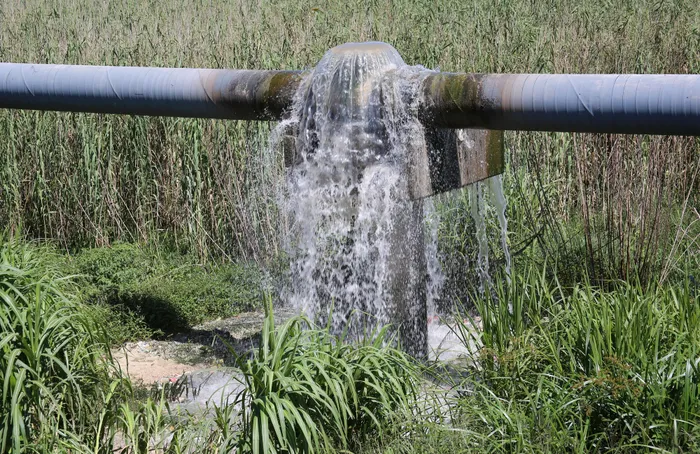
Santam has urged farmers to keep up Agri maintenance to avoid the risks of it leading to more challenges for the farmer.
Image: Tumi Pakkies / Independent Newspapers
Farmers are being urged to prioritise regular maintenance and early risk detection to avoid costly damage and insurance claims, as even minor oversights can quickly escalate into major incidents.
Thabo Twalo, chief underwriting officer at Santam, on Tuesday said small issues on farms often spiral into significant problems if left unattended.
“A cracked irrigation pipe, a seized bearing, or a build-up of debris on machinery can quickly escalate into a major loss event,” he said.
“For local farmers operating under tight margins and demanding seasonal conditions, recognising and acting on early warning signs can be the difference between routine maintenance and a significant insurance claim.”
He highlighted harvester fires as one of the most common and costly risks during harvesting season, often caused not by a complete lack of maintenance but by missed intervention points during the day.
“Harvester fires contribute significantly to our agricultural claims. They are often directly linked to debris build-up and missed intervention points during the day, rather than a complete lack of maintenance.”
Twalo pointed to a 2022 incident where Santam paid out more than R7 million after a harvester caught fire late in the afternoon.
"The fire occurred in the late afternoon, and photographs taken after the incident revealed excessive debris on the machine that ignited," he said.
"If that debris had been removed during midday, the risk would have been significantly reduced. At the very least, the fire may have been contained before resulting in a total loss.”
Twalo warned that harvesters are particularly vulnerable when working with oil-rich crops such as sunflower, canola and soya, which increase the risk of ignition when combined with dust and heat.
“These crops are highly flammable, and when straw and dust accumulate in hot zones on the machine, the ignition risk increases dramatically. I recommend a scheduled midday clean with a broom or a leaf blower to remove any residue buildup.”
Beyond the immediate loss of machinery, Twalo cautioned that fires spreading to neighbouring farms can result in far greater financial and legal consequences.
“These can result in legal action, reputational damage, and severe financial losses that insurance may not fully cover. Understanding this broader risk landscape underscores why proactive fire prevention is essential for both the business and greater community.”
Mechanical upkeep is equally critical, with Twalo stressing that routine servicing should never be skipped.
"A seized bearing, for example, can generate extreme heat and act as an ignition source for debris that has collected around it. These are preventable risks if equipment is properly maintained.”
He also underscored the importance of inspecting broader farm infrastructure.
“Small cracks in cast-iron components or early signs of wear can often be addressed before they lead to a breakdown that causes secondary damage or downtime.”
In addition to mechanical risks, farmers must remain alert to weather-related threats. Lightning strikes, particularly on tractors in operation, remain a notable cause of damage.
“These incidents typically occur while equipment is in operation rather than when it is stored, which means farmers need to remain alert to changing weather conditions while working,” Twalo said.
To mitigate risks, he recommended building structured maintenance routines into daily operations.
“Breaking maintenance into smaller, regular interventions rather than relying on a single daily or seasonal check," Twalo said.
"Midday cleaning and inspections during harvesting, having fire extinguishers readily available, and ensuring operators are trained to recognise early signs of fire such as smoke or burning smells can make a meaningful difference.”
He added that during high-risk periods, having a second person monitor machinery and surrounding fields can help detect problems early.
Twalo emphasised that taking preventative measures is not only practical but also a requirement under most insurance policies.
"The insured is required in terms of the policy wording to take all reasonable steps and precautions to prevent accidents or losses, so not doing so can definitely influence how assessors look at the damages at hand after a claim.”
BUSINESS REPORT