

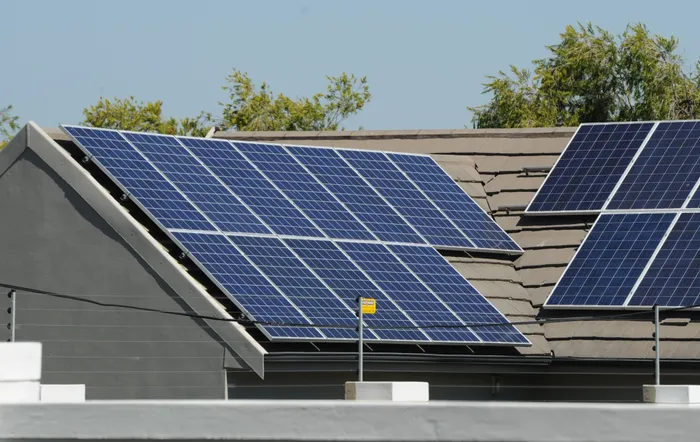
South African Photovoltaic Industry Association (SAPVIA) in a statement welcomed the decision by Eskom to extend the registration fee waiver for Small-Scale Embedded Generation (SSEG) systems until 30 September 2026.
Image: Henk Kruger/ Independent Newspapers
The South African Photovoltaic Industry Association (SAPVIA) has welcomed Eskom’s decision to extend its registration fee waiver for Small-Scale Embedded Generation (SSEG) systems until the end of September, describing it as a positive step toward accelerating South Africa’s energy transition.
Eskom announced last week that it would extend the waiver deadline from 31 March 2026 to 30 September 2026, while also introducing a prepaid metering option for residential solar users. The utility said the measures are designed to support the safe and compliant connection of systems up to 50kW, as rooftop solar adoption continues to grow across households and businesses.
The power utility emphasised that it remains committed to helping customers connect solar systems responsibly while contributing to the country’s shift toward cleaner energy sources.
SAPVIA said the extension, coupled with the prepaid option, improves accessibility to energy independence by removing financial and administrative barriers that have previously discouraged registration.
Sim Khuluse, technical and policy manager at SAPVIA, said the association has been engaging consistently with Eskom and municipalities to ensure that regulations enable, rather than hinder, rooftop solar growth
“We applaud Eskom for listening to industry concerns regarding the 31 March deadline," he said.
Khuluse added that by extending the waiver and introducing a prepaid-friendly path, Eskom was removing the “compliance tax” that has previously deterred many households from registering their systems.
“However, this is only half of the puzzle. While Eskom is making strides, the inconsistent, often delayed and cumbersome approval processes at a municipal level continue to act as a drag on our national energy transition.”
SAPVIA reiterated that SSEG registration is not merely a regulatory requirement but a critical component of grid safety and system integrity.
Proper registration enables better management of voltage fluctuations and reduces the risk of grid overload, while also preventing dangerous “islanding” — where private systems feed electricity back into a de-energised grid, posing serious risks to maintenance workers.
In addition, standardised registration ensures compliance with national standards such as SANS 10142-1, safeguarding both homeowners’ investments and insurance validity.
Despite progress for Eskom-supplied customers, SAPVIA noted that many South Africans served by municipalities still face registration fees and lengthy delays, creating uneven access to solar adoption.
Khuluse called on municipal electricity distributors to align with Eskom’s approach by streamlining their processes and adopting a unified, digital-first system nationwide.
“We need a unified, digital-first approach across all provinces. Inconsistent municipal by-laws create a cumulative backlog that intensifies pressure on the national grid's technical interface and frustrates the very citizens who are investing their own capital to ensure energy security.”
Khuluse concluded that SAPVIA remains committed to collaborating with all stakeholders to move away from punitive measures and towards a safe, transparent, and legally compliant energy future.
Agnes Mlambo, Eskom’s acting group executive for distribution, said they recognise the important role customers play in South Africa’s energy transition.
“Our goal is to ensure installations are safe, compliant and aligned with protecting the national grid.”
BUSINESS REPORT