

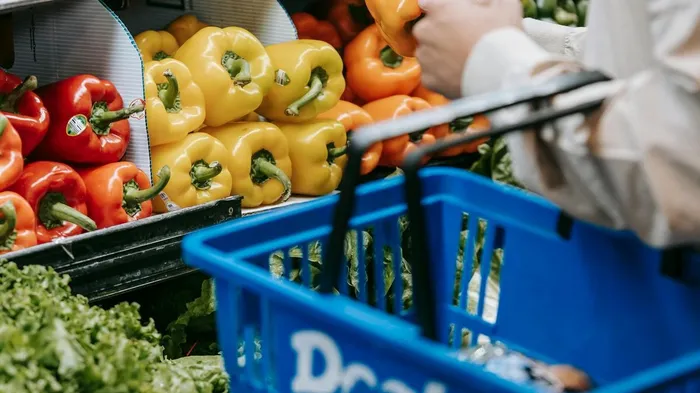
The latest Household Affordability index released on Tuesday indicated decreases in food prices both year on year and month on month
Image: Pezels
South African households received modest relief in March as food prices declined slightly both month-on-month and year-on-year, according to the latest Household Affordability Index.
However, civil society organisations warn that looming fuel price increases in April could quickly reverse these gains and place further strain on already stretched budgets.
The latest Household Affordability index released on Tuesday indicated decreases in food prices both year-on-year and month-on-month.
According to the Pietermaritzburg Economic Justice and Dignity Group (PMBEJD), which tracks 44 basic foods from 47 supermarkets and 32 butcheries in March, the average cost of the Household Food Basket was at R5,328.53.
This reflected a 1% month-on-month decrease of R55.28 and a flat year-on-year decline of 83 cents.
Mervyn Abrahams, director of the PMBEJD, said that of the 44 foods tracked in the basket: 14 foods increased in price, 29 foods decreased in price, and 1 food remained unchanged.
Abrahams said that among the foods that had a significant decrease in March included rice, chicken feet, beef, butternut, and apples.
While Abrahams noted that foods that increased in price by 5% or more included soup, tea (7%), tomatoes, cabbage, and peanut butter.
Abrahams added that most areas had decreases in the food basket.
“Food baskets in Joburg, Durban, Cape Town, Springbok, Pietermaritzburg, and Mtubatuba decreased in price, while the Mthatha food basket increased in price," he said.
Abrahams said that Statistics South Africa’s (StatsSA) latest consumper price inflation (CPI) data for February was 3.0%, and for the lowest expenditure quintiles 1-3, it was 2.4%, 2.5%, and 2.6%, respectively.
“CPI food and non-alcoholic beverages inflation was 3.7%. StatsSA’s Producer Price Index for February shows agriculture was -7.1%, of which products of crops and horticulture was -21.2%, and live animals and animal products was 16.9%,” he said.
Abrahams added that the March 2026 average cost of a basic nutritional food basket for a family of four persons is R3,667.72.
“The minimum shortfall on food for a workers' family in March 2026 is 35.1% (a shortfall of R1,289.09 on a basket of nutritional food costing R3,667.72)," he said.
“If all the remaining money (R2,378.63) went to buy food, then for a family of four, it would provide R594.66 per person per month. This is 30% below the national food poverty line of R855 per person per month.”
Evashnee Naidu, KwaZulu-Natal regional manager of Black Sash, said that they have noted a decrease in food prices.
“If we look at the food items that have decreased, while some are basic items, it is not the full household basket that most impoverished homes use for their monthly needs," Naidu said.
"The worry is that most people have to look at paying for electricity, water, and transport first which is made worse by the fuel price increase in April before even looking at buying food, leading to them being less able to afford healthy food choices.”
Siyanda Baduza, basic income reseachers at the Institute for Economic Justice (IEJ), said the decrease in food prices for March would have been a welcome relief for many poor families.
“Looking ahead to April, expected fuel price increases are the result of two distinct changes: the decision to raise the fuel levy in the Budget and the impact of the international context. The reason is that even if most grant beneficiaries and poor households don't drive, fuel levy increases impact all prices in the economy," Baduza said.
"The inflationary increases in grants, which will come into effect in April, will do little to protect against these increases, as they were intended for general inflation and the grants are still far below measures of adequacy, even with the increases.”
Tando Ngibe, senior manager at Budget Insurance, said while any relief on food prices is welcome, the broader financial strain facing households is clear.
“This, with the addition of impending fuel price increases from 1 April and interest rates remaining unchanged, means many households will be left with even less disposable income," Ngibe said.
"Critically important now is for consumers to actively address high debt repayment costs as well as prioritise budgeting. In this environment, even small increases in essential costs can make a positive impact.”
BUSINESS REPORT