

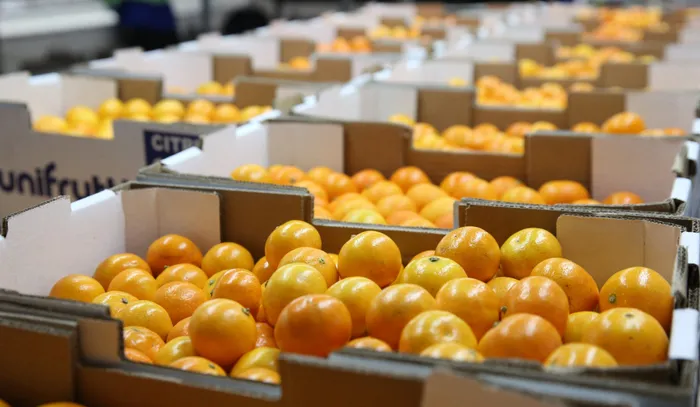
Citrus Growers’ Association of Southern Africa (CGA) raised alarm bells on Monday after receiving reports of isolated diesel shortages following higher fuel prices expected on Wednesday due to the ongoing conflict in the Middle East.
Image: Zanele Zulu/ Independent Newspapers.
Citrus Growers’ Association of Southern Africa (CGA) has raised fresh concerns over fuel supply disruptions, warning that isolated diesel shortages and rising prices could jeopardise the country’s upcoming citrus export season.
The industry body on Monday said it has received reports of limited diesel availability at certain fuel stations, despite assurances that national supply remains stable.
The shortages are believed to be driven by unusual buying patterns and controlled allocation by suppliers, amid expectations of higher fuel prices linked to ongoing tensions in the Middle East.
With the citrus season set to begin in earnest in April, the CGA said it is closely monitoring both fuel availability and costs, which are critical to the smooth functioning of the export supply chain.
Dr Boitshoko Ntshabele, the CEO of the CGA, warned that the situation requires urgent coordination across the value chain to minimise disruption.
“These factors will impact the upcoming citrus season, which begins in earnest from April. The CGA has also received reports of isolated diesel shortages, which is concerning,” Ntshabele said.
“While official assurances indicate that national supply remains stable, industry participants have reported limited diesel availability at certain stations, seemingly caused by unusual buying patterns and controlled allocation by industry players.”
Ntshabele said that strong coordination, transparency, and contingency planning will be essential to ensure the upcoming season proceeds with as little disruption as reasonably possible.
“The government must take into account the important contribution of agriculture exports in the economy. South Africa is the world's second largest exporter of citrus, and citrus is South Africa's largest agricultural export sector.”
He added that 95% of the national citrus crop moves by road to ports.
“Should controlled selling or limited availability of diesel persist, it could directly affect the functioning of the citrus supply chain. This points to the problems inherent in a logistics system almost wholly reliant on trucks,” he said.
“Over the longer term, greater freight rail activity is needed, and the CGA is grateful that private sector involvement in rail is progressing, but it needs to happen at a greater scale and at a faster pace.”
Ntshabele concluded that recent developments place additional strain on our sector, which supports 140,000 jobs at farm level.
“We therefore encourage the government to assist in mitigating negative impacts and to create an enabling environment that supports the continued growth of the citrus industry. This includes action on improved market access to China, India, the United States, and the European Union. We need better access and more markets now more than ever.”
Dawee Maree, head of agriculture information and marketing at FNB South Africa, said that they have also noticed similar situations in various areas.
“Clients have informed colleagues in the provinces that they do experience rationing and also shortages. This is definitely a concern for the industry, given the fact that we are fast approaching harvesting season,” Maree said.
“The increase coming Wednesday will definitely be a huge shock to the system, and farmers will bear the brunt of it, given that they are price takers and will not be able to transfer the cost increase down the supply chain. So shortages and massive price increases are a double-whammy for the industry.”
Bennie Van Zyl, TLU SA general manager, said that they were also concerned about a shortage of diesel for farmers.
“It's not only the citrus growers but also the winter grain crop area that is close to the planting season, and also some of the summer rainfall areas have the problem as they are close to harvesting,” van Zyl said.
“The cost of production is already unaffordable, and with this rise, it will get out of hand. We think there are a lot of proposals that have been made but think the government should look into the matter and help farmers to keep production as it is of strategic value for South Africa.”
BUSINESS REPORT