

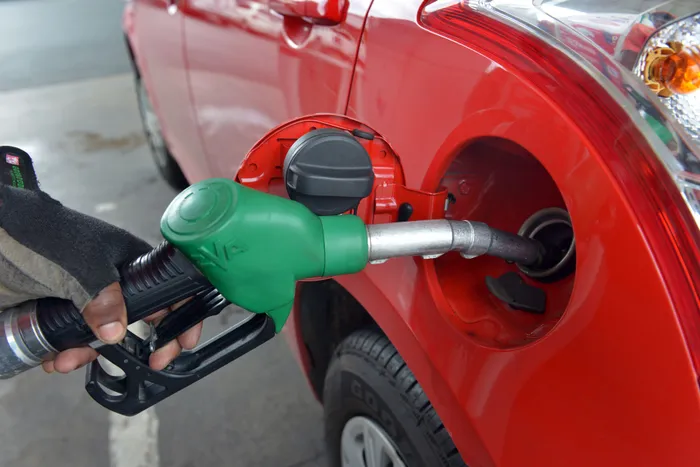
On 1 April, South Africa will confront unprecedented fuel price hikes, with petrol rising over R5 per litre. This crisis, driven by international conflicts, threatens to exacerbate the country's economic struggles, pushing millions into deeper poverty and necessitating immediate government action.
Image: Picture: Karen Sandison/Independent Newspapers
On 1 April, South Africa will face one of the most devastating economic blows in living memory with fuel prices skyrocketing over R5 per litre for petrol, R10 per litre for diesel and R11 for paraffin.
These hikes are the direct result of the war of insanity unleashed in the Middle East and its impact upon international oil and gas supplies and prices.
They will inflict massive damage on South Africa, already battling weak economic growth averaging 1% over the past decade, 41.1% unemployment and entrenched levels of poverty and inequality.
Workers drowning in debt, supporting an average of 7 relatives and many of whom spend up to 40% of their meagre salaries on transport; have no space to cope.
Working class families will be forced to choose between buying food and electricity or going to work and school.
27 million social grant recipients cannot manage any rise in inflation, let alone this gigantic shock.
Businesses, especially those needing to transport goods, will struggle and many will retrench workers, and some may simply close.
In 2022 oil prices spiked after the war in Ukraine broke out and fuel prices rose by R3 a litre. Government led by the African National Congress, after engagements with business and labour at Nedlac, swiftly temporarily slashed fuel taxes by R1.50 a litre providing valuable relief to workers, commuters and the economy.
This is exactly what our sister nation, Namibia, has done with the announcement of a 50% fuel tax holiday. This is precisely what government needs to do now.
The costs of not acting will be far greater with workers no longer able to afford to travel to work, the economy grinding to a halt, jobs shed and tax revenues needed to fund public services plummeting.
We dare not ignore such a dire situation lest it spark an Arab uprising similar to that previously seen in Tunisia, Egypt and elsewhere. The R50 billion plus price tag of the July 2021 violence in Gauteng and KwaZulu-Natal is a painful reminder of the folly of ignoring such dangerous moments.
No one knows when the war in the Middle East will conclude, though most wish for its immediate end. Oil prices are likely to remain high for some time once the war ends and production and exports resume.
Whilst there is nothing the South African government can do to end this war, it can and must protect society, in particular the working class, from its effects.
The most urgent intervention is for government to suspend taxes upon petrol, diesel and paraffin. These must be substantial if they are to provide meaningful relief to society and the economy. These must be put in place for the duration of the war and until oil prices return to prewar norms.
Most importantly this must happen before 1 April. It cannot be deferred by a single day.
Providing substantial fuel tax relief is the fastest, most efficient, cost effective and direct relief needed to manage this pending crisis.
The Reserve Bank needs to avoid its predisposition to impose repo rate hikes on society as inflation rises. The sole cause of any pending inflationary spike is external, the international oil price. It is not domestic or consumer driven. Consumers are already drowning in debt and will soon be bleeding from massive fuel hikes and inflation. They should not be plunged further into misery by repo rate hikes which will only worsen an already dire situation.
If the war drags on, further interventions to cushion society, in particular the poor, workers and fragile economic sectors, will be necessary.
These will need to include adjusting social grants, including the SRD Grant, for inflation as well as providing food parcels for indigent households and expanding the Presidential Employment Stimulus, internships and artisanship programmes to help absorb the unemployed.
Engagements are needed to take place to help Eskom and municipalities reduce the price of electricity. Targeted support for agriculture and Transnet will be important to protect food from inflation.
Measures to expedite Metro Rail’s return to full capacity and other public transport investments will help protect workers and commuters from skyrocketing transport costs will be important.
The economy, in particular fragile sectors and businesses, need relief in the form of a stimulus package, affordable capital and finally fixing the Unemployment Insurance Fund’s Temporary Employment Relief Scheme.
These will come with significant price tags. The Budget provides for a R32 billion contingency fund for disaster relief. There is no doubt that the pending fuel tax hikes constitute a national disaster and a threat to the entire nation.
Beyond this government will be a need to reprioritise non-essential expenditure within the Budget as well as provide additional resources to the South African Revenue Service to ramp up tax compliance to ensure the state has the resources required to navigate this existential crisis.
The private sector must contribute towards an economic and social relief package by providing loan and insurance payment holidays and halting any retrenchments.
In the long term, it is time we expedite measures to protect South Africa from the ever-volatile international oil price.
This includes honouring the long outstanding review of the fuel taxes to provide relief to commuters, ensuring all communities have access to affordable and safe public transport, accelerating plans to fix and expand passenger rail, moving towards electric vehicles of all types (this requires a necessary shift for our local motor and train manufacturing industry) and fast tracking plans to explore and exploit oil and gas reserves of the Northern and Western Cape coastline.
There are two choices before us as we head to 1 April.
Do nothing and watch the economy grind to a halt and millions plunge into absolute poverty.
Or move with speed, provide massive fuel price relief and ensure the nation, especially the poor, are able to navigate these dangerous waters.
Government must rise to the occasion and provide the necessary leadership just as it did during Covid-19.
Solly Phetoe is the General Secretary of Cosatu.

Solly Phetoe is the general secretary of Cosatu.
Image: Doctor Ngcobo / Independent Newspapers.
Follow Business Report on Facebook, X and on LinkedIn for the latest Business and tech news.