

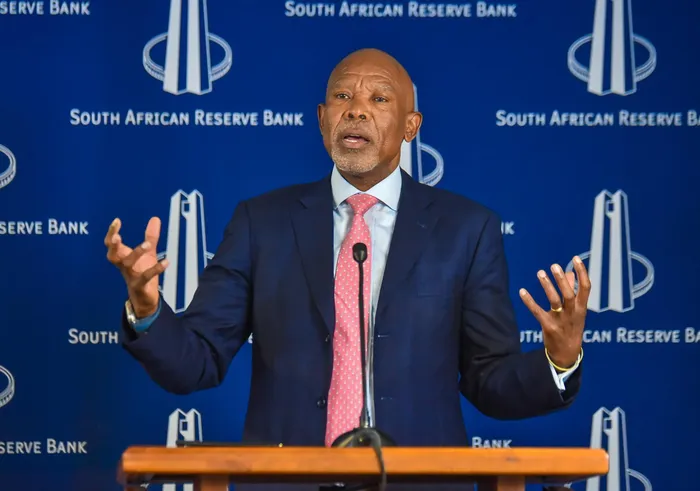
Most experts believe that when the Monetary Policy Committee (MPC) meets on Thursday they will leave interest rates unchanged following the US Federal Reserve announcing that interest rates would be unchanged in March
Image: SARB | Facebook
Most experts believe that when the Monetary Policy Committee (MPC) meets on Thursday they will leave interest rates unchanged following the US Federal Reserve announcing that interest rates would be unchanged in March. Experts have warned that they believe interest rates will rise in the coming months.
Neil Roets, founder and CEO of Debt Rescue, said that the decision by the US Federal Reserve to keep interest rates unchanged reinforces a more cautious global monetary environment, and this has important implications for South Africa. “We at Debt Rescue believe that, while the Fed’s pause may provide some short-term stability in global markets, it does not necessarily translate into relief for local interest rates. In fact, the outlook has shifted meaningfully in recent weeks. Escalating geopolitical tensions in the Middle East have pushed oil prices above $100 (R1679) per barrel, which is a significant concern for South Africa as a net importer of fuel.”
Roets added that higher fuel costs filter through the economy, increasing transport expenses and placing upward pressure on food prices and overall inflation. “At the same time, the rand has weakened to multi-month lows, further intensifying imported inflation. Although recent CPI data showed a moderation to around 3%, this is likely short-lived. The full impact of rising oil prices will only be felt in the coming months, alongside a wave of domestic increases, including electricity tariffs, fuel levies, and other administered costs taking effect in April.”
Roets said that given this backdrop, we expect the South African Reserve Bank to remain cautious and hold rates steady at the upcoming MPC meeting. “However, the risk of interest rate hikes later in the year is increasing if inflation accelerates. For consumers, this signals a prolonged period of financial strain and reduced disposable income.”
Benay Sager, Executive Head at DebtBusters, said that their expectation is that the interest rate will go up. “That might be contrary to the belief of many others, but without knowing what the international petrol prices might become in the next few months, we think the Reserve Bank may feel they need to intervene now and, based on the anticipated increases, try to get ahead of the curve.”
Sager added that if it stays the same, it will be a welcome surprise for us. “The US Fed Reserve has more runway because the impact on them will be felt later, in terms of the overall price increases for petrol and so on. South Africa imports a lot of the petrol that we use daily whereas the US doesn’t, and the impact for us will be felt much more quickly. So we think the two are somewhat independent from each other, and we don’t expect the US decision to have that much impact on the South African decision.”
Sager said that we can expect more interest rate hikes in the future. “There are probably two or three increases to come later this year, depending on how the situation in the Middle East shapes up. We certainly don’t see interest rates going down or even staying at the same level as they are today by the time we get to the end of the year, but it also depends on how quickly – or slowly – the shocks in the system work themselves out.”
Efficient group economist Dawie Roodt said that he believes that the MPC will leave interest rates unchanged. “I do believe that MPC will follow the Federal Reserve’s decision as their decision affects interest rates and global trajectories. I think there is a good chance that the MPC will increase interest rates by 25 basis points in May. Interest rates were on a downward trajectory but the situation has changed in recent weeks due to the Middle East conflict.”
Dr Bonke Dumisa, an independent economist, said that he does not expect any interest changes on Thursday despite the February inflation rate dropping to exactly 3%. “The reason for this is that the current USA / Israel warmongering is creating serious high inflation expectations with the international Brent crude oil prices per barrel hovering above $100 (R1679) per barrel for the past six consecutive business days. We therefore predict very high petrol. I believe both the USA and South Africa will keep their interest rates unchanged. The intransigence of both Donald Trump and Benjamin Netanyahu makes it difficult to make any reasonable long-term predictions.”
BUSINESS REPORT
https://businessreport.co.za/