

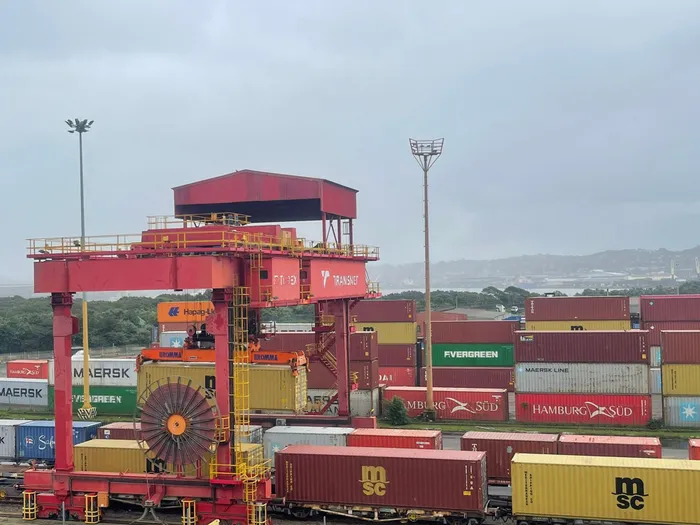
Durban Container Terminal (DCT) Pier 2 containers being loaded on rail wagons destined for the back of port facility. DCT Pier 2 is prioritising terminal fluidity ahead of South Africa’s citrus season.
Image: Supplied
A new industry body, the Container User Forum (CUF), has been launched to strengthen coordination and improve the efficiency of the container logistics system in South Africa and the broader Southern African region.
The forum said its establishment reflects the growing recognition that container logistics plays a critical role in supporting trade and driving inclusive economic growth across the region.
According to the organisation, the CUF was created as an industry-led platform aimed at improving collaboration among stakeholders across the container value chain and addressing long-standing operational challenges.
“The CUF has been formed to address a longstanding gap in the container sector: the absence of a neutral, cross-industry platform focused on the practical delivery of solutions with measurable outcomes and coordinated system improvement.”
The forum will operate as a non-profit organisation that brings together participants from across the container ecosystem, including shipping lines, logistics companies, port operators and cargo owners.
Its primary goal is to identify bottlenecks within the system, promote transparency and develop joint solutions that improve the performance of container logistics operations.
CUF said the initiative is intended to complement the work of existing industry bodies rather than replace them. Instead, it aims to provide a structured forum where stakeholders can collaborate on common challenges affecting the entire container value chain.
The organisation believes stronger coordination across the industry is essential to improving the reliability and competitiveness of container logistics in Southern Africa.
Among the key focus areas for the forum will be improving port operational efficiency, increasing capacity and enhancing the flow of cargo around port facilities.
The organisation will also focus on strengthening back-of-port operations, developing integrated intermodal transport solutions and improving rail corridor connectivity.
Additional priorities include improving data visibility within the logistics system, promoting skills development and encouraging the adoption of new technologies to enhance operational performance.
The forum’s governance structure has been designed to ensure transparency and accountability. According to CUF, its operating model includes member-led governance, specialised working groups and project-based initiatives aimed at delivering measurable outcomes.
The organisation also emphasised that its structure incorporates appropriate legal and data safeguards to protect commercially sensitive information while enabling greater collaboration.
CUF believes that South Africa and the wider region have significant potential to position themselves as a more efficient and competitive container logistics hub, provided that industry stakeholders work together to address systemic constraints.
“The time for fragmented engagement has passed,” the organisation said, noting that the sector requires a credible platform capable of coordinating action, building trust among stakeholders and driving practical improvements.
Brenda Magqwaka, CUF CEO, said the organisation’s main objective is to align the entire container logistics ecosystem around shared goals.
“Through this alignment we work toward shared efficiency, non-confidential goals, common standards, and trusted data. Together we can build a South African container system that moves faster, costs less, and creates sustainable employment across the value chain.”
Magqwaka added that CUF exists to turn coordination into measurable outcomes: shorter truck turnaround times, more reliable rail connections, fewer demurrage disputes, and higher port throughput; while ensuring that reform remains transparent and inclusive.
“When operators, regulators and industry stakeholders work from the same data and shared objectives, trust increases, investment follows, and the benefits extend beyond the logistics sector to the wider economy and communities.”
BUSINESS REPORT