

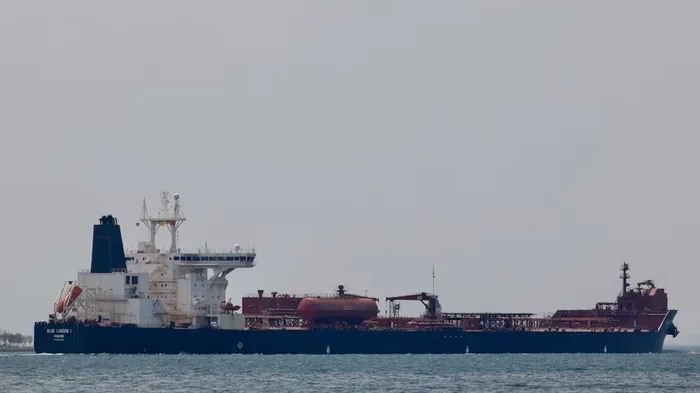
Last Monday, Iran announced the closure of the Strait of Hormuz.
Image: File
A protracted US-Iran war leading to the closure of the vital Red Sea transport corridor of the Strait of Hormuz between Oman and Iran will have dire global economic consequences, with some countries at higher risk than others.
India is among the countries that will be seriously impacted, while South Africa too will face increased economic pressure, though less so than India. This is because New Delhi is highly dependent on the Hormuz Strait for transporting its oil imports, while Pretoria is indirectly affected by the global consequences of the disruption.
Mindful of the consequences of a prolonged conflict between the US and Iran, which has already drawn other Middle East countries, including Israel, Qatar and the United Arab Emirates into its orbit, both Indian Prime Minister Narendra Modi and South Africa’s President Cyril Ramaphosa have called for dialogue and diplomacy for a speedy end to the war.
Now that the dogs of war have been unleashed, there’s no telling how and when this war will end. Meanwhile, the world economy is already reeling from the fallout from the US attacks and Iranian counterattacks.
Last Monday, Iran announced the closure of the Strait of Hormuz, a crucial channel for global trade and the transportation of oil. With an estimated 13 million barrels of crude oil passing through this vital trade artery, prolonged closure of the Strait could lead to severe shortages anda surge in oil prices. The effects of the, hopefully temporary, closure of the Strait were felt almost immediately, with the price of Brent crude escalating to $80 a barrel, and Qatar, one ofthe largest producers of Liquefied Natural Gas (LNG), stopping production after some of its facilities were hit by Iranian drones.
India, which is heavily dependent on oil imports and shipments via the Strait of Hormuz, is particularly vulnerable to shortages and massive oil price increases if the closure drags on. South Africa, though as much at risk as the rest of the world to global fuel price increases, is less vulnerable than India, which imports more than 50% of its LNG from Qatar and the United Arab Emirates (UAE), via the Strait, as it is not directly impacted by the closure of the Strait.
Any global price increase will inevitably lead to food and transport hikes in South Africa; India must brace itself for oil supply shortages and price hikes, as its competitiveness will be affected by a prolonged blockage of the Strait.
The South African rand, which was on an upward trajectory in recent months, weakened in the immediate aftermath of the US attacks and Iran’s retaliatory violence. For India, a prolonged closure of the Strait means a ballooning oil import bill, weakening of its currency and increased inflation. But this is not the first time that India has faced the prospect of its oil supply being choked by conflict in the Middle East.
Every time Israel and its regional enemies fight, shipping in theHormuz Strait and the Red Sea region is disrupted, and India’s oil imports are threatened. New Delhi has been taking contingency measures to offset the impact of these disruptions on its economy by diversifying its energy sources and trade routes. India’s Minister for Petroleum andNatural Gas, Hardeep Singh Puri, has given an assurance that steps are being taken to ensure the continued availability and affordability of oil.
As the war rages on, India, together with other affected countries and major shipping lines, is diverting its freight ships away from the Strait of Hormuz to South Africa’s Cape of Good Hope,but though safer, this means additional travelling time and costs, as well as increased insurance payments.
Fawzia Moodley is a freelance writer.
BUSINESS REPORT