

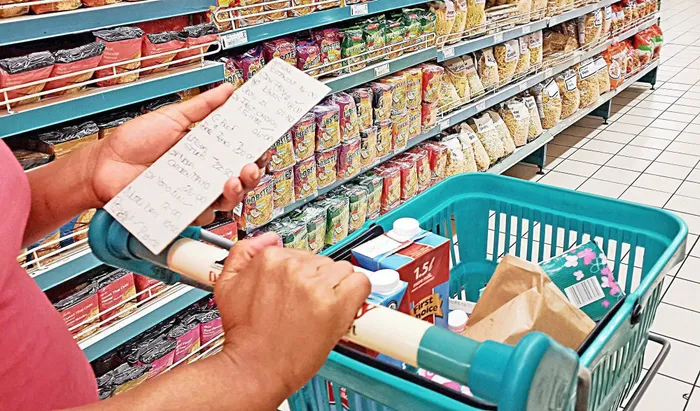
As the fuel price crisis unfolds, consumers brace themselves for the soaring costs that come with it.
Image: David Ritchie/Indepedent Newspapers
Consumers in South Africa have been placed in jeopardy due to the ongoing conflict in the Middle East taking place between Iran, the US and Israel.
The start of March already put consumers on the backfoot with the Department of Mineral and Petroleum Resources announcing fuel increases for the month, with many analysts predicting further hefty increases with the effective closure of the Strait of Hormuz threatening to disrupt a significant share of global energy supply.
The conflict placed further uncertainty for consumers with the geo political tensions possibly having an effect on the South African Reserve Bank's (Sarb) stance on interest rates for the country.
When fuel prices increase, it directly affects prices at the till for customers here in South Africa.
The Road Freight Association (RFA) already sounded the alarm for consumers as it forecasted an inevitable increase in daily costs, following the rise in diesel prices, triggered by the global geopolitical tensions.
The price of diesel, set to increase between R0.60 and R0.65 per litre in March is a move that reflected the various supply and logistics risks stemming from heightened hostilities between Iran, the US, and Israel, which have put upward pressure on the international price of oil.
Gavin Kelly, CEO of the RFA, expressed deep concern over the ramifications of this increase, describing it as a primary source of fuel for most medium and heavy commercial transporters.
Kelly said that diesel is the primary source of fuel for most medium and heavy commercial transporters, this will place an immediate cost burden on daily operations.
"Transporters will be faced with either immediately or later, depending on their operating models or agreements, factoring this increase (and any others that may arise) into their pricing when offering freight transportation services. This means that the gains which were achieved through the gradual reduction of the basic fuel price during 2025, will be erased and the consumer will, inevitably, begin to feel this change in increasing prices at the till," Kelly said.
He added that fuel is one of the basic input costs in a transportation business that has huge impact on rates for transport.
"The general economy will also not be immune - with this pressure becoming an upward inflationary force, thus affecting both future decisions regarding the repro rate and the value of the Rand in the pocket of the man on the street,” Kelly further said.
While 2026 was widely predicted to see the start of an easing in the repurchase rate (repo rate) policy, the global tensions could well undo the path that was meant for the Sarb's Monetary Policy Committee this year.
As inflation was contained and economic growth showing a slight upward projection, expectations had built around further repo rate cuts this year to put the repo rate at 6.5%, and possibly another in early 2027.
Frank Blackmore, Lead Economist at KPMG South Africa said that Markets have already begun reacting as oil prices soared in recent days.
Blackmore pointed to immediate financial shifts that could have far reaching implications.
“The immediate consequence is that we have seen already an increase in the price of oil and gold as well as the depreciation of the Rand and the appreciation of the dollar,” he said.
“Given the significance of the geographical region in the Strait of Hormuz, we can expect an increase in transport costs for obvious reasons, because of this region being a major transport route for global exchange. All that would mean increases in inflation specifically through oil and the Rand leading to petrol prices increases,” Blackmore explained.
“We know you cannot move either people or goods throughout the economy without spending on that which means that this will be a broad based increase in prices and that could lead to interest rates remaining on hold for some time as well as obviously becoming a barrier to or oppressive factor on global growth prospects and South African growth prospects as well. Higher interest rates mean more expensive money and it means less borrowing out there,” he said.
Follow Business Report on Facebook, X and on LinkedIn for the latest Business and tech news.