

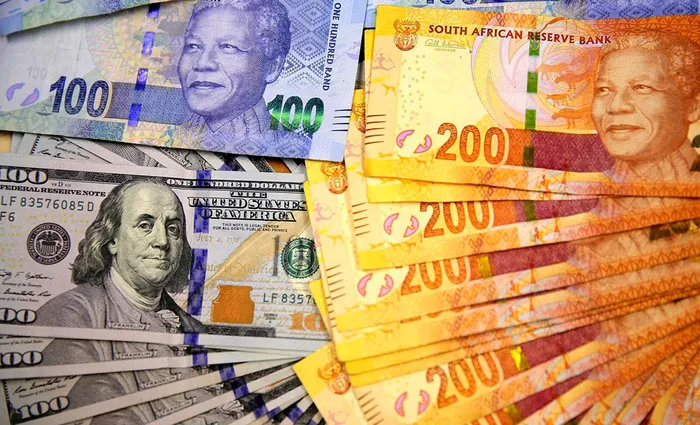
Association of Chartered Certified Accountants (ACCA) 2026 Global Economic Outlook indicates that global growth is likely to remain above 3% in 2026.
Image: File Reuters
Global growth is likely to remain above 3% in 2026, according to the Association of Chartered Certified Accountants (ACCA) 2026 Global Economic Outlook. The outlook indicated that the global economy is expected to grow at a reasonable but not "particularly exciting" pace again this year.
Global growth proved more resilient than expected in 2025, despite the major trade disruptions and massive policy uncertainty.
"That resilience is likely to carry into 2026, with global GDP likely to expand by around 3%, broadly in line with last year, though risks remain more firmly skewed to the downside,” it said.
Former IMF chief economist Ken Rogoff said the global economy is ‘solid but not exciting’, while cautioning that the scale of uncertainty is not fully reflected in financial markets. He warned of the risk of a significant stock market correction over the next three years, even as markets could rise further in the interim.
“Despite the surprisingly positive economic picture given where it seemed we were six months ago, I think there are a lot of downsides to the US administration's policies, with negative consequences for the US economy likely to emerge in 2027 and 2028. Populist policies work until they don't," Rogoff said.
Jonathan Ashworth, the chief economist at ACCA and author of the report, said on a central case scenario, the global economy should continue with a steady expansion in 2026, aided by looser monetary policy, fiscal easing, and the ongoing AI boom.
“The US should be the fastest growing G7 economy, with the administration likely to double down on efforts to boost growth ahead of the mid-terms. But it is a fragile global backdrop, amid heightened geopolitical uncertainty, risks of an escalation in trade tensions, and concerns about threats to the Federal Reserve’s independence,” he said.
“In a volatile, unpredictable and rapidly changing world, understanding the interplay of economic, geopolitical, political, and technological factors will be critical for businesses and policymakers,” added Ashworth.
Ashworth said among the major events in 2026, on the political front, US midterm elections in November will be key.
“With a wafer-thin majority in the House of Representatives, and given the traditional swing against the party occupying the White House, the Republicans may lose their majority, which would constrain President Trump’s room for manoeuvre on policy for the remainder of his term. Local elections in France, Germany, and the UK will also receive attention, as investors gauge the upward momentum of right-wing populist parties,” he added.
2025 was a momentous year for international trade and the global economy.
“Measures of US trade policy uncertainty surged to record levels in April, as President Trump unveiled much larger than expected import tariffs on the country’s trading partners. The average effective US tariff rate is now around 17%, the highest since the 1930s and up from just 2.4% in 2024. There is very wide variation in tariffs across countries, however, with Brazil, China, and India currently facing very high rates,” he said.
Despite the enormous trade disruptions, which initially fuelled sharp declines in stock markets and other risk assets, in 2025 the global economy proved much more resilient than expected.
Ashworth said this is well highlighted by the progression of the forecasts by the International Monetary Fund (IMF) since January 2025. After initially falling quite sharply in April, by October, these forecasts for growth in the global economy and global trade were broadly similar to the January estimates published just before President Trump’s inauguration.
Ashworth added that a steady global expansion seems likely in 2026, although it is a fragile economic backdrop amid elevated uncertainty and a wide array of risks. “The World Bank forecasts growth of 3.1% in 2026, down slightly from 2025, while the IMF forecasts an expansion of 3.3% (IMF 2026). The former sees growth largely unchanged in both the advanced economies and ‘emerging market and developing economies excluding China.”
BUSINESS REPORT