

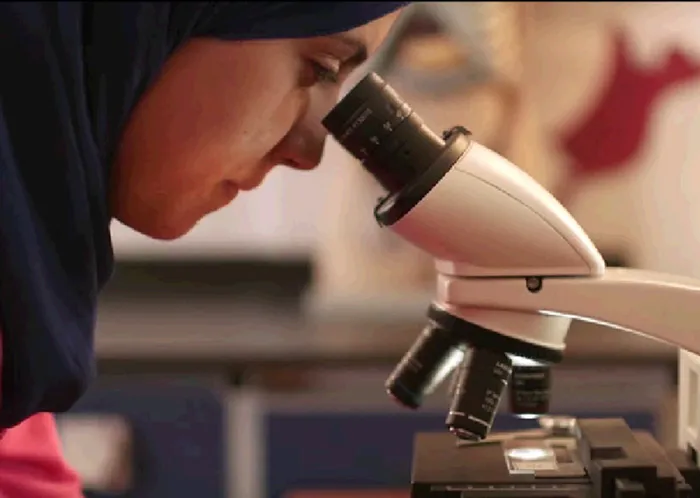
Despite advancements, a significant number of girls abandon mathematics at an early stage, often hindered by the misguided belief that it is “too hard” or “not for them.”
Image: File.
As the world observes the International Day of Women and Girls in Science on 11 February, the South African Mathematics Foundation (SAMF) has sent an urgent message to schools, educators, and parents: the power of mathematics is an invaluable gift for young people, especially girls.
Despite advancements, a significant number of girls abandon mathematics at an early stage, often hindered by the misguided belief that it is “too hard” or “not for them.”
Two prominent South African mathematicians are working tirelessly to dispel this notion and illustrate the critical importance of girls' involvement in mathematics.
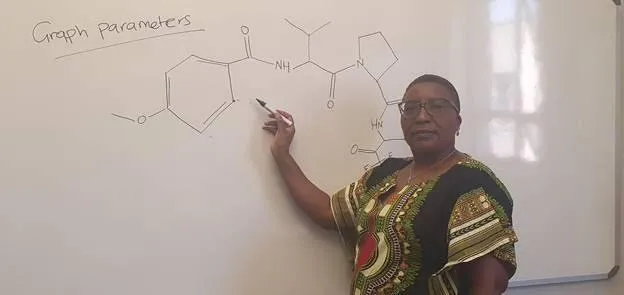
Professor Eunice Gogo Mphako-Banda.
Image: Supplied.
Professor Eunice Gogo Mphako-Banda, a Professor of Mathematics at the University of the Witwatersrand and a Director at the SAMF, asserts that the world of mathematics has abundant opportunities because a scarcity of women actively engage in it.
Her pioneering career demonstrates that mathematical thinking not only cultivates confidence but also ensures long-term career security.
Adding her voice to this critical conversation, Professor Karin-Therese Howell, Executive Director of AIMS South Africa, highlighting the ability of mathematics to equip individuals with the skills necessary to navigate complexity and uncertainty.
“These skills extend well beyond the confines of the classroom, influencing how future leaders make decisions in an ever-evolving landscape,” Howell explained.
Their journeys may differ, but the message remains unequivocal, girls belong in mathematics.
This inclusion is not merely beneficial; it is essential.

Professor Karin-Therese Howell, Executive Director of AIMS South Africa
Image: Supplied.
The vitality of mathematics flourishes when it mirrors the full diversity of society.
To facilitate this empowerment, practical steps can be taken by teachers and parents alike. Confidence can blossom through exposure, encouragement, and hands-on experience.
One of the most effective ways to foster engagement is by providing young learners with the opportunity to participate in structured, nationwide settings like the South African Mathematics Olympiad (SAMO) and the South African Mathematics Challenge (SAMC).
These competitions cater to learners of varying levels and are conducted within regular classroom environments, prioritising analytical thinking over speed.
This approach allows participants to view mathematics as an accessible domain, potentially introducing them to exciting future careers in STEM.
Schools are encouraged to enroll all students in these competitions, not just those who excel in academics.
Every learner's participation can enhance confidence, nurture curiosity, and build resilience, particularly for girls who may still doubt their mathematical capabilities.
Important dates to note for interested participants include:
This International Day of Women and Girls in Science is a pivotal time for action.
The SAMF said it calls on schools, educators, and parents to take steps to enter learners for the SAMO and SAMC.
The next generation of women in mathematics is already present in our classrooms, waiting for the opportunity to shine.
BUSINESS REPORT