

Fairplay Movement, SA Poultry Association and ENSafrica said that they have applied and started a campaign for VAT-free chicken products with President Cyril Ramaphosa's State of the Nation Address around the corner and the Budget speech later this month.
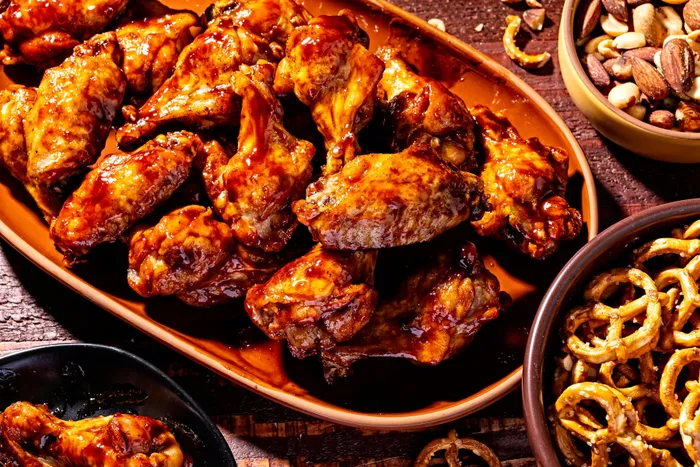
Image: Scott Suchman/For The Washington Post; food styling by Marie Ostrosky
The Fairplay Movement, the South African Poultry Association (SAPA) and law firm ENSafrica have launched a campaign and formally applied for selected chicken products to be zero-rated for VAT, as President Cyril Ramaphosa prepares to deliver the State of the Nation Address and Finance Minister Enoch Godongwana readies the National Budget later this month.
SAPA CEO Izaak Breitenbach on Monday said the application focuses on staple chicken products commonly consumed by lower-income households. These include frozen bone-in portions and whole birds, as well as both frozen and fresh offal.
“The products that have been excluded are the high-value products like chicken breasts, fresh chicken and further processed chicken,” Breitenbach said.
Charles de Wet, tax executive director at ENSafrica, said previous budgets had included announcements around additional zero-rated food items, but momentum stalled after government abandoned plans to increase the VAT rate.
“For some reason, it was due to an increase in the VAT rate. I mean, you will recall that there was an announcement that the rate would go up from 15% by 2% to 17%, and then it was reduced with sort of a phased-in approach," he said.
"The moment that that was off the table, for some reason, sort of any additional zero-rated items were off the table as well.”
De Wet noted that total tax collections for the 2024–25 fiscal year amounted to about R1.8 trillion, with revenue performing strongly. Collections to the end of December were almost 10% higher year on year, giving the Minister of Finance some fiscal room.
VAT accounts for roughly 20% to 25% of total tax revenue, translating to about R450 billion in annual collections.
Based on ENSafrica’s calculations, zero-rating frozen bone-in chicken would cost the fiscus about R5bn a year. Including fresh bone-in chicken would raise the total to around R6 billion.
De Wet added that if you look at the total collections from all taxes in the 2024-25 fiscal year, that is R1.8bn. He said these numbers are not far off the numbers that National Treasury presented in its feedback to the Select and Standing Committee on Finance last year.
“That is a very small percentage of, you know, the total tax revenue that is collected in the circumstances. You know, even a very small percentage of the total VAT that is collected, you know, we're sort of talking about 1% of VAT collections in the circumstances," De Wet said.
"According to the Pietermaritzburg Economic Justice and Dignity Group household index, a household pays in the circumstances around R346 or nearly R350 rand a month for chicken. The impact that it would have on chicken products that are in that selection, I mean, it's almost an additional, you know, R91 that could be saved by each individual household. Simply by zero-rating chicken in the circumstances.”
De Wet said it was striking that no meat products are currently included on South Africa’s VAT zero-rated food list, despite the country being a major meat producer.
“While there were minor changes to that list in 2018 when the VAT rate was increased, sort of the substance of the list has been there for more than 25 years. I think there have been significant moves in people's preferences in the circumstances.”
Meanwhile, Breitenbach said SAPA’s proposal deliberately targets lower-income consumers by focusing on bone-in portions and offal.
“Our higher LSM , LSM chicken buyers would tend to buy fresh chicken. They would tend to buy further processed chicken," he said.
"And while the target audience that we target in this discussion actually buys bone-in portions, they do buy offal products, the red offal products, as well as the other offal products.”
Breitenbach added that by focusing our definition very specifically on bone-in portions and offal, we've eliminated the benefit to go to our higher LSM consumers.
BUSINESS REPORT