

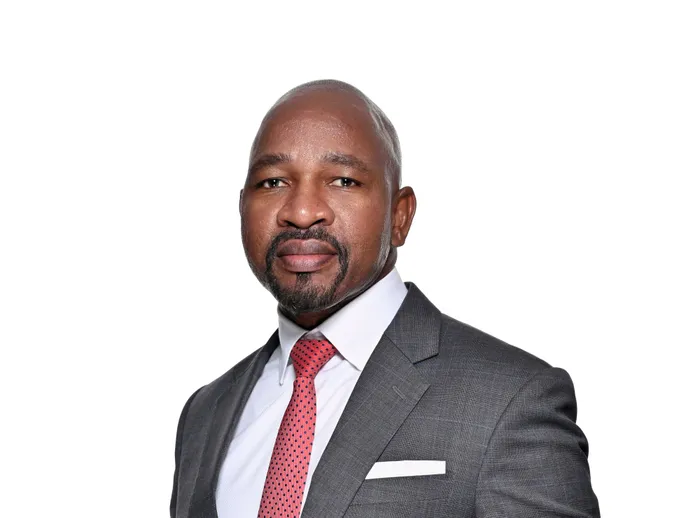
The resignation of Land Bank CEO Themba Rikhotso announced a few days ago was greeted with shock and surprise from the agriculture sector.
Image: Supplied
The resignation of Land Bank CEO, Themba Rikhotso, announced on Friday, has been met with shock and concern across South Africa’s agricultural sector, with industry leaders warning that uncertainty at the institution could have far-reaching consequences for farmers and food security.
Land Bank confirmed that Rikhotso, who joined the development finance institution on 1 April 2023, will remain in its employ for the duration of his notice period, which runs until the end of April.
In a statement, the bank said Rikhotso will be taking up a role at another South African banking institution. The bank said Rikotso assumed leadership during a particularly challenging period and provided steady and focused leadership during a critical phase of its stabilisation.
“Under his tenure, the Bank achieved notable progress in its turnaround programme, including conclusion of the liability solution, undertaken in close collaboration with the Bank’s lenders and with the support of the National Treasury,” the bank said.
“These efforts have contributed meaningfully to the process of strengthening the Bank’s financial position and its operational resilience.”
However, an industry expert, who asked not to be named, on Monday said Rikhotso’s resignation comes amid growing legal uncertainty surrounding the bank’s standing to pursue liquidations against farmers.
“These claims have underpinned its aggressive recovery tactics, including the liquidation of hundreds of farmers,” he said.
“This ongoing legal uncertainty casts a shadow over billions of rands in current and pending liquidations within the South African farming community, potentially opening the door for many to be reversed or set aside depending on this Supreme Court Appeals (SCA) ruling.”
The expert added when referring the issue to the SCA, the Kimberley High Court emphasised that it is in the public interest to achieve legal certainty, given conflicting judgments on whether Land Bank held the necessary cession and standing to pursue such liquidations
The Land Bank was approached for comment on Monday and said that they would respond accordingly.
TLU SA general manager Bennie van Zyl said the situation at Land Bank raises serious questions about the country’s approach to agriculture and rural development.
“It is actually very sad for us that we have to give some comments on the Land Bank, an institution that was created because of a decision that was made by the Government of South Africa a long time ago,” he said.
“Other businesses have only to run the production factors, but the agricultural sector also has to manage the climatic realities.”
Van Zyl said the Land Bank was established to accommodate these unique challenges, but was now failing to fulfil its mandate to the farming sector.
“So for us, this is very sad that we sit in a situation where the Land Bank does not fulfil its obligations to the farming and agricultural sector,” Van Zyl said.
“The agricultural sector is going to pay a price if this is just to proceed. At the end of the day, food security is at stake. Then our consumers also pay the price.”
Francois Rossouw, CEO of the Southern African Agri Initiative (Saai), said Rikhotso took over leadership at a time when the Land Bank was under severe pressure and trust from farmers had largely eroded.
“Throughout his tenure, he was approachable, diplomatic, and demonstrated a clear understanding of the real challenges farmers face on the ground,” he said.
“While the broader institutional and legal issues remain unresolved, his willingness to engage constructively with the sector will be missed.”
Agricultural economist Dr Simphiwe Madikizela, an adjunct academic and professor of economics at Unisa, said Rikhotso’s departure would be felt across the sector.
“Rikhotso brought great stability to the Land Bank since his appointment in 2023 and he will definitely be missed,” he said.
“My understanding is that he will take up another position at another institution. I believe that the Bank, which plays a crucial role in the agriculture sector, has the depth to continue its work.”
Madikizela added that despite the leadership change, the Land Bank remains critical to the agricultural economy, particularly for small-scale farmers.
“It helps with funding, development of small-scale farmers, and mentorship. In South Africa, there is massive unemployment and the Land Bank also provides unemployment and aids in food security.
“I do believe that the Land Bank has a strong team that will be able to deliver on its mandate.”
BUSINESS REPORT