

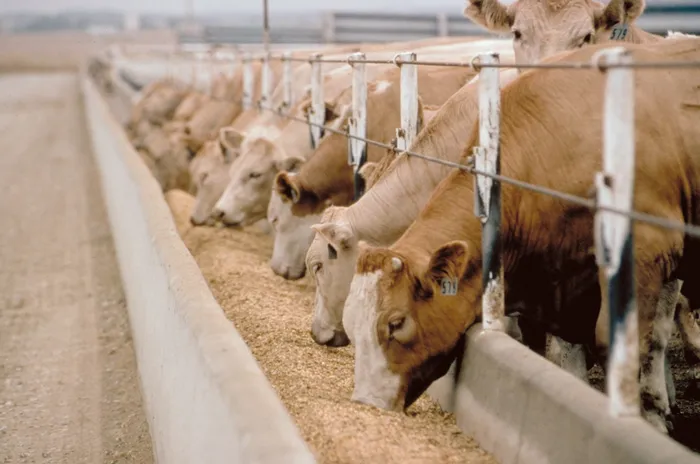
A legal expert advises that farmers and agribusinesses have legal obligations to fulfill while facing the Foot and Mouth Disease crisis.
Image: File
Farmers and agribusinesses have significant legal obligations to meet as South Africa grapples with the Foot and Mouth Disease (FMD) outbreak, a legal expert has warned, as industry and government ramp up efforts to contain the spread of the disease.
The warning follows the FMD Industry Coordination Council (ICC) issuing its first progress update, while Agriculture Minister John Steenhuisen recently unveiled a long-term plan to vaccinate the national herd and restore South Africa’s FMD-free status within the next decade.
Lucinde Rhoodie, a director in the agriculture, aquaculture and fishing sector at law firm Cliffe Dekker Hofmeyr (CDH), on Friday said livestock owners and agricultural businesses are bound by strict legal requirements during an FMD outbreak.
“These requirements are primarily grounded in the Animal Diseases Act, 1984 (Act No. 35 of 1984) and regulations. FMD is classified as a controlled animal disease under the Act, which imposes a legal duty on animal owners or managers to take all reasonable steps to prevent their animals from becoming infected and to prevent the spread of any disease from their animals or land to others.”
She outlined several core responsibilities. Farmers must immediately report any suspected FMD cases to state veterinary authorities, restrict animal movement and ensure all movements are properly documented and compliant with health declarations.
They must also implement and maintain strict biosecurity measures, including isolation protocols for new and existing animals, and comply with all directives related to Disease Management Areas (DMAs) and movement controls.
In addition, producers are required to keep accurate records and cooperate with inspections, surveillance and enforcement actions by authorities. Failure to comply can carry serious consequences.
Rhoodie noted that not reporting controlled diseases or ignoring required control measures may constitute an offence under the Act. Penalties can include fines, imprisonment, or both.
"For certain offences, imprisonment may not exceed seven years. The first conviction of certain offences may result in a fine not exceeding R8 000 or imprisonment not exceeding two years," she said.
"The second conviction of certain offences may result in a fine not exceeding R16 000 or imprisonment not exceeding four years. The third or subsequent conviction may result in imprisonment not exceeding four years without the option of a fine.”
Rhoodie added that declaring a state of disaster could strengthen the response to FMD. Such a move could enable more centralised coordination between departments and agencies, including the South African Police Service, traffic authorities and the SANDF, to enforce livestock movement controls.
It could also speed up the mobilisation of veterinarians, technicians and laboratory capacity, and provide financial relief to commercial and communal farmers suffering losses due to quarantines, trade restrictions and halted livestock movements.
Meanwhile, the FMD ICC reaffirmed its role in supporting and aligning industry efforts with the Ministerial Task Team (MTT) and the Department of Agriculture to streamline responsibilities and avoid duplication.
The council said Dunevax had confirmed that 1.5 million doses of the Dollvet FMD vaccine are expected to arrive in mid-February. Allocation and distribution will be coordinated by the MTT, which has already met to discuss rollout plans.
The ICC said it would formally request clarity from the Department and the MTT on how vaccine allocation and distribution decisions were made, and how implementation will unfold at ground level, to ensure the industry is ready to support the rollout.
FMD ICC said that a unified national approach for Section 9 permits is being discussed for tabling.
“The ICC would like to see clear and specific guidelines on Movement Permits country-wide. The Scheme document on Pre-emptive Vaccination was finalised on Wednesday evening, submitted to the Department, and will be discussed in the coming week. Part of the proposed scheme involves the involvement of private veterinarians in the distribution of the vaccine," it said.
"Emergency interim measures under the contingency plan are being pursued to ensure that regulations previously written for a country free of FMD, such as movement compliance requirements, do not hamper future value chain operations.”
FMD ICC has requested a 24-hour turnaround time for the South African Health Products Regulatory Authority approval of Section 21 applications.
BUSINESS REPORT