

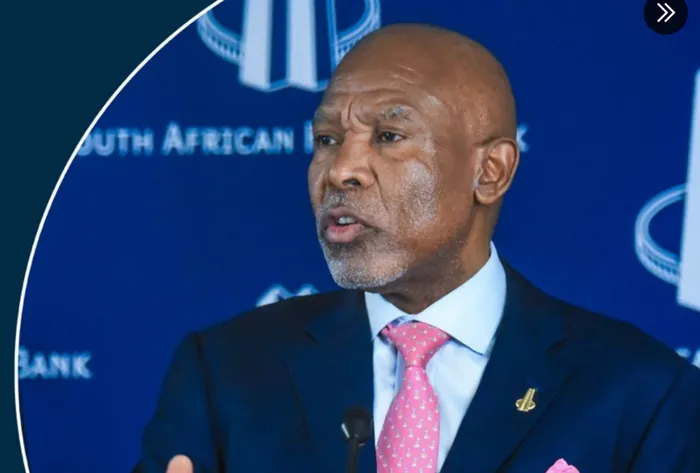
As Janu-worry comes to an end, it seems consumers will not be given any reprieve in the form of an interest rate cut this month.
Image: SA Reserve Bank.
The South African Reserve Bank will announce its first decision of the year on interest rates on Thursday afternoon.
It has been widely predicted that the central bank will keep rates unchanged.
Economists and analysts have predicted that the central bank will be moving with caution and keep the rate unchanged at 6.75%, translating to the prime lending rate also staying the same at 10.50%.
Investec's lead economist, Annabel Bishop, said that the MPC meeting is not expected to see a change in interest rates, coming so soon after November’s -25 basis points cut.
"With the repo rate currently at 6.75%, 325bp above the inflation rate, and with CPI inflation expected to fall below 3.0% y/y in Q2.26, the high real interest rate in South Africa supports further interest rate cuts. Indeed, without an additional -50bp cut this year (expected to be spread over two meetings), the real interest rate will rise further, nearing 4.00% mid-year," Bishop said.
This means there will be no much needed reprieve for consumers struggling with debt in the contry.
Neil Roets, CEO of Debt Rescue told Business report that South Africans are entering deeper into 2026 under severe financial strain, driven by persistently high living costs, limited income growth, and borrowing costs that remain elevated.
"For millions of households, credit has become a lifeline for basic necessities such as food, fuel, and electricity. Against this backdrop, expectations that the Sarb will keep interest rates unchanged are not surprising. The Monetary Policy Committee (MPC) has adopted a cautious stance, balancing inflation trends with global uncertainty. While this approach is understandable from a policy perspective, it offers little immediate relief to consumers who are already under immense pressure," Roets said.
He added that the current data highlighted the seriousness of the situation.
According to Eighty20, total household debt reached R2.6 trillion in the third quarter of 2025, with overdue balances rising sharply.
"More South Africans are entering the credit market, and many are relying on short-term and retail loans to survive. This is not a sign of financial health, but of distress. We also note expert forecasts suggesting that interest rate cuts may only materialise later in 2026, should inflation fall below 3%. While this provides some hope, it does little to ease the burden consumers face right now. With food, transport, and utility costs continuing to rise faster than wages, households are living on extremely tight margins," Roets said.
"Our own research shows that nearly nine out of ten consumers feel anxious or overwhelmed by their financial situation. Behind every statistic is a family making painful choices to cope. South Africans deserve more than survival. They deserve a realistic path to recovery," Roets further added.
BUSINESS REPORT