

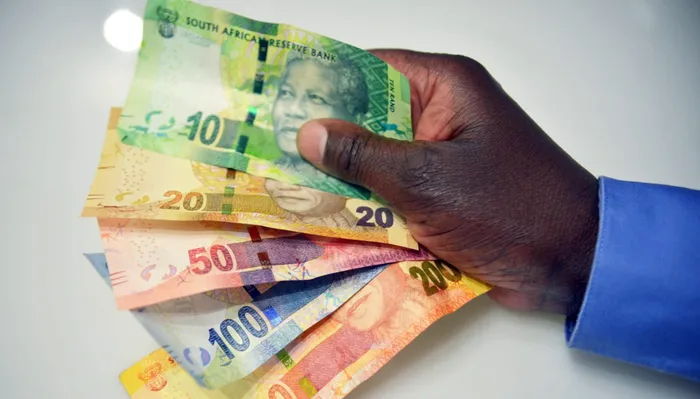
There has been welcome reaction to last week's announcement of the removal of South Africa from the European Union’s list of “High-Risk Third Country Jurisdictions” (EU List).
Image: Karen Sandison/Independent Newspapers
There has been welcome reaction to last week's announcement of the removal of South Africa from the European Union’s list of “High-Risk Third Country Jurisdictions” (EU List).
The National Treasury said that they welcome South Africa’s removal from the list. “This follows the delisting of South Africa from the FATF’s greylist (“list of countries under increased monitoring”) and the UK’s list of countries in which there is a high risk for money laundering and terror financing, both of which happened on 13 October 2025.”
Treasury added that they also welcomed the removal of five other African countries - Burkina Faso, Mali, Mozambique, Nigeria, and Tanzania - from the EU List, following their removal from the FATF greylist in 2025. “The decision to remove South Africa (and other African countries) from the European Union list was published on Friday, 9 January 2026, and will take effect on 29 January 2026.”
Treasury said South Africa was added to the EU List in August 2023 as an automatic consequence of its greylisting by the Financial Action Task Force (FATF) in February 2023.
“The EU listing is in terms of its Article 9(1) of Directive (EU) 2015/849, which requires that third-country jurisdictions having strategic deficiencies in their systems for combating money laundering and terrorism financing (‘high-risk third countries’) must be identified to protect the proper functioning of the EU’s internal market.”
Professor Waldo Krugell, an economist at North-West University, said this is one of those small pieces of good news.
“It is not the sort of thing that immediately leads to a stronger Rand or more investment, but it helps to lower compliance costs, it adds to competitiveness, and in the end is the foundation of a well-functioning financial system. Getting off the grey list and this list are wins for the economy,” he said.
Professor Raymond Parsons of the North West University Business School said this is a welcome development.
“The removal of SA from the EU list of high-risk third country jurisdictions is another building block to support the better economic outlook for SA this year. The EU decision, if taken together with SA’s recent removal from the FATF ‘grey list’ and Standard & Poor’s upgrading of the country’s investment status, is a further confidence-building step.”
Parsons added that as the National Treasury has warned, much work still requires to be done to remedy South Africa’s deficiencies in combating money laundering and terrorism financing.
“The challenge in 2026 also remains to translate the various advances on the financial front into higher growth, real investment, and more jobs,” he said.
Johann Els, the chief economist at PSG Financial Services, said South Africa's removal from the high-risk country list by the European Union is certainly a positive.
“I don't think there will be any immediate positive reaction, though. But it certainly falls in line with what we've seen recently. Removal from the grey list, upgrading ratings by S&P. And gradually, foreign investors are starting to see the better environment that we have in South Africa. The environment where we can move forward towards better underlying economic growth,” he said.
Els added that this presents better investment returns for foreign investors.
“In an environment especially where the US is seen as a much more volatile policymaker, foreign investors are shying away from the US as an investment destination, running towards precious metals. We've seen a significant run in precious metals prices, but also towards emerging economies," Els said.
In an environment where growth is gradually picking up from the 1% annual average growth over the last 13 years to a slightly better underlying picture, towards around 1.4% expected for 2025, 1.7% or 1.8% expected for 2026, and 1.7% expected for 2027. So it's still weak growth, but it's better than where we were."
Ulrich Joubert, an independent economist, said it was a sort of automatic movement of South Africa to this high-risk list.
“If you look at the report, then they say you know when you're on this high-risk list then they have to do more investigations and check that you're not sending money to terrorist groups or that you're not part of money laundering," Joubert said.
"Before an agreement is done between South Africa and the EU and the specific country or the banks of that country, then senior management must then agree that we can borrow the money from those international institutions in Europe. It's really good news for the South African economy."
BUSINESS REPORT