

Agricultural associations have raised concern but welcome action by the provincial Government of Limpopo, which issued a requirement earlier this week for pre-approved permits and risk-based assessments for the movement of cloven-hoofed animals in and out of the province to control the spread of Foot and Mouth Disease.
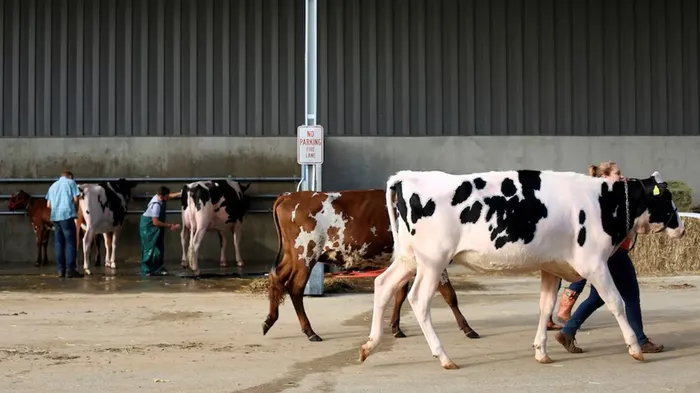
Image: File picture: Reuters, Ben Brewer
Agricultural associations have welcomed decisive action by the Limpopo provincial government to curb the spread of Foot and Mouth Disease (FMD), but have cautioned that stricter movement controls could place added pressure on farmers if not efficiently implemented.
Earlier this week, Limpopo’s Department of Agriculture and Rural Development introduced new requirements for pre-approved permits and risk-based assessments for the movement of cloven-hoofed animals into, within and out of the province. The measures apply to cattle, sheep, goats, pigs and game, and take effect immediately until further notice.
The department said the regulations are grounded in the Animal Diseases Act, 1984 (Act No. 35 of 1984), under which FMD is declared a controlled animal disease. The Act empowers veterinary authorities to prescribe control measures to prevent the spread of animal diseases and promote animal health.
The department stressed that the new stipulations do not replace or weaken existing movement requirements in declared FMD control zones, Corridor disease areas and African Swine Fever controlled zones. All livestock must also carry official owner identification marks in line with the Animal Identification Act of 2002, as well as individual tags, before any movement is permitted.
Under the new protocol, any inter-provincial movement of cloven-hoofed animals into Limpopo must be supported by a pre-approved movement application.
This application must be completed by the responsible state veterinarian in the province of origin, recommended by that province’s Director of Veterinary Services, and then submitted to Limpopo authorities for final approval at least five days before movement. Each application will be assessed on a case-by-case basis and subjected to a risk assessment.
Dewald Olivier, chief executive officer of Red Meat Industry Services (RMIS), said the department’s decision was a necessary and responsible step to contain FMD.
“The protocol is firmly grounded in the Animal Diseases Act and sets clear conditions for movements into, within, through, and out of the province—including individual animal identification, veterinary declarations, and stock removal certificates,” Olivier said.
“These measures are essential to protect animal health, safeguard market confidence, and prevent further spread while vaccination and surveillance plans are intensified.”
Olivier added that tighter movement controls would help stabilise supply chains disrupted by recent outbreaks.
“The requirement for a veterinary movement permit, linked to individual animal IDs and pre-movement risk assessments, provides traceability and accountability across auctions, feedlots, and farms,” he said.
“In short, while these controls will add administrative pressure in the near term, they are proportionate to the threat and form part of the pathway back to resilient, well-functioning livestock markets.”
However, Francois Rossouw, CEO of the Southern African Agri Initiative (Saai), warned that the new requirements could have serious financial implications for farmers if poorly executed.
“The protocol now requires pre-approved movement permits, detailed documentation, and at least five days’ lead time for any cloven-hoofed animals moving into, within, or through the province. That is a serious intervention with real cash-flow implications for family farmers, auctions, and feedlots,” he said.
Rossouw criticised government for relying too heavily on movement restrictions without matching them with faster vaccine rollouts, proper strain-matching, functional laboratories and a clear national policy.
“Movement control on its own does not stop Foot and Mouth; it buys time. If that time is not used aggressively for blanket vaccination and upgrading biosecurity capacity, we are just dragging out the pain for compliant producers while illegal and uncontrolled movements carry on under the radar,” he said.
“For farmers, the key now is certainty and speed: permits must be processed quickly and uniformly across districts, rules must be communicated in plain language, and there must be support for smaller and communal farmers who simply cannot absorb repeated market disruptions. Saai will monitor how this protocol is applied on the ground and will engage the province and national department where it unfairly penalises law-abiding family farmers without meaningfully reducing disease risk.”
BUSINESS REPORT