

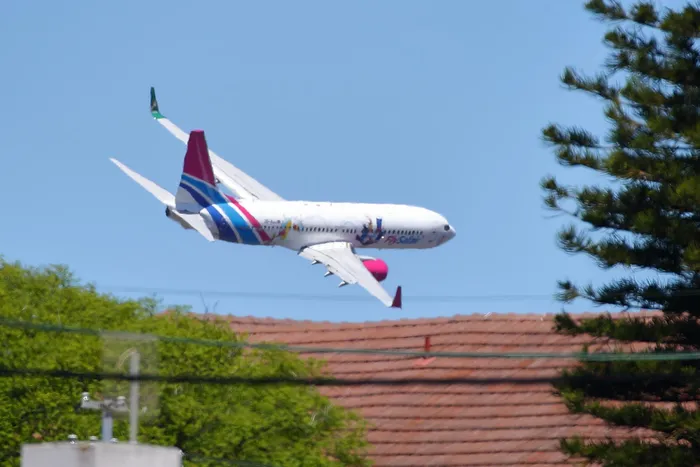
South African business travel saw a robust 17% increase in 2025, the highest growth across the continent.
Image: Colin Brown
As we approach the close of 2025, South African business travellers can undoubtedly attest to a year that was anything but routine.
From unprecedented geopolitical tensions to revolutionary changes driven by artificial intelligence, 2025 has reshaped the landscape of business travel in ways that were unimaginable just a year ago.
“We have identified nine defining moments of 2025 that make it clear we're not going back to the old way of doing business travel,” said Mummy Mafojane, General Manager at FCM.
“The visa chaos, geopolitical shocks, and technology revolution have fundamentally changed what success looks like.”
The ripple effects of international politics were felt acutely when former U.S. President Donald Trump reintroduced tariffs of 10-60% on global imports in April. South African firms were quickly confronted with the chaos that followed.
“That routine New York sales trip wasn't just about closing deals; it was about navigating trade policy uncertainty and potential supply chain disruptions,” Mafojane explained.
The immediate impact on the aviation sector was stark, as airlines saw stock prices plummet by as much as 15% following the announcement.
Companies began reconsidering their travel to the U.S., revealing how fragile business travel can be in the face of shifting political landscapes.

Mummy Mafojane, General Manager at FCM.
Image: Supplied.
For South African business travellers, the long-awaited journey to North America often came with a frustrating hitch.
Applying for a U.S. or Canadian visa turned into a test of patience, with interview wait times extending to over three months in major cities like Johannesburg, Cape Town, and Durban.
“Applications to Canada have taken as long as 568 days,” Mafojane noted, highlighting a growing crisis in travel logistics.
The necessity for long-term planning meant that spontaneous trips to the U.S. or Canada became a rarity, forcing companies to schedule meetings well in advance or explore alternative markets with fewer visa hurdles.
The challenges didn’t stop there.
The Gaza conflict and the ongoing war in Ukraine led to significant flight disruptions.
Middle East airspace was closed in June, necessitating creative rerouting through various hubs like Istanbul and Athens.
Such scenarios turned typical business trips into logistical puzzles, compelling companies to rethink their travel strategies entirely.
As if that weren’t enough, instances of GPS spoofing affecting hundreds of flights daily added a layer of risk, making risk management crucial for all professionals involved in travel.
Challenges also emerged on the domestic front when FlySafair pilots engaged in a two-week strike in July, causing disruptions to schedules and heightened prices at a time when business travel was surging.
This domestic crisis was a stark reminder of South Africa's vulnerability to labour disputes that impact travel infrastructure, emphasising the need for robust contingency plans.
2025 also ushered in significant innovations in the in-flight experience, particularly with the implementation of the International Air Transport Association's (IATA) new lithium battery rules, which banned certain power banks from checked luggage.
Initially viewed as a setback for productivity, this change coincided with airlines beginning to offer free Wi-Fi, enabling business travellers to remain connected during flights, albeit with smarter battery management.
"We started seeing specific requests for 'power management strategies' and 'offline flight preferences' in travel bookings," said Mafojane, capturing the evolving needs of today’s travellers.
While geopolitical tensions dominated headlines, artificial intelligence steadily transformed corporate travel management.
A staggering 90% of business travel managers embraced AI technologies by year-end, enhancing their ability to predict disruptions and recommend alternative routes.
“AI took us from reactive to proactive,” Mafojane explained, underscoring how these tools provided invaluable support in navigating last-minute challenges.
Despite the turmoil, South African business travel saw a robust 17% increase in 2025, the highest growth across the continent.
Companies were not just travelling more; they were travelling smarter, integrating “bleisure” in their budgets, prioritising wellbeing, and ramping up sustainability efforts.
November brought a historic moment with South Africa’s hosting of its first G20 Summit, attracting international attention and investments.
“We saw international focus on Africa as a business destination reach levels we'd never experienced before,” said Mafojane.
This event generated an uptick in demand for MICE (Meetings, Incentives, Conferences, and Exhibitions) infrastructure, signalling South Africa's aspiration to be a key player in the global economic arena.
The passing of the Climate Change Act 22 of 2024 mandated that corporate travel policies now needed to prioritise sustainability, with companies quickly shifting to carbon tracking and emission accountability.
“Sustainability went from nice-to-have to must-have overnight,” noted Mafojane, encapsulating the urgency that characterised this transition.
Reflecting on this chaotic yet transformative year, the message for 2026 is unequivocal: agility is paramount.
The businesses that thrived were those capable of pivoting swiftly in response to change.
As travel continues to evolve, the integration of technology and a focus on traveller wellbeing will play leading roles in shaping the future of corporate travel.
“2025 was the year we learned that business travel isn't just about getting from A to B anymore," Mafojane said, "It’s about getting there safely, sustainably, and with your sanity intact.”
BUSINESS REPORT