


According to the Deputy Minister of Social Development, South Africans spend an average of R414 million on alcohol each day, making this one of the most lucrative times of the year for the retail alcohol market.
Image: Getty Images
As the festive season of 2025 approaches, South Africa is preparing for a surge in alcohol consumption, with expenditure nearly tripling during the week between Christmas and New Year.
According to the Deputy Minister of Social Development, South Africans spend an average of R414 million on alcohol each day, making this one of the most lucrative times of the year for the retail alcohol market.
The upcoming week-long spike represents a crucial opportunity for businesses to understand evolving consumer behaviour and preferences, an essential factor that can differentiate market leaders from their competitors.
With an average annual alcohol consumption of 7.8 litres per person, South Africa exceeds the global mean of 5.5 litres, positioning itself as the fifth highest globally when consumption is measured among drinkers only.
The country’s drinkers, on average, consume approximately 30 litres annually, signalling a robust market ripe with potential.
Eighty20 Consulting has taken a deep dive into these emerging trends through its MAPS survey, which analysed data from 20,000 South Africans, revealing that almost half (47%) of adults consumed alcohol in the past month.
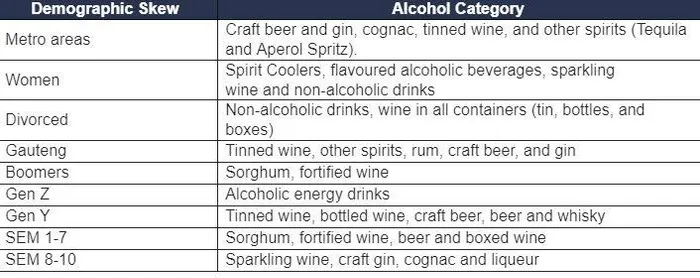
Beer stands out as the preferred choice, particularly among men, with 68% of weekly beer consumers identifying as male.
Image: Supplied.
Beer stands out as the preferred choice, particularly among men, with 68% of weekly beer consumers identifying as male.
Conversely, festive celebrations indicate a shifting preference as wine emerges as the top choice for internet-enabled South Africans, followed by cider and spirits, according to data from GWI.
Interestingly, alcohol consumption displays a pronounced urban-rural divide. Approximately 10 percentage points more individuals in metropolitan areas consume alcohol compared to their rural counterparts, with nearly 80% of men and 70% of women in cities partaking in alcoholic beverages.
Further demographic insights reveal that younger generations, particularly Generation Y (Millennials) and Generation X, are driving consumption patterns more than Baby Boomers, who are at least 50% less likely to drink.
Age significantly influences alcohol preferences as well. For example, the average consumer of sorghum or fortified wine is around 41 years old, while those gravitating towards alcoholic energy drinks skew younger—the average consumer is roughly six years younger.
These age distinctions could provide vital clues for brands aiming to tailor their products effectively.
Moreover, the increasing popularity of non-alcoholic beverages is noteworthy. Andrew Fulton, Director at Eighty20, reports that close to a million South Africans are consuming non-alcoholic beer, cider, or gin each week, a marked increase from approximately 666,000 a year ago.
Despite the rise in non-alcoholic options, fewer than 5% of these consumers abstain from alcohol altogether, representing a shift rather than a complete abandonment of traditional options.
Interestingly, non-alcoholic cider has captured the consumer's attention more than its beer counterpart, highlighting a demographic skew with 57% of non-alcoholic drinkers being female and predominantly urban dwellers.
A case in point is the success of Heineken 0.0, buoyed by celebrity endorsements, while local brands like Castle Free are carving out substantial market share, especially appealing as health-conscious options post-pandemic.
By recognising how alcohol consumption patterns vary across demographics, brands and retailers can strategically pinpoint growth opportunities.
In a rapidly evolving market, tracking shifts in preferences related to age, income levels, and regions can uncover emerging trends.
As Fulton concludes, data-driven insights empower brands to align their product offerings, pricing strategies, and marketing efforts with the actual demands of the consumer, transitioning from assumptions to evidence-based strategies.
BUSINESS REPORT