

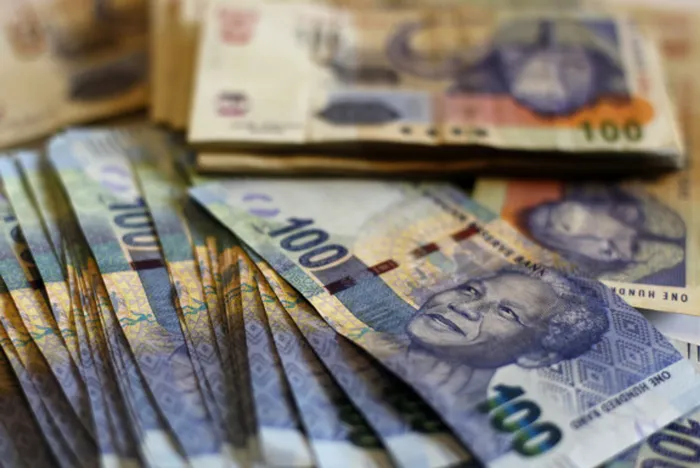
The South African Chamber of Commerce and Industry (SACCI) Business Confidence Index (BCI) released on Thursday indicated that the BCI increased from 121.1 to 132.3.
Image: Independent Newspapers
South Africa’s business sentiment strengthened sharply in November, with the South African Chamber of Commerce and Industry (Sacci) Business Confidence Index (BCI) rising from 121.1 to 132.3, according to data released on Thursday.
The improvement follows last week’s RMB/BER Business Confidence Index, which rose by five points to 44 in the fourth quarter of 2025.
Sacci said November’s BCI was 14.2 index points higher than the same month in 2024 — the largest annual increase since June 2021, when Covid-19 restrictions were lifted.
On a monthly basis, the index gained 2.7 points between September and October and a further 8.5 points in November, marking an 11.2-point surge over two months.
However, the chamber cautioned that the sharp rise did not signal a broad-based improvement in overall business conditions.
“Apart from a notable increase in overseas tourists, the increase can be ascribed to specific BCI sub-indices that were more affected by global economic and financial market assessments than local real economic activity,” Sacci said.
After peaking at 125.8 in February, the BCI dropped to 113.2 in June before recovering steadily from July through September, eventually climbing to 132.3 in November.
For the year to date, the index averaged 120.6, compared with 111.9 over the same period in 2024.
Between October and November, only one of the BCI’s 14 sub-indices, energy supply (electricity costs), weighed negatively on sentiment.
“Seven sub-indices were in support of a positive business climate and six sub-indices had a neutral effect. By far the most positive short-term impact on business sentiment in November came from the substantial increase of overseas tourists. Positive global merchandise trade and easier and stable financial developments also contributed to a steady business climate.”
Year-on-year, merchandise export volumes and the energy supply sub-index were the only major drags on confidence. In contrast, stronger overseas tourism, firmer precious metal prices and improved new vehicle sales made significant positive contributions.
Sacci said that in the short term, the financial environment was broadly supportive, while real economic activity was “positive-leaning”, with only one negative sub-index. Over the medium term, financial indicators were firmly in positive territory, and real activity was “on balance” stronger.
On the broader economy, Sacci noted that South Africa’s real GDP grew 2.1% year-on-year in the third quarter of 2025, driven primarily by a surge in agriculture, forestry and fishing.
“This growth was mainly owing to real output of agriculture, forestry and fishing increasing by 49.9% y/y in the 3rd quarter of 2025. If agriculture, forestry and fishing output is excluded the real GDP recorded 0.7% y/y growth for the first nine months of 2025.”
Output in several key sectors contracted during the period, including construction (-4.1%), electricity and water (-3.2%), manufacturing (-1.5%) and mining (-1.2%). In contrast, wholesale and retail trade, along with hotels and restaurants, saw growth accelerate to 3.7% in the third quarter, up from 1.2% in the first quarter, mirroring the “exceptional increase” in overseas tourist arrivals.
Sacci noted that global trade tensions remain elevated as the United States continues to use tariffs to advance its fair-trade agenda. However, it said recent one-on-one negotiations had restored some predictability.
“Trade diplomacy is becoming part of macro-economic policy and structural adjustments. Fiscal space needs to be re-established and sustained with central bank independence conserved for financial stability.”
BUSINESS REPORT