

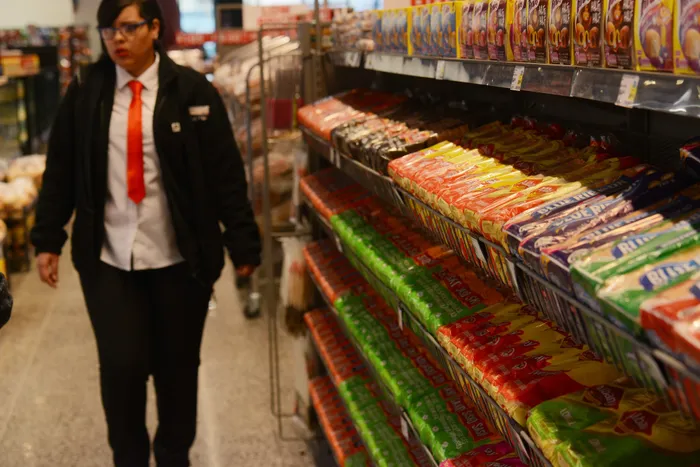
Experts say that there isn't much concern despite Producer Price Index (PPI) increasing to 2.9% in October 2025, compared with 2.3% in September 2025.
Image: Armand Hough/Independent Newspapers
Economists say there is little cause for concern despite South Africa’s Producer Price Index (PPI) rising to 2.9% year-on-year in October 2025, up from 2.3% in September.
Statistics South Africa’s latest data shows that PPI actually declined by 0.1% month-on-month, signalling limited upward pressure on consumer inflation.
Stats SA reported that the biggest positive drivers of annual producer inflation were food, beverages and tobacco products, followed by coke, petroleum, chemical, rubber and plastic products, and furniture and other manufacturing.
Negative contributors to the monthly decline included food, beverages and tobacco, petroleum-related products, and electrical machinery and communications equipment.
Independent economist Ulrich Joubert said the increase came in below market expectations of 3.1%.
“So it's currently less than what was anticipated. That is always good news. In the past, we said that PPI is an indication of what will happen to the Consumer Price Index (CPI)," Joubert said.
"However, nowadays that relationship has diminished to a large extent. Upward movement on the PPI side indicates that it will filter through into the CPI over a period of time."
Joubert added that an increase in food prices can be expected due to the festive season.
“Despite an increase in PPI, I expect prices to hold steady in 2026 and potentially lead to a lower CPI and interest rate cuts next year.”
Professor Waldo Krugell, an economist at North-West University, said that the increase is actually a bit below what economists expected.
“The year-on-year increases were mainly in food products, petroleum products, as well as furniture and other manufacturing. It is important to note that month-on-month, PPI actually declined by 0.1%," Krugell said.
"So there is very little worry that this will fuel consumer price inflation, and there is even less pressure expected on food prices next year. All round, our inflation environment is still quite stable. That is good news.”
Unisa economist Dr Eliphas Ndou said that this slight increase in the producer price predates stickiness in CPI to remain above 3%.
“In addition, the increase in the costs of producing food and beverages, as well as electricity, will be passed on to headline consumer inflation, keeping it slightly above the inflation target point of 3%,” he said.
The Nedbank Group Economic Unit said that PPI continued to increase, rising from 2.3% in September to 2.9% in October.
“The outcome was in line with our expectations but lower than the market’s forecast of 3.1%. The food, beverages and tobacco category made the largest contribution to headline PPI, adding 0.9 percentage points (ppts), followed by ‘coke, petroleum, chemicals, rubber and plastics’ and ‘furniture and other manufacturing products’, which added 0.5 ppts each," Nedbank said.
"All the other categories, except electrical machinery, also contributed to the rise. Electrical machinery bucked the trend, subtracting 0.2 ppts off PPI.”
Investec economist Lara Hodes said the marginal monthly decline reflected subdued fuel price movements in October. On a yearly basis, petroleum-related categories added 0.5% to the headline PPI figure.
Hodes noted that manufactured food inflation continued easing, dropping to 2.1% in October from 2.9% in September. This aligns with global trends: international food commodity prices fell 1.9% in October, while the rand strengthened nearly 1% against the US dollar.
BUSINESS REPORT