

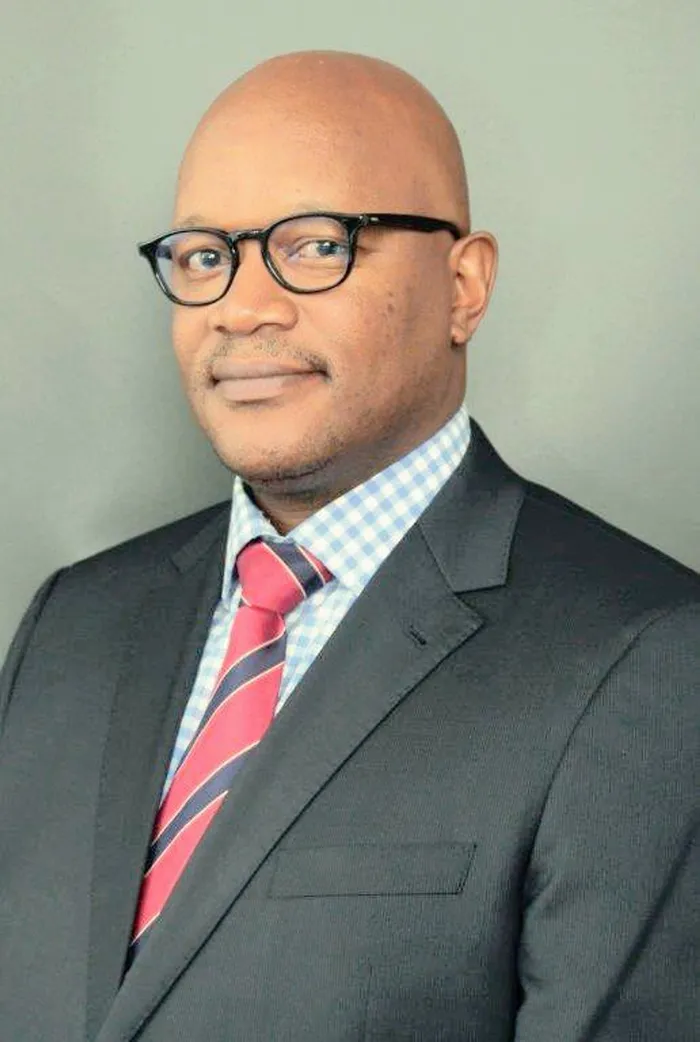
Serame Taukobong, the CEO of Telkom. Picture: Simphiwe Mbokazi
Image: supplied
Telkom’s financial resilience gives it the capacity to absorb shocks while continuing to invest in a global environment that is shaped by geopolitical instability, inflationary uncertainty, and ongoing energy and supply chain risks, the chairman Mvuleni Geoffrey Qhena said.
“The 2026 financial year results speak to this resilience, financial strength, and high-performance culture. Telkom delivered an improved EBITDA (earnings before interest, tax, depreciation, and amortisation), margin of 28.1%, higher free cash flow of R3.1 billion, and robust leverage at 0.5 times net debt to EBITDA gives the group the capacity to absorb shocks while continuing to invest responsibly,” he said in the annual report distributed Friday.
Equally important had been protecting customers and network availability, and the board had overseen sustained investment in energy resilience and network optimisation while encouraging cost discipline, he said.
The group’s data-led strategy and network modernisation were aimed at ensuring the group captures the rapid growth in AI adoption in the market while delivering margin expansion.
“There were no fundamental changes to the strategy; rather, the emphasis sharpened around execution discipline, capital efficiency, and resilience in a more constrained economic and competitive environment,” he said.
In terms of strategy progress, implementation was mixed. “Clear areas of strength are the data-led, core connectivity, and infrastructure pillars of the strategy. However, top-line growth remains below the group’s medium-term ambition, and BCX’s performance has yet to stabilise in a subdued enterprise ICT market,” he said.
“These areas are receiving focused board attention,” he added.
CEO Serame Taukobong said in the report on their medium-term opportunities that customers need modern, data-optimised infrastructure, even where full 5G coverage is still emerging.
“As high-end devices primarily drive 5G demand, we are focusing on corporate and industrial 5G opportunities for now, particularly in mining and indoor coverage. We are prioritising efficient rollout in these high-demand areas, including targeted upgrades to site infrastructure such as power, transmission, and structural capacity,” he said.
At the same time, ongoing LTE capacity expansion was being balanced with 5G investment to ensure the group continues meeting current demand while building for the future.
He said the pre-paid market remains a significant growth area. In the 2026 financial year, mobile data subscribers and data traffic increased strongly, while the pre-paid segment delivered stellar service revenue growth.
A further opportunity lies beyond connectivity. Digital and financial services – including airtime advance, insurance, and adjacent digital platforms – are scaling and deepening customer stickiness.
As fibre penetration expands and mobile and fixed usage converge, the group’s ability to leverage Openserve’s infrastructure alongside mobile distribution also increases. This positions Telkom to capture household and SMME data growth more effectively.
“It means that growth will come from data usage, platform services, and integrated connectivity, not from increasing subscribers alone,” said Taukobong.
Affordability remained a defining feature of the South African market.
“Our focus is on value-based pricing. Instead of engaging in unsustainable price competition, we aim to offer affordable access while protecting margin through efficiency, scale, and differentiated propositions. This balanced approach is central to delivering sustainable growth in a highly regulated and price-sensitive environment,” he said.
“Overall, our objective is a simpler, more focused Telkom – one that consistently converts strategy into earnings, cash flow, resilience, and sustainable shareholder value. As we enter the second year of our medium-term guidance, we are confident that our framework captures our commitment to disciplined execution,” he said.
BUSINESS REPORT