

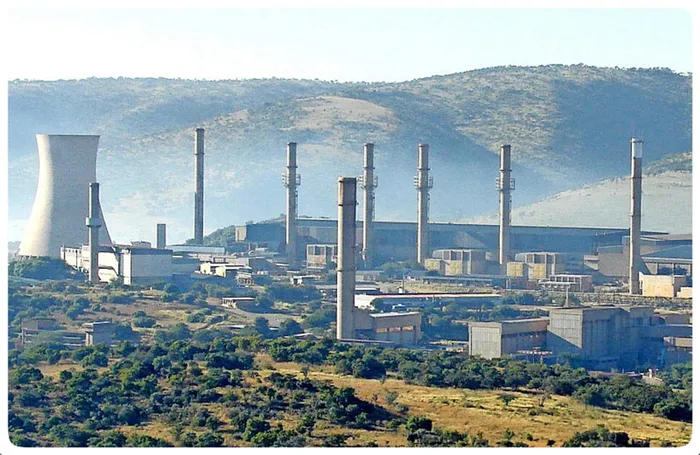
The Pelindaba nuclear research facility outside of Tshwane. The Nasdaq and JSE-listed ASP Isotopes, which recently reached a joint venture agreement with the state-owned Nuclear Energy Corporate of SA to produce high-assay low-enriched uranium, has signed an agreement with Texas A&M Engineering Experiment Station to advance the production of high-purity uranium hexafluoride.
Image: Supplied
ASP Isotopes (ASPI), the Nasdaq and JSE-listed speciality isotope manufacturing and development company, has through a subsidiary signed an agreement with Texas A&M Engineering Experiment Station (TEES) to advance the production of high-purity uranium hexafluoride (UF6).
The research agreement was signed between ASPI company Quantum Leap Energy and TEES to advance and de-risk the commercial production of high-purity uranium hexafluoride (UF6), a critical feedstock in the nuclear fuel enrichment supply chain.
“This agreement reflects the growing momentum across Texas' nuclear industry and highlights the value of collaboration in strengthening the domestic nuclear fuel supply chain,” ASPI said in a notice to the JSE Tuesday.
"This collaboration represents an important step toward building a more resilient and scalable nuclear fuel supply chain," said Dr Ryno Pretorius, CEO of Quantum Leap Energy, in a statement.
"Uranium conversion is a critical link in the nuclear fuel cycle used throughout most of the world, transforming yellowcake into uranium hexafluoride, the feedstock required for uranium enrichment. Today, the US has only one operating commercial conversion facility, making the expansion of domestic capabilities essential to strengthen our nation's energy security and reduce reliance on foreign sources,” he said.
“By working alongside TEES, we are advancing technologies with the aim of improving production efficiency, lowering costs, and supporting the growing demand for nuclear fuel,” said Pretorius.
"Advancing technologies that strengthen the nuclear fuel supply chain requires close collaboration between industry, academia and government," said Dr. Lin Shao, TEES Associate Agency Director and Professor of nuclear engineering.
"As a state agency and part of The Texas A&M University System, our mission is to improve lives through applied research, workforce development and technology transition. This agreement pairs our research capabilities with QLE's commercial efforts towards uranium conversion, generating the data and insights needed to support safer, more efficient, and more scalable nuclear fuel production," he said.
Bringing together QLE's fuel cycle knowledge and TEES' research capabilities, the agreement focuses on collecting fundamental physicochemical data on the reactions involved in producing UF6 from yellowcake uranium (U3O8), a process known as uranium conversion.
“We expect the resulting insights will strengthen the engineering basis for QLE's conversion technology commercialization efforts, contribute to a more resilient US nuclear fuel supply chain, and support the development of a more robust nuclear ecosystem in Texas,” said Pretorius.
TEES is the official research agency for Texas A&M Engineering and does interdisciplinary research across The Texas A&M University System.
Quantum Leap Energy is a development stage nuclear fuels company dedicated to advancing technologies and processes across critical segments of the nuclear fuel cycle. The company focuses on uranium conversion, enrichment of uranium-235 for nuclear fuel production (HALEU) and isotopic separation of lithium-6 and lithium-7, as well as radioactive waste treatment technologies.
The company aims to address perceived gaps in the nuclear fuel supply chain for advanced nuclear reactors, small modular reactors, and fusion systems, sad Pretorius,
The company has established partnerships or commercial initiatives and relationships with industry leaders including TerraPower, Fermi America, and the South Africa Nuclear Energy Corporation, to accelerate the commercialization of isotopes essential for next-generation nuclear energy systems.
BUSINESS REPORT