

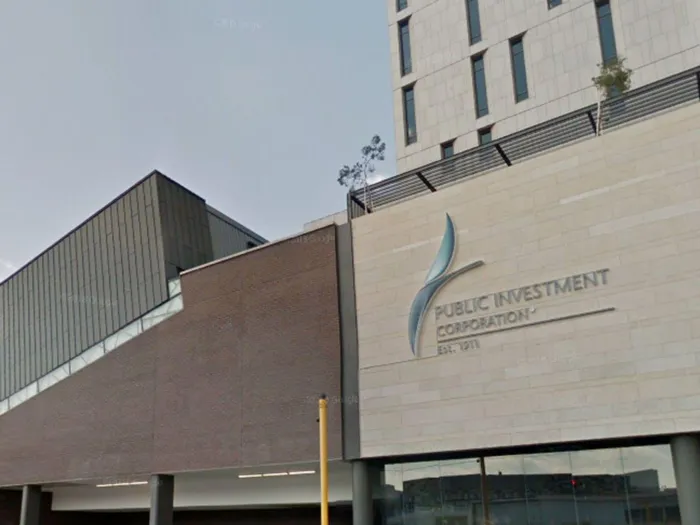
The Democratic Alliance has called for urgent parliamentary hearings after the Public Investment Corporation suspended its chief executive and acting chief investment officer amid a growing governance crisis.
Image: IOL / File
Trade unions, business organizations and political parties are increasingly concern about mounting allegations of governance failures at the state-owned Public Investment Corporation (PIC), following its suspension of its CEO on Monday night.
Trade unions gave mxied reactions to the announcement that PIC Chief Executive Patrick Dlamini had been put on "precautionary suspension".
Claude Naiker from the Public Servants Associations (PSA) said: “This development is a significant step towards restoring accountability and confidence in the management of public servants’ pension funds.”
Naiker added that the PSA has consistently raised serious concerns about the continued losses incurred through the PIC’s high-risk private equity investments, for a number of years.
“Billions of rand belonging to members of the Government Employees Pension Fund (GEPF) have been exposed to investments that have failed to deliver the expected returns, placing unnecessary risk on the retirement savings of more than 1,2 million public servants.”
Naiker said the action taken by the PIC board demonstrates that the persistent concerns raised by stakeholders can no longer be ignored.
“Accountability and consequence management are fundamental principles of sound governance and are essential in restoring public trust in the institution. The PSA reiterates its previous call on the Minister of Finance to urgently review the investment mandate governing the PIC. While developmental investments remain important, they should never compromise the primary fiduciary responsibility of safeguarding members’ pension assets,” said Naiker.
He said investment decisions must be guided by prudent risk management, transparency, sustainability, and the objective of achieving optimal long-term returns.
Professor Simphiwe Madikizela, economist at the University of South Africa (Unisa), said that the misuse of funds is concerning, given the role and mandate of PIC, as well as the amount of resources that they are entrusted with.
“My view is that any matter that is brought up needs to be looked into seriously and investigated properly with credible evidence that is admissible in how it was acquired; otherwise, it has potential impact on the brand and reputation of any institution, including Lanseria International Airport; in this case, they will not be an exception.”
Matthew Parks, Parliamentary Coordinator Congress of South African Trade Unions (COSATU), said that they could never welcome allegations of corruption; but they appreciate the PIC acting to address matters of great concern to millions of workers and pensioners.
“We would not want a return to the dark days of state capture, where such serious matters would have been swept under the carpet,” said Parks.
Parks said the Federation was deeply concerned by serious allegations of misconduct, possibly criminal, surrounding some investment(s) at the PIC.
“We view the allegations and counter allegations in a very serious light. It is critical that the PIC Board be provided the necessary space to investigate these allegations and where any persons are found wanting, to hold the accused accountable to the full might of the law.”
Parks said that for far too long the PIC was treated like a private piggy bank by many dodgy elements in the state, political, and business circles, at the expense of the ordinary workers and pensioners to whom these monies belong.
“We have been encouraged by the positive strides that have been made over the past few years at the PIC to clean up the rot and introduce a sense of transparency and accountability,” he said.
Parks said many of the Judge Lex Mpati Commission’s recommendations have been actioned. “Some, including the recent amendments to the PIC Act, need further work to ensure their full implementation. Nonetheless, there has been substantial progress from the days when a former CEO of the PIC had a blank cheque to sign unlisted and listed investments of up to R3 billion and R10bn respectively, without seeking board approval.”
The Democratic Alliance (DA) has called for urgent parliamentary intervention, warning that South Africans' pension savings could be placed at risk if governance concerns are not addressed.
DA spokesperson on finance Dr Mark Burke said Parliament had failed to exercise adequate oversight of one of the country's most important financial institutions.
"The public has every right to be concerned. The ANC's David Masondo, PIC Chairperson and Deputy Finance Minister, faces his own whistleblower allegations and a tenure marked by failed investments. Then there's the five suspended executives in the last two years," Burke said.
He criticised Parliament's Standing Committee on Finance for what he described as a lack of meaningful oversight.
"In moments of crisis, it is Parliament's constitutional duty to call officials to account. To help the nation know what's happening. It has thus far failed dismally."
Burke said the committee had not required the PIC to explain the growing conflict within its leadership and had not held an in-person hearing with the institution over the past year.
"Parliament's Finance Committee has not only neglected to demand the PIC explain its boardroom fighting, it hasn't held a single in-person hearing with the PIC in the past year."
He also questioned Parliament's recent recommendation supporting greater investment flexibility for the PIC.
"Bizarrely, two months ago, ANC finance MPs unanimously fought for the PIC to be allowed to spend more money on unlisted investments and for this recommendation to be included in an official report."
Burke argued that the governance issues now facing the institution demand immediate action.
"There is no longer only smoke at the PIC; the fire is blazing. The casualties are mounting. Parliament urgently needs to call in-person, in-camera hearings over multiple days to hear what the board and executives tasked with investing public pension money are doing."
Meanwhile, Parmi Natesan, CEO of the Institute of Directors South Africa (IoDSA), said a precautionary suspension should not be viewed as a finding of guilt, but it does raise important governance considerations.
"For an institution entrusted with managing significant public funds, the board should ensure continuity of leadership, effective delegation of authority, robust risk management, and clear accountability. Equally important is maintaining stakeholder confidence by demonstrating that governance processes are being followed objectively, fairly, and without undue delay," Natesan said.
Natesan added that the board should ensure that the investigation is conducted independently, in accordance with due process and the principles of procedural fairness.
"It should oversee, but not interfere in, the investigation, ensure appropriate interim leadership arrangements are in place, and communicate with stakeholders in a manner that is transparent while respecting legal and confidentiality obligations," Natesan said.
Visit:www.businessreport.co.za