

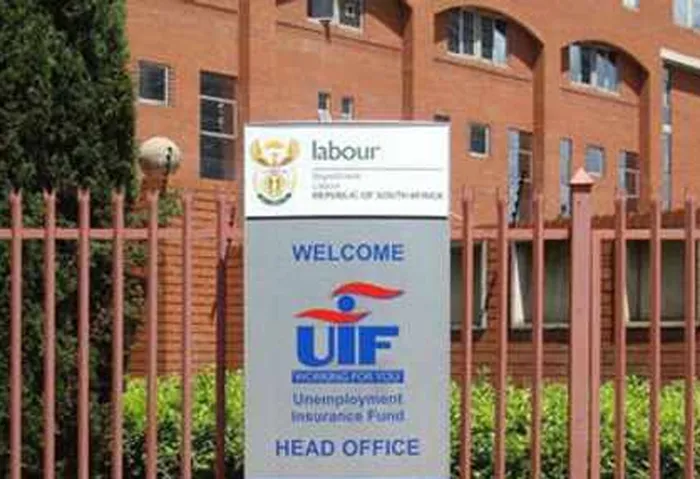
Business Unity South Africa have joined a chorus of concerns among trade unions in South Africa about the dysfunction and alleged governenace failures at the Unemployment Insurance Fund.
Image: Supplied
Business Unity South Africa (Busa) has joined key trade unions in calling for the Unemployment Insurance Fund (UIF) and Compensation for Occupational Injuries and Diseases Fund to be placed under administration or new management, citing rampant corruption and dysfunction.
Business Unity CEO Khulekani Mathe said the organisation has withdrawn from the UIF structures at Nedlac following six years of “sustained effort” to try to help reform the problems at the UIF, and he wants the fund to “urgently” be placed under administration to stabilise operations, clear claims backlogs, and address governance failures.
He also stated that a forensic investigation was needed at the UIF to assess the “legality and appropriateness” of all fund expenditures. “The current situation is unsustainable,” he said. Business Report questions to the Department of Employment and Labout were not answered at the time of going to press.
The latest concerns follow a call one month ago by four trade union bodies—Cosatu, the Federation of Unions of South Africa, the South African Federation of Trade Unions, and the National Council of Trade Unions—for President Ramaphosa to deploy the Hawks and Special Investigating Unit to the UIF to probe allegations of “systemic and serious corruption” at the UIF and the Compensation Fund.
Last month, the Groupdup publication also reported that thousands of unemployed South Africans had unknowingly submitted UIF claims through an outdated online system that accepts their applications but does not process them. The Department of Employment and Labour stated at the time that a new portal would be up and running by November.
Meanwhile, in April, a Supreme Court of Appeal ruling in the case of Van der Vyver Transport vs Minister of Labour and others, highlighted a state of dysfunction at the Compensation Fund and ruled that it required "an urgent, independent investigation."
In addition, by 2025, the Compensation Fund has received disclaimer audits from the Auditor-General for no less than 12 consecutive years.
Mathe said the UIF remained characterised by “persistent operational failures, governance weaknesses, delays, unresponsiveness, and a drift away from its core mandate.”
“It is unacceptable that contributors are left without support while funds are redirected, delayed, or absorbed into programmes that do not directly address the statutory entitlements,” said Mathe.
He expressed concern regarding the continuous expansion of the Labour Activation Programmes in ways that appear to overlap with the mandate of the Department of Higher Education and Training and the Sector Education and Training Authorities.
“Equally troubling are efforts to redirect UIF resources towards government-to-government programmes that primarily benefit non-contributors, while contributors themselves face delays, exclusion, and administrative barriers,” said Mathe.
He noted that Busa had also decided to remove its representatives from the UIF board to "safeguard the reputation of our representatives, uphold sound governance principles, and send an unequivocal message that the current situation is unsustainable.”
As an example of the operational dysfunction of the UIF, he mentioned that the UIF’s rigid requirement for distressed employers to rectify up to 20 years of compliance data is impractical and “demonstrates a lack of responsiveness to stakeholders.”
“There is a growing impression that proper governance systems have been deliberately undermined. UIF board meetings have frequently been scheduled at short notice, making it difficult for members to adequately prepare or adjust their commitments. The disruptions have contributed to repeated failures to achieve quorum—not due to a lack of willingness to participate, but because of impractical and ad hoc arrangements,” he said.
Visit:www.businessrepport.co.za