

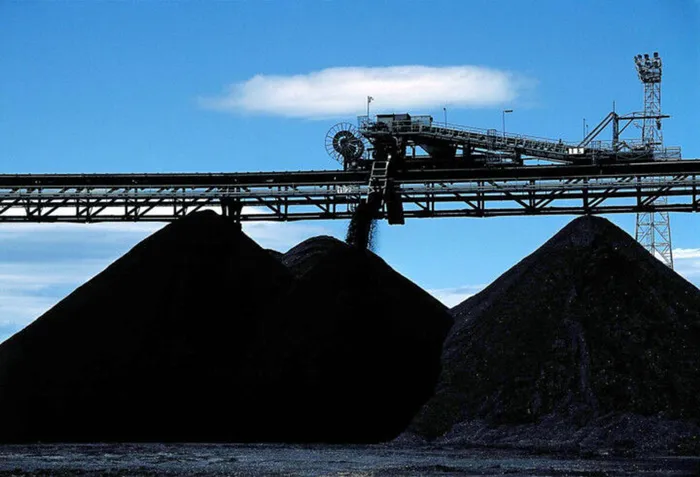
Thungela Resources said it has operated a fatality-free business for 39 consecutive months to the end of June 30, 2026 and it remains steadfast in keeping safety the priority at its coal mining operations.
Image: Supplied
Tungela Resources will export about 6,3 million tons of coal in the six months to June 30, some 100,000 tons below what it exported in the same period a year ago, amid firmer coal prices.
CFO Deon Smith said in the coal mining group's pre-close update Tuesday that about 2 Mt is expected to export from Ensham Coal Mine in Australia, which is up on the 1,6 Mt exported at the same time last year.
Production in South Africa benefitted from improvements at Khwezela mine and a strong performance at Mafube mine. Zibulo experienced an increase in conveyor belt and support services challenges in the mining footprint that will be retired once all production is shifted to Zibulo North Shaft.
However, “we believe these challenges are transient... (we) remain confident in achieving the full-year export saleable production guidance for the group,” said Smith. The export saleable production guidance of 13 Mt to 13,6 Mt for the full year was unchanged.
Export sales for South Africa, including third-party sales of about 0,7 Mt, were expected to be about 7,5 Mt, compared to 6,6 Mt for the first half of 2025.
The group said higher export sales were enabled by improved Transnet Freight Rail performance, as well as the utilisation of rail from coal export producers who did not have sufficient coal available to fully utilise their rail allocation.
The Richards Bay Benchmark coal price had strengthened in 2026, with an average of $104,25 per ton for the year to date, compared to $89,53 per ton for the full 2025 year and $91,78 in the first half of 2025.
The protracted Middle East conflict had resulted in renewed buying from India, and this had also been supportive of the Richards Bay benchmark thermal coal prices in recent weeks.
The average realised export price through the Richards Bay Coal Terminal was $87,60 per ton, compared to $74,67 per ton for 2025 and $78,13 in the first half of 2025.
The discount was mainly driven by a lower quality sales mix, as a higher proportion of lower quality coal was railed from stockpiles.
Foreign exchange rate volatility had a material impact on financial performance. The US dollar had remained weak, largely driven by cyclical shifts in federal reserve monetary policies. The South African rand was stronger relative to the US dollar, trading at an average rate of R16,40 per dollar for the year to date, compared to R18,39 in the first half of 2025.
The group realised an export price of R1,437 per ton year to date, compared to R1,336 per ton for the full 2025 year. Energy markets remained volatile as prices continued to respond to shifting sentiment around the protracted Middle Eastern conflict and the disruptions to shipping through the Strait of Hormuz.
In recent weeks, the Brent crude oil and gas prices traded in wide ranges, which prompted brief selloffs based on reports of renewed US-Iran engagements, while also reaching multi-year highs on concerns that tensions could persist longer than anticipated.
“While the Strait is presently open and shipments have resumed, markets remain sensitive to any potential disruption given its strategic importance,” said Smith.
Thermal coal markets initially strengthened on higher oil and European gas prices, before retracting later as energy prices softened. The Newcastle benchmark thermal coal price had tracked higher energy market prices and remained firm.
However, the Richards Bay benchmark thermal coal price did not accelerate at the same rate as the Newcastle price, mainly due to the slowdown seen in Indian buying activity.
Physical coal demand remained subdued, with end-users in India showing greater preference for cheaper, lower quality material, while other Asian importers favoured cheaper Russian and Colombian supply over South African and Australian higher quality cargoes
Capital expenditure for the South African operations was expected to be about R600 million. This consisted of R500 million relating to sustaining capital and expansionary capital of R100m.
visit:www.businessreport.co.za