

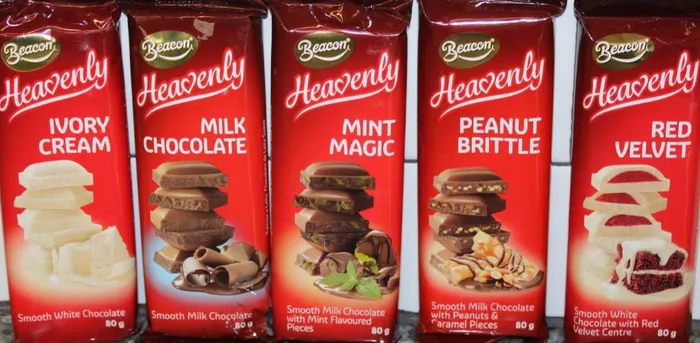
Tiger Brands has announced the sale of its iconic Beacon brand, known for its beloved chocolates and sweets, while retaining popular products like TV Bar and Jelly Tots. What does this mean for the future of Tiger Brands and the chocolate industry?
Image: YouTube
Tiger Brands said during its half year results announcement on Monday that it had entered into an agreement of sale to sell the iconic chocolate and sweet manufacturing brand, Beacon.
Tiger Brands had owned Beacon since 1999.
The company said while it will be selling Beacon, it will retain many of their well known chocolates.
Tiger Brands said that popular items such as TV Bar, Nosh, Wonder Bar, Black Cat chocolate, Jelly Tots chocolate and the Jungle energy bar will remain under the Tiger Brands umbrella.
The Beacon brand, well known in the country for their easter eggs, chocolates and sweets, was founded in 1931 by Lithuanian Hymie Zulman.
Zulman had bought Durban Confectionery and Spice Works at the time.
Tiger Brands new CEO Tjaart Kurger said that the company lacks a competitive advantage that could be leveraged in the chocolate industry.
The sale will include manufacturing equipment that is used to make easter eggs, chocolate bars and other assortments.
The company said that disciplined operational execution and a sustained focus on affordability underpinned a robust performance by Tiger Brands for the six months ended 31 March 2026 in which the company delivered strong volume growth and a meaningful improvement in operating income.
"This performance was achieved despite ongoing macroeconomic volatility, continued pressure on consumer spending, and a competitive environment," Tiger Brands stated.
“The South African consumer bears the heaviest burden during challenging economic times and as Tiger Brands we remain committed to driving affordability and relevance in everything we do. The growth achieved in the first half along with continued momentum in delivering the business turnaround is the result of diligent execution of our strategic and operational levers.,” Tjaart Kruger, CEO Tiger Brands said on Monday.
All Business Units improved operating income, with Grains and Culinary delivering a standout 91.7% and 26,9% increase respectively.
The food group giant said that in addition, Tiger Brands continued to make progress in delivering on commitments to reduce environmental impact, address food security in vulnerable communities and with its digital transformation strategy implementation.
"Tiger Brands recently signed a landmark electricity wheeling agreement with renewable energy supplier Apollo Africa to help reduce its scope 1 and 2 greenhouse gas (GHG) emissions, beginning with its manufacturing sites in Gauteng. Set to commence in 2028, the agreement marks a significant step in the company’s transition to cleaner energy sources. Tiger Brands’ sites to be supplied via Ekurhuleni Municipality will receive approximately 60% of their electrical supply from wheeling by 2028," the company stated.
“While we expect the macroeconomic environment to become more challenging in the second half, Tiger Brands remains confident in our ability to deliver in line with guidance. We are proactively managing geopolitical and trade‑related pressures through disciplined cost initiatives and targeted pricing actions, ensuring the resilience of our performance in H2 2026,” Kruger added.
Follow Business Report on Facebook, X and on LinkedIn for the latest Business and tech news.