

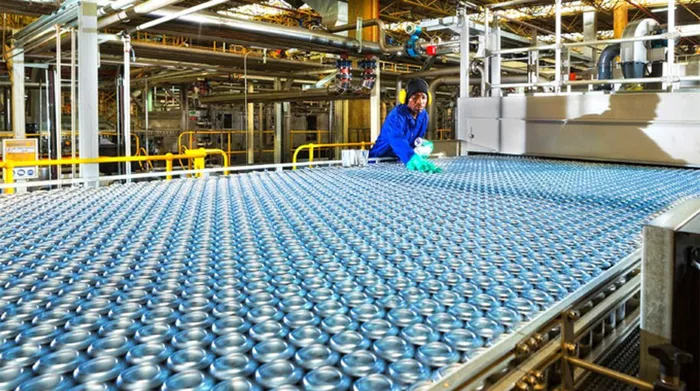
Nampak is currently engaged in talks with parties about the disposal of its Nampak Zimbabwe business.
Image: Supplied
Nampak has continued to improve operational profitability, cash generation, and debt reduction despite low economic growth and muted demand.
South Africa’s biggest packaging group is fresh out of a financial turnaround that started in early 2023, and by late last year the group had converted multibillion losses into operational profits, halved its debt, and disposed of non-core assets.
The turnaround is aptly indicated by the share price, which gained 1.25% to R484,00 on the JSE on Friday, while three years ago, it was trading at only 68 cents.
In the six months to March 31, its Beverage South Africa segment performance continued to improve, and there was a “stellar contribution” from Beverage Angola.
However, the Diversified segment contracted sharply due to fish and deciduous fruit supply issues, structural business losses, and disruptions from customer pack changes and related inventory management that are not expected to be repeated.
Normalised headline earnings of continuing operations increased by 9% to R346 million, with normalised headline earnings per share rising by 8% to 4,131,6 cents. Cash of R493m was generated from operations, after R338m was used to fund working capital. Net cash generated from operating activities increased to R256m from R82m.
Debt reduced by 30% to R2.2 billion from R3.1bn at the end of the first half of 2025, with net gearing decreasing to 69% from 149%.
“The performance was despite headwinds in Diversified, and the sustained progress was underpinned by the strategic clarity, revenue growth, management discipline, and cost efficiency focus that has been instilled in the business during the past three years,” said CEO Riaan Heyl in a statement.
Beverage SA’s stable results saw the benefits of customer retention offset by the loss of can-end exports, following the sale of Nampak's interest in Bevcan Nigeria, lower exports to Zambia and Argentina, as well as raw material quality and supply disruptions.
The relocation of the can manufacturing line from Angola to Beverage SA is progressing as planned and within budget. The line will increase capacity and flexibility across pack formats, said Heyl.
Beverage Angola benefited from a better economic environment, stable currency, and increased consumer demand. This was aided by regional filling capacity expansion and export opportunities. Efficiencies and cost discipline continue to enable increased substrate competitiveness.
A review of Diversified was concluded, with ensuing actions were being implemented. The Diversified segment remains integral to the overall Nampak portfolio strategy, said Heyl.
Normalised EBITDA (earnings before interest, tax, depreciation, and amortisation) fell by 6% to R816m, primarily driven by a reduction in Diversified of R103m. This was partially offset by a 9% increase in Beverage’s normalised EBITDA, due to increases of 28% in Beverage Angola to R187m and a 4% increase in Beverage South Africa to R533m.
Net finance costs fell by 33% to R189m, primarily due to the proceeds from disposals in the latter part of the first half of 2025 being applied to reduce net debt, lower comparative net working capital levels, and lower interest rates linked to negotiated financing package ratchets.
Post-tax items affecting HEPS but excluded from normalised HEPS include a R47m pension and an R82m interim settlement of an outstanding Covid-19 insurance claim received in the prior period, as well as Angolan production can-line relocation costs of R68m.
The loss from discontinued operations came to R114m, primarily due to a R136m impairment in Nampak Zimbabwe. This compared to a R2.5bn profit in the first half of 2025 that included a recycling of a foreign currency translation reserve of R2.4bn from the Bevcan Nigeria disposal.
Total operations’ headline earnings of R293m and headline earnings per share of 3,491,6 cents decreased by 47% and 48%, respectively. The disposal of Nampak’s 51.43% interest in Nampak Zimbabwe is progressing with interested parties, said Heyl.
Looking forward, he said the beverage category is expected to remain relatively resilient, with capacity expansion and pack format flexibility supporting Beverage South Africa’s competitiveness. Beverage Angola is expected to remain a growth driver, while the Diversified reset is expected to support a sustainable double-digit EBITDA margin business once completed.
BUSINESS REPORT