

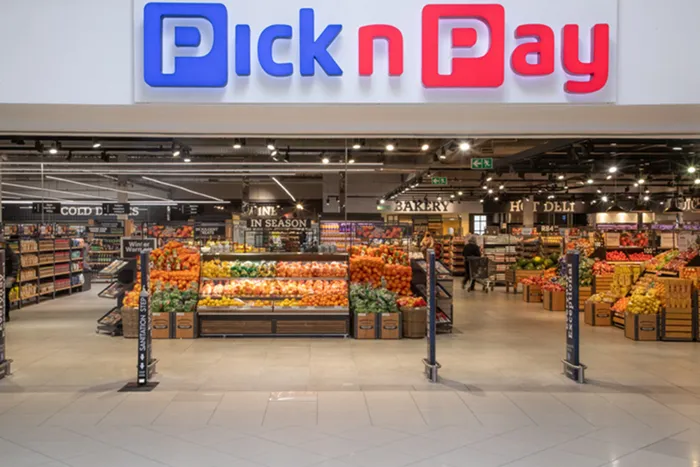
Pick n Pay CEO Sean Summers says he would rather their financial turnaround take longer to be more deeply rooted within the group, than work too fast and have to come back and restructure the group again two years later.
Image: Supplied
Pick n Pay has said its financial turnaround will be a multi-year process, but by even those standards, what its management had hoped might be a three-year process might now turn out to be longer, in spite of the steady progress made, CEO Sean Summers admitted on Monday.
The group, South Africa’s second biggest grocery store chain, launched a recovery plan late 2023 to restore profitability, simplify operations, and revive the core supermarket business. Its financial results for the 52 weeks to March 1 saw the operating loss reduce by 5.4% to R386 million.
“While Pick n Pay’s trading loss increased, the business is fundamentally stronger than two-and-a-half years ago as a result of the action we have taken and the investments we made,” Summers said.
“We now have the balance sheet strength to support our return to profitability, but achieving break-even in Pick n Pay requires the successful execution of all six strategic initiatives, including the recalibration of our employment costs.”
The group announced a Section 189A labour consultation process with its store employees at the beginning of this month, this after back-office staff were significantly restructured, and their salaries frozen over the past two years, with many jobs lost, said Summers.
He cited as an example of the changes they were seeking at their stores the fact that their employees receive double pay for working on a Sunday, while for the rest of the industry, employees receive 50% more. The Section 189A process had already followed 2.5 years of talks with labour representatives, he said.
Summers said in an interview, however, there has been underlying operational improvements across the core Pick n Pay supermarket business in the past year, and there had been another year of strong growth from the group’s discount grocery business Boxer.
Pick n Pay’s turnaround strategy had centred around six priorities, three of which had been largely completed – the recapitalisation of the business, the re-establishment of leadership structures, and the reset of the store estate.
Summers said the remaining priorities centred around restoring competitiveness, including the labour consultation process, and he did not anticipate they would need to go to the market for additional capital through the turnaround. Last week, the group raised R4.7 billion after it sold an 11.5% stake in subsidiary Boxer, leaving Pick n Pay with 54% of Boxer.
Pick n Pay turnover increased 3.4% in the 52 weeks, with 12.3% growth from Boxer and a 1.6% decline from Pick n Pay, as a result of store closures under the store reset. Summers said there were some 90 fewer stores in the turnover figures for the year under review, comprising those converted to Boxer, some sold to franchisees, and some closed.
Pick n Pay SA’s internal selling price inflation was at 1,9%, well below CPI food inflation of 4.4%, with deflation in Boxer at -1.2%. Company-owned Pick n Pay supermarkets recorded like-for-like sales growth of 3.9%.
The online business recorded a strong year, with turnover increasing by 32.7%. Gross profit margin expanded 0.5% to 18.8%, with improvement in both Pick n Pay and Boxer.
Group trading profit declined 4.2% to R1.7bn, due to the combined result of a R330m increase in Boxer trading profit and a R404m increase in the Pick n Pay trading loss to R1bn, as the repositioning of the supermarket business continued.
Summers said the turnaround strategy was on track, supported by improving topline growth, renewed operational disciplines, and careful cash management.
On their efforts to restructure labour costs, he said: “This process is not about reducing our workforce, but about ensuring the long-term viability of our business and protecting employment into the future.The process is being facilitated by the CCMA. I am confident we will make our way through this with our labour partners,” he said.
Summers said Pick n Pay had delivered improvements in store standards, product availability, and product range, particularly across Fresh categories. Progress had also been made across several priorities, including shortage reduction, support office efficiencies, and supply chain optimisation, supported by an improved logistics contract and enhanced marketing initiatives.
Casparus Treurnicht, Gryphon Asset Management research analyst and portfolio manager, said he had hoped to see greater improvement in trading margins in Pick n Pay’s core supermarkets portfolio and better visible signs of improvement in Pick n Pay’s stores at this stage of their financial turnaround.
He said Shoprite was announcing market share gains every year, and this was coming at the expense of Pick n Pay and Spar.
BUSINESS REPORT