

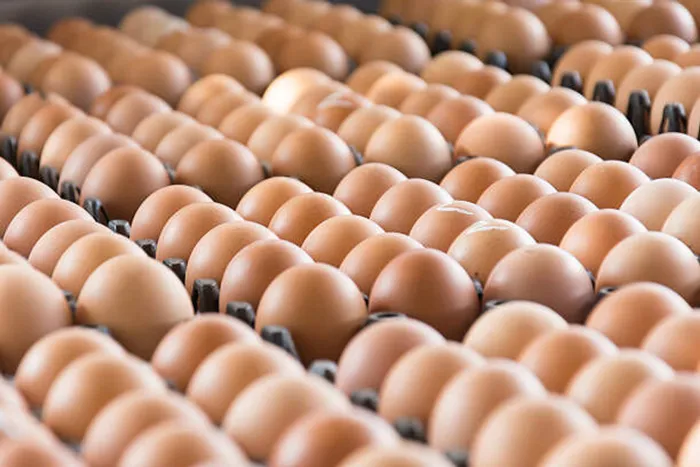
Eggs from chicken farm in packaging that preserves it for sale. Quantum Foods said its trading environment improved in the six months to March 31, 2026, but the environment may be more challenging in the second half due the impact of the Middle East crisis on fuel prices and local consumer demand.
Image: Supplied
Quantum Foods Holdings, the integrated poultry group, has warned of a significantly more challenging second half due to the conflict in the Middle East and its adverse impact on global supply chains.
The impact would primarily be due to the result of higher fuel costs, not only on the company’s cost structure but also on the disposable income of consumers, Quantum's directors said Friday at the release of financial results for the six months to March 31.
The group reported a 16% increase in headline earnings per share to 86,5 cents per share in the first half, and an interim dividend of 22 cents per share was declared, well up from zero the same time last year.
Revenue fell 5% to R3,43 billion. But operating profit increased by 13% to R232 million. Earnings per share increased 21% to 90,4 cents. Head office costs increased from R15m to R19m, primarily due to increased costs related to the valuation adjustment of the now settled share appreciation rights scheme, which was impacted by share price movements.
Directors said trading conditions were generally more favourable through the interim period compared with the six months to March 31, 2025. The group benefited from higher demand for poultry products, lower feed input costs, low levels of electricity disruption in South Africa, and continued recovery after the impacts of highly pathogenic avian influenza (HPAI) in prior years.
Demand for poultry products was also supported by the foot-and-mouth disease outbreak in South Africa that resulted in reduced red meat supply.
Directors said feed input costs, excluding the immediate impact of higher fuel costs and medium-term impact of increased fertiliser costs, were expected to remain relatively low in the short term, supported by sufficient grain availability and stable international commodity prices.
Egg selling prices in South Africa were expected to remain under pressure, as the national flock levels remained elevated.
They said the risk of HPAI outbreaks remains high, locally and internationally, and continues to represent a significant operational risk to the poultry industry.
Discussions between the industry and the South African government had not yet resulted in commercially feasible HPAI vaccination administration protocols for producers.
The group continued to mitigate this risk through geographic diversification, biosecurity protocols, and disciplined placement strategies.
Performance in Zambia was expected to remain stable. Improved feed input costs resulting from an expected large grain crop harvest, and lower load shedding following higher hydro-electrical output, were expected to mitigate the impact of the decrease in egg selling prices that started towards the end of the interim period.
Repeating the strong interim performance in Uganda in the second half of the year was expected to be challenging, with the expectation of higher feed input costs and disruption to planned hatching egg import logistics related to the ongoing conflict in the Middle East.
The environment in Mozambique was expected to remain challenging, with egg selling prices continuing to be under pressure due to high layer flock numbers in South Africa.
In the interim period, feed input costs fell materially. The average SAFEX yellow maize price decreased 30.6%. The landed cost of soybean meal fell by 14.1%, mainly as a result of an 8% strengthening of the rand against the US dollar.
Quantum’s share was unchanged at R10.50 on Friday afternoon, after having increased from R8.41 over a year.