

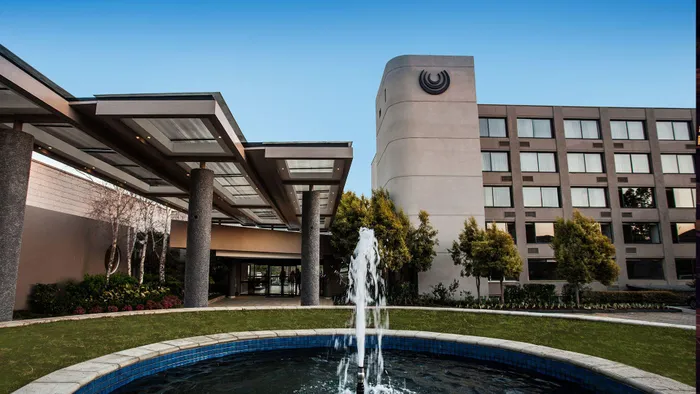
Riverside Sun is a country hotel destination on the ourskits of Johannesburg. Southenr Sun said demand was bolstered by meetings, conventions, incentives, and events, as well as corporate and leisure foreign inbound travel, particularly in Gauteng and the Western Cape.
Image: Supplied
Southern Sun’s positive trading momentum at its offshore hotels over 12 months has been interrupted by the ongoing conflict in the Middle East, and increased fuel costs are a concern for the group’s local operations.
This was stated by the hotels and resorts group’s management on Wednesday at the release of financial results for the year ending March 31, where the dividend was raised by a strong 20% to 30 cents a share.
Management noted that a significant portion of airlift into the Seychelles, where the group operates Paradise Sun, originates from the Middle East, and this has materially decreased since the conflict began on February 28, 2026.
In Mozambique, fuel and US dollar shortages have stifled demand. However, in South Africa, the group has not yet experienced a material adverse impact on its operations, management said.
For the year ending March 31, offshore room revenue decreased by 8% to R233 million. A marginal improvement in trading levels in Mozambique, along with the successful relaunch of Paradise Sun, drove offshore performance in the second half of the year.
Income for the group increased by 9% to R7.2 billion, with occupancy up 2.1% to 62.9%. Adjusted headline earnings per share rose by 19% to 90,1 cents.
A broad-based improvement was observed across all regions throughout the year, supported by major international conferences and events, including the G20 in Gauteng and improved transient demand in South Africa.
Southern Sun’s management said they remain well-positioned to withstand a potential downturn.
“A strong balance sheet supports the funding of development initiatives through existing facilities and operational cash flows. This financial flexibility preserves optionality for shareholder returns, including opportunistic share buybacks or special dividends, while maintaining resilience through the cycle,” they said.
South African hotels achieved an occupancy rate of 64.3% through the year, up from 61.9% a year before, and a 5% increase in average room rates (ARR) to R1,505 (R1,429), lifting room revenue to R4.6bn (R4.2bn).
Demand was bolstered by meetings, conventions, incentives, and events, as well as corporate and leisure foreign inbound travel, particularly in Gauteng and the Western Cape.
Government and corporate conferencing demand increased in KwaZulu-Natal, contributing to the group’s largest income growth outside the Sandton Consortium properties, which benefited from the reopening of the Sandton Towers and the G20 conference. This performance was largely due to the local government’s focus on safety and security, along with active destination marketing that positions the region as an attractive year-round destination.
Food and beverage income rose by 9% to R1.7bn (R1.6bn). Property rental income grew by 8% to R294m, while other income increased by 14% to R377m, reflecting improved trading across ancillary services.
Offshore occupancy was 39.5% (40.5%), including Paradise Sun at 0% for the closed period. Average room rates remained under pressure due to the strengthening of the Rand.
South African earnings before interest, tax, depreciation, amortisation, and rent (Ebitdar) increased by 13% to R2,4bn (R2,1bn). In contrast, offshore operations’ Ebitdar fell to R46m from R5m. Group Ebitdar increased by 12% to R2,4bn.
The group’s Sandton Consortium, which includes Sandton Sun and Towers, Garden Court Sandton City, and management fees from the Sandton Convention Centre, saw income increase by 21% to R801m, while Ebitdar grew to R276m from R211m, driven by strong conferencing demand, including the G20 and B20 conferences, and the reopening of Sandton Towers following its refurbishment.
Western Cape income rose 7% to R2.5bn, while Ebitdar increased by 9% to R1.1bn, contributing 47% to group Ebitdar. Cape Town hotels benefited from strong foreign inbound travel and large-scale events, including the G20 and international conferences hosted at the Cape Town International Convention Centre.
KwaZulu-Natal income increased by 13% to R1.1bn, while Ebitdar rose by 15% to R284m from R247m, attributed to stronger corporate and government conferencing, with robust domestic travel.
In Mozambique, both Maputo hotels delivered a solid fourth quarter, underpinned by improved occupancies, particularly at Southern Sun Maputo. Demand benefited from SANDF and Portuguese military deployments supporting flood relief efforts in northern Mozambique.
Southern Sun’s share price rose by 3.05% to R10,49 on the JSE, a price that has increased from R8,92 a year ago.
BUSINESS REPORT