

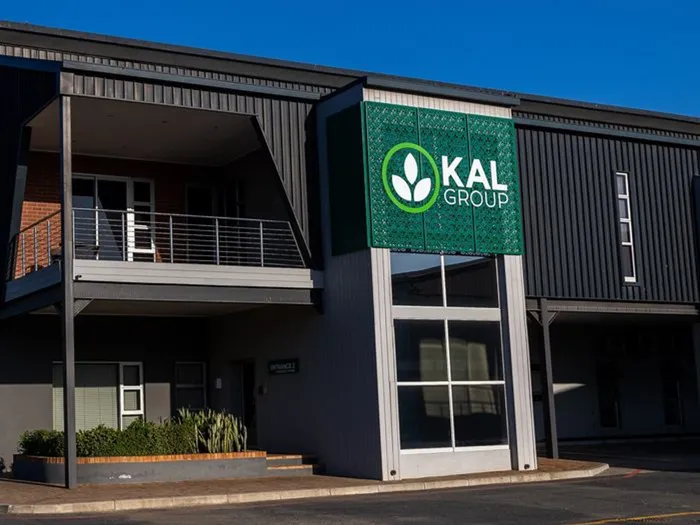
The KAL Group is an agriculture and lifestyle company specializing in the trade and retail of agriculture, fuel and related markets in southern Africa. Recognizing that farmers and consumers are operating under challenging conditions through the fuel price increases from the end of March, the group supported its customers with practical interventions, including extended credit support to qualifying customers.
Image: Supplied
KAL Group, the JSE-listed South African agri, fuel and convenience speciality retailer, lifted its interim dividend 25% to 70 cents per share for the six months to March 31, while it also significantly reduced debt.
Net interest-bearing debt fell by R453.8 million. Over the past 12 months, R239.8m in term debt was settled, contributing to a decrease in the group’s debt-to-equity ratio to 32.9%, compared to 48,4% in the prior year.
Revenue increased by 5% to R11.36 billion, while gross profit grew by 8.8% to R1.81bn. Headline earnings per share (HEPS) increased by 12.5% and recurring HEPS grew by 15.1%.
“We are encouraged by this set of results, particularly against the backdrop of ongoing uncertainty and challenging conditions,” said the CEO Johann le Roux in a statement.
He said a resilient operating model, combined with disciplined execution, contributed to steady growth and improved profitability.
“Our debtors’ book remains robust, while good working capital and balance sheet strength continue to position the business well for opportunities,” said le Roux.
Cash generation remained strong and, together with low debt, reflected management’s confidence in the business, despite the uncertain operating environment.
Le Roux said several macroeconomic factors contributed to cautious optimism across the market, including lower inflation, moderate economic growth prospects, South Africa’s exit from the FATF grey list and a strengthening rand.
However, towards the end of the reporting period, escalating conflict in the Middle East created renewed uncertainty, driving fuel and agricultural input costs higher and placing additional pressure on inflation. In late March, concerns around fuel availability and anticipated fuel price increases resulted in a sharp increase in consumer-driven demand, placing pressure on supply across the industry.
“The business was already performing well, with double-digit growth n the first five months of the period, and although we saw a fuel demand spike in March, once-off price adjustments on fuel will only impact the second half of the financial year,” said le Roux.
Fuel prices trended downward for most of the six months to March 2026, with average fuel prices throughout the period 3% lower than the same period last year. Outside of the reporting period, record fuel price increases followed from April as geopolitical tensions intensified.
KAL Group’s fuel volumes increased by 6.7% year-on-year, supported by the surge in demand experienced during March.
“We recognise that farmers and consumers are operating under challenging conditions. As a responsible business committed to supporting our customers, we implemented practical interventions, including extended credit support to qualifying customers,” said le Roux.
“Our fuel teams worked tirelessly to manage the fuel supply challenges and ensure fair access to loyal customers and availability across the network.”
Revenue from Agrimark increased 6.3% year-on-year and profit before tax (PBT) increased by 10,9% when excluding group incentives.
“We continue to invest in the business and support our customers, opening two new Agrimark stores in Mbombela and Hartenbos, as well as a new Mechanisation offering in KwaZulu-Natal,” said le Roux.
PEG, the fuel and convenience business, increased PBT by 49.2%, driven by 7% growth in fuel volumes and a 5.6% increase in retail revenue. Le Roux said footprint expansion remained essential to PEG’s long-term growth strategy.
“Two new fuel sites were added and 18 projects completed, including three quick-service restaurants (QSRs), two bakeries and 13 upgrades. The pipeline for further sites and QSR expansion remains positive,” he said.
Capital expenditure came to R112.8m, including upgrades, maintenance and R38.5m spent on the acquisition of the two new PEG sites.
Despite below-average rainfall impacting yields, Agrimark Grain (grain handling and storage, seed processing, and potato seed marketing) achieved a 14% year-on-year increase in wheat volumes received.
An additional 30,000 tons of grain storage capacity was added during the period in the Swartland region.
BUSINESS REPORT