

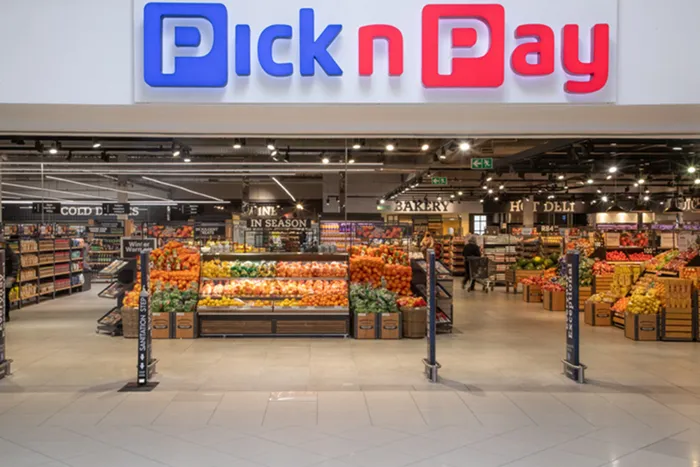
Pick n Pay's management aim to restructure the labour model at its stores to take into account changes in the retail environment such as customers shopping later in the day and over the weekend.
Image: Supplied
Pick n Pay is entering talks with about 22,000 of its staff about the next phase of its turnaround strategy, a restructuring of its store labour model that will aim to improve flexibility and operational efficiency of its stores.
The retailer, which warned in February that headline loss per share is expected to widen by more than 20% compared to the 2025 year, despite two years of turnaround initiatives, said the latest consultations will exclude head-office employees, who had already seen their numbers decline through restructuring, and who had faced a salary freeze over the past 24 months.
“Certain aspects of Pick n Pay’s labour arrangements – such as minimum guaranteed hours, inflexible scheduling practices, and certain benefits and allowances – are above market norms and out of line with current shopping trends.
The adjustments are not intended to reduce the total headcount of affected store staff, but rather to bring the retailer’s labour practices more into line with its competitors to compete on an even footing,” the group said in a statement on Monday.
“Our priority through this process is to protect jobs wherever possible, while building a more sustainable business. Our goal is to ensure Pick n Pay can open more stores and continue to provide work for people in the future. To achieve this, we must stay competitive, be financially viable, and serve our customers in the way they choose to shop,” said CEO Sean Summers.
“With more customers shopping later in the day and on weekends, a more adaptable staffing approach is required,” he said.
He said this review was part of a phased plan to stabilise and rebuild the group supermarket business and would address challenges stemming from legacy labour agreements that had increased complexity, while limiting the company’s ability to align staffing with changing customer behaviour.
“The consultation will focus on labour flexibility and the total cost of employment for specific store-based staff in relation to guaranteed hours and certain benefits and allowances, particularly those that are above market. The proposal does not envisage reducing hourly wage rates,” said Summers.
Pick n Pay has initiated a Section 189A consultation process with the South African Commercial, Catering and Allied Workers Union (SACCAWU) and store-based employees within the Non-Management Bargaining Unit.
Reflecting on the group's turnaround journey so far, Summers said significant structural and financial changes had been made, including adjusting the group holding structure and the listing of Boxer to reduce debt, the resetting of the store estate that involved some store closures, restructuring of the support offices, and a salary freeze for support office staff.
“At the same time, we focused on rebuilding sales through stronger marketing and promotions, and by improving the in-store experience, despite a highly competitive environment in which others expanded while we closed stores,” he said.
He said their current store labour model has been out of balance in the marketplace for some time.
"While established with positive intention, these structures have become increasingly complex, reducing flexibility and our ability to respond to retail trends and customer demands,” he said.
“We recognise this will be a difficult time for affected employees… This will be a challenging time, but we also know that hard decisions must be made to align with market realities to secure a stronger, more competitive, and more sustainable business,” he said.
Pick n Pay’s share price fell 2.1% to R19.28 on the JSE Monday afternoon, while the JSE Retailers Index was down 1.17% at the same time. The share price has drifted lower over a year, from R28.13 per share.
BUSINESS REPORT