

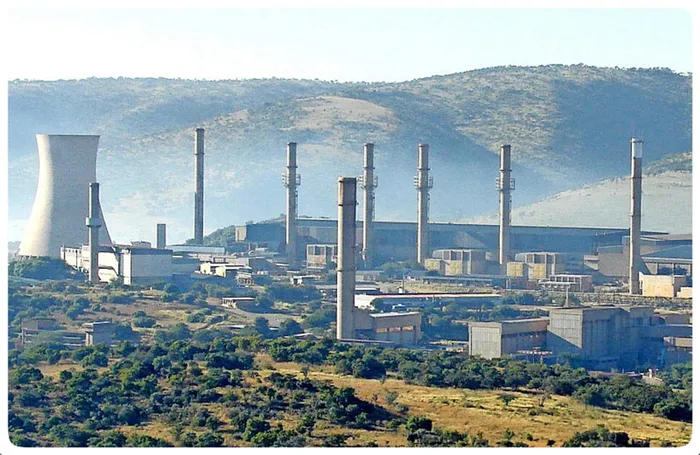
The Pelindaba nuclear research facility outside of Tshwane. While the facility produces parts of the nuclear fuel required for the Koeberg nuclear power plant, the enriched uranium for the process is imported. Allowing South Africa to enrich uranium to the low level required by power stations could make the country one of the lowest producers of nuclear fuel in the world/.
Image: Supplied
Many African countries, which have fast-growing energy markets and mines and industries in far-flung rural areas, have expressed interest in the potential development of South African-manufactured pebble bed modular reactors (PBMRs), according to Stratek Holdings chairman, nuclear physicist, and former chairman of the South African Nuclear Corporation, Dr Kelvin Kemm.
Centurion-based Stratek Holdings was formed by a small group of nuclear scientists and engineers who are at the stage where they are ready to build a much-improved version of the earlier PBMR that was pioneered by South Africa in the early 2000s. The development of this reactor was put on “hold” after international financiers withdrew from the project because of the global financial crisis of 2008.
Since then, a number of PBMRs have been developed by other countries. Stratek’s HTMR-100 reactor is a high-temperature helium gas-cooled modular reactor that produces high-quality steam, which is coupled with a steam turbine system to produce a continuous base of 35 MW of electrical power. The entire reactor complex takes up the space of about a football field and is not dependent on large bodies of water, which is significant in the South African and African context where water is typically scarce.
Kemm, interviewed online for the IR Thinker podcast, said that while Eskom had done well to eliminate loadshedding, the country still lacked sufficient reserve electrical capacity, and new power stations needed to be built. In addition, the large-scale adoption of solar capacity in the country had also reduced Eskom’s potential income streams.
He said the South African government had always considered nuclear power as part of its primary energy mix, and the country retains a large nuclear capacity and skills base, with, for instance, over 2,000 people working in the sector in facilities over 2,000 hectares. The country remains one of the biggest exporters of nuclear medicine worldwide; every three minutes, someone in the world is injected with nuclear medicine produced in South Africa.
The Koeberg nuclear plant’s two generation units were recently upgraded with football-sized turbines, each heavier than a Boeing 747, effectively extending the plant’s life for another 40 years. The first generating unit at Koeberg was commissioned in 1984.
He said Koeberg is producing the cheapest electricity by far in South Africa, and proponents of renewable energy typically only count the cost of electricity by looking at the initial outlay and some operational costs, instead of considering the cost over a time span of 30 to 40 years, which is typically the life of a nuclear power station.
Kemm said he was also in favour of South Africa regaining its capability to enrich uranium into fuel for nuclear power stations. While the country is still producing elements of its fuel at Pelindaba and, along with Namibia, is a global supplier of uranium to the nuclear industry, the enriched uranium is imported. South Africa stopped enriching uranium at the time of its first elections in 1994, under pressure from the US government, said Kemm.
The ability of South Africa to enrich uranium to the level required for use in nuclear power stations holds the possibility of making the country one of the world’s most competitive exporters of nuclear fuels, he said.
Kemm mentioned that the company was receiving a “lot of interest” from financiers and potential customers for its HTMR-100s, even though it remains “a major problem” convincing stakeholders in Europe and the US that South Africa can indeed build a reactor.
He said the South African government’s extreme push towards wind and solar power generation was misguided, as the power generated was intermittent. While South Africa holds possibly vast solar power potential, the power must be used where it is optimally applicable. The addition of battery storage only adds complexity and cost to the renewable energy cost equation.
“I believe that in 20 years or so, our youngsters will be saying, how could we not have pursued nuclear power more aggressively in the face of the world’s growing energy requirements,” said Kemm.
He noted that Germany had closed its nuclear power plants in favour of wind and solar power generation, while next door, France, which generates most of its electricity from nuclear plants, was not only producing cheaper electricity but was also generating lower carbon dioxide emissions than Germany at the same time.
“The EU is starting to realise they were wrong on nuclear power plants,” he said.
Visit:www.businessreport.co.za