

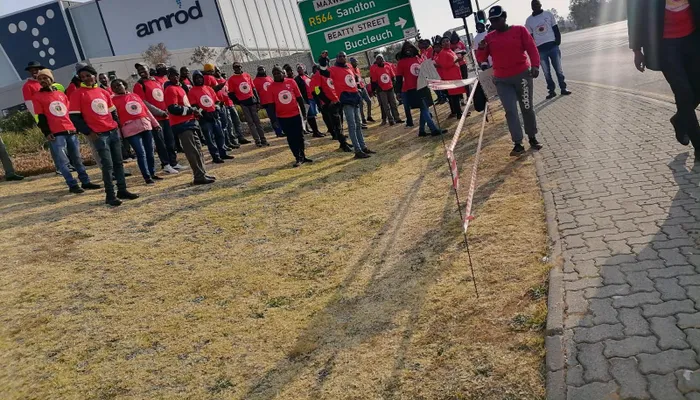
A TRAWU spokesperson said that about 120 CJA staff nationwide had been on strike since April 2, and while the company was still operating, its operations were likely to have been badly affected by the strike.
Image: Supplied
The Transport and Retail Allied Workers Union (TRAWU) on Tuesday called for a secondary strike on April 17 at the major telecommunications groups, including Telkom, Vodacom, MTN, and Cell C, in support of a prolonged strike occurring at CJA Telecommunications.
Silverton, Pretoria-based CJA Telecommunications, originally established as a close corporation in 2004 to service Telkom South Africa as a turnkey contractor, converted to a privately owned company in 2009.
The company does infrastructure projects for nearly all of the major telcos in Southern Africa, including planning, civils, VSAT, LAN and fibre, greenfield installations, wifi, generators, batteries, base stations, and site build projects.
A TRAWU spokesperson said that about 120 CJA staff nationwide had been on strike since April 2, and while the company was still operating, its operations were likely to have been badly affected by the strike. Business Report, after repeated phone calls to CJA, was told that we could not speak to directors at the company.
The TRAWU spokesperson said the labour dispute had arisen after CJA failed to meet the union's demands of a 13% annual wage increase, with a 100% 13th bonus, fixed overtime rates, and the company providing security escorts for workers in dangerous areas, as well as the abolishment of mandatory polygraph testing for staff, which was being implemented by the Chinese telecoms group Huawei.
Huawei South Africa said they complied with all South African regulations and laws and its sub-contractor companies, in this case CJA, were similarly required to comply with all laws and regulations.
The TRAWU spokesperson said CJA had initially offered a 4% salary increase for this year as part of a three-year proposal capped at 13.8%, but the union had insisted on a one-year increase.
“The strike is following a deadlock on wage negotiations between the parties,” the union said in a statement.
The aim of the strike was to “expose the exploitative practices of the Chinese company Huawei, which continues to disregard South African labour laws and exploit workers in the country,” and to “send a clear message to the four major network providers in South Africa that they must reconsider their reliance on foreign companies that exploit our citizens and instead support local companies,” the union said in a statement.
BUSINESS REPORT