

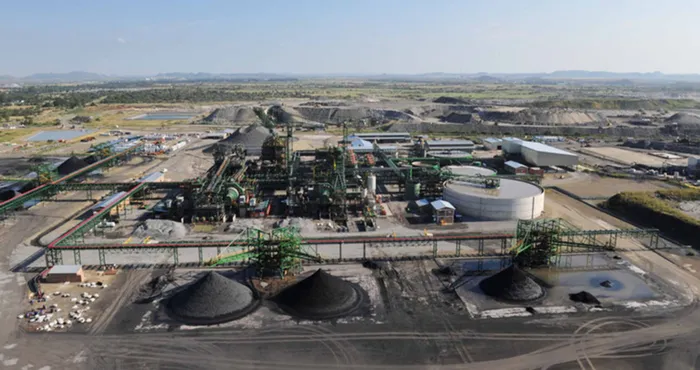
Tharisa Mine. The life of the mine has been extended to 60 years with the commencement of underground mining.
Image: Supplied
Tharisa saw its first successful blast at the Tharisa Mine Apollo portal, marking the transition to underground mining in parallel with the existing open cast operations at the JSE and London dual-listed metals and mining company.
A production report for the second quarter to March 31 showed that quarterly PGM production was 34.3 koz (Q1: 38.8 koz) with PGM recoveries stable at 77.5% (Q1: 78.8). PGM prices averaged higher at $3,038/oz (Q1: $2,208).
Tharisa’s CEO Phoevos Pouroulis said underground development at the mine began on March 31 and it showcased the long-term life of the mine, with over 60 years of underground mining potential, while over $500 million would be invested over the next decade to sustain the optimal output of over 200 kozpa of PGMs and 2.0 Mt of chrome concentrate.
Quarterly chrome production came to 404,0 kt (Q1: 349,4 kt) with chrome recoveries stable at 69.7% (Q1: 70.3%). Average chrome concentrate price came in at $290/t (Q1: $276/t).
Group cash on hand came to $184.3 million (December 31, 2025: $122.2m), and debt was at $129.6m ($75.2m), resulting in net cash of $54.7m ($47m).
“In what is traditionally the toughest operational quarter, impacted by increased lightning events and high rainfall, we increased quarterly chrome output, while PGM output was hampered by lower grades in the reef being mined,” said Pouroulis.
“Reef mined was lower in the quarter due to in-pit constraints, but processing throughput remained strong with improved chrome feed grades supporting higher chrome concentrate production. PGM production was impacted by lower grades in the reef being mined, although recoveries remained robust,” he said.
On the processing side, PGM recoveries and chrome recoveries demonstrated consistency of operations.
Chrome prices were supported by higher logistics and freight costs due to the increase in global oil prices. Mitigation measures were in place to ensure, as far as possible, security of fuel supply to tTharisa Mine, and while costs would increase, the focus remained on efficiency, said Pouroulis.
He said the underground development was a natural progression. Meanwhile, good progress was being made in further derisking the Karo Platinum project in Zimbabwe, with open pit surface clearing commencing, following the successful mobilisation of the mining contractor at the end of the last quarter.
“Infrastructure development and investment in key work packages continues securing the necessary power, water and long lead requirements. Good progress has been made in terms of the Karo funding, which will provide the full requirements for project completion and targeting first ore in mill in the second quarter of 2027,” he said.
The funding is subject to final agreement with the Zimbabwe government on the fiscal stability agreements, which were nearing conclusion.
On the platinum market, Pouroulis said platinum fundamentals remain firm as the market comes to terms with the deficits in the supply-demand dynamics, with the de-stocking of inventory pipelines; any new demand will need to be met by new supply.
Prices held firm even during the disruptive geopolitical second half of the quarter. Chrome prices remained strong with logistics costs being passed on to the end customer.
Tharisa’s share price fell 3.6% to R25.13 on Tuesday morning, but the price remains much higher than the R13.31 it traded at a year ago.
BUSINESS REPORT