

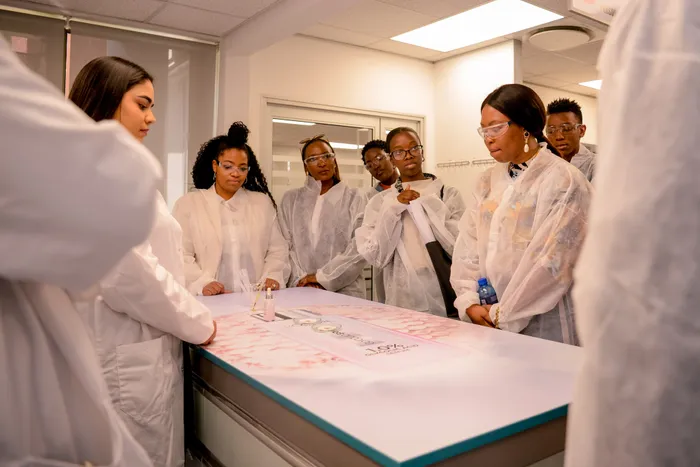
This Programme is a beacon of hope and inspiration for women in scientific fields, proving that with the right support, they can drive remarkable advancements that shape not only their futures but those of their communities and the entire continent.
Image: Supplied.
In a world where breakthroughs begin with curiosity and the courage to question, women scientists across Sub-Saharan Africa are stepping into the limelight, wielding their innovative ideas to unlock possibilities for their communities and the continent.
The L’Oréal–UNESCO For Women in Science Sub-Saharan Africa Programme has championed these voices for over 25 years, providing not just visibility but crucial support to advance their research and careers.
This year marks a pivotal expansion, as L'Oréal and UNESCO formally integrate South Africa into the Sub-Saharan Africa Programme.
This strategic move seeks to unite diverse scientific expertise and amplify the impact of women’s research efforts, strengthening the Programme's reach across the entire continent.
Since its inception in 2010, the For Women in Science Programme has awarded 320 endowments to women at the doctoral and post-doctoral level, creating a powerful legacy of female scientists who are reshaping the research landscape.
“Inclusivity in science is transformative. When women are supported to thrive, they not only advance their research; they strengthen the future of their communities and countries,” says Michelle Gololo, Programme Lead for the initiative.
At the heart of L'Oréal's ethos is a commitment to innovation, which Gololo identifies as foundational to the company’s operations.
“The For Women in Science Programme reflects our belief that progress is only possible when we bring diverse perspectives to the forefront.”
Yet, despite this commitment to inclusivity, women in STEM fields still face significant challenges. The systemic gaps that persist affect not only their careers but also the pace of scientific innovation.
Gololo notes that while these challenges are global, women scientists in Africa encounter additional layers of complexity.
“When we invest in women, we unlock talent that accelerates solutions. It widens how we see the world and enriches the answers we bring to shared global challenges,” she affirms.
The partnership between L’Oréal and UNESCO is resolute in its mission to create space, support, and opportunities for women scientists throughout Sub-Saharan Africa. By fostering collaboration across borders, the Programme aims to cultivate a community of like-minded individuals who share a common purpose.
Applications for this year’s Programme are currently open to women scientists across all 49 countries, including South Africa.
The focus spans various fields, including Formal and Life Sciences, Environmental and Physical Sciences, Engineering, and Technological Sciences. Many participants find that the Programme serves as a career-defining moment—a chance to gain recognition, amplify their voices, and expand their futures.
One prominent example of this transformative impact is Dr. Bambesiwe May, a recent recipient of the For Women in Science Award and a postdoctoral researcher in Earth Sciences.
Her groundbreaking work tackles a pressing environmental challenge—determining how to mitigate the risks posed by mine dumps while simultaneously extracting value from the metals found within them.
“It is an honour to be part of the Programme,” Dr. May shares. “L’Oréal Sub-Saharan Africa and UNESCO’s support enable me to keep working on real-world problems. I hope young women see that science is human, creative, and full of opportunities to make a difference.”
Interested scientists are encouraged to submit their applications for the 2026 For Women in Science Sub-Saharan Africa Programme by 15 May 2026 via the official portal.
Follow Business Report on Facebook, X and on LinkedIn for the latest Business and tech news.