

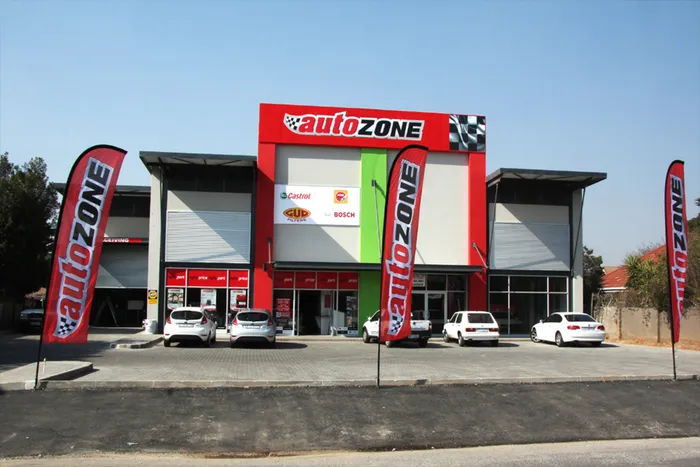
Stronger revenues in Metair were supported by the acquisition of AutoZone.
Image: Supplied
Executives at Metair expect South Africa’s short term vehicle production outlook under the original equipment manufacturers segment to be subdued due to the influx of imported car brands from China and India, with the company sinking to a headline loss of 67 cents per share despite raising revenues for the 2025 full year by 57% to R17.9 billion.
Total earnings for the period, including discontinued operations, included a 50% improvement in cash and cash equivalents to R1.2bn, with cash generated from operations firming up by 27% to R1.88bn.
Stronger revenues in Metair were supported by the acquisition of AutoZone and Hesto’s inclusion as a subsidiary from April last year. The company was, however, dented by the impact of a R413 million fine imposed by the European Commission on its Rombat Romanian unit.
Paul O'Flaherty, Metair CEO, said on Wednesday that the company together with Rombart had lodged an appeal against the Rombat fine in February. Excluding the Rombat fine, operating profit before capital and exceptional items in Metair increased by 99% to just over R1bn.
“The short-term outlook for OEM production volumes remains subdued, and strategic government decisions to support localisation and strengthen local manufacturing competitiveness will be pivotal to growing production levels. Metair will continue to focus on those areas of the business within its direct control,” said O'Flaherty.
The company will now prioritise efforts on returning AutoZone to profitability, realisation of aftermarket synergies, and capitalising on growth opportunities in the aftermarket and Africa. With cheap vehicle imports from China and India entrenching, Metair anticipates that the short-term outlook for OEM volumes will remain subdued.
The company’s chairman, Ms Mgoduso, said lower production volumes for OEMs reflect pressure in local and export markets. Furthermore, trade uncertainties from South Africa’s strained relations with the United States are weighing down prospects.
“While the uncertainty around South Africa’s trade relationship with the US and long-term future participation in the African Growth and Opportunity Act (Agoa) is concerning, the direct impact on the automotive sector is not currently material, as vehicle exports to the US account for a relatively small proportion of total exports. However, the potential effect on economic growth in South Africa and Europe, as well as on future automotive industry investment decisions, is a concern, as is the downward pressure on local assembly volumes due to rising imports,” said Mgoduso.
This comes as the South African automotive industry has “experienced sharply divergent market conditions” during the year under review.
Although new vehicle sales grew strongly by 15.7% to 597,014 units, this growth was disproportionately driven by imported vehicles, which surged by 30.4% to 408,890 units.
Contrastingly, production of passenger and light commercial vehicles by South African original equipment manufacturers (OEMs) increased by only 1.5% to 602,302 units in 2025.
“In addition to ceding domestic market share, local OEMs also encountered intensified competition in export markets, limiting export growth to 5.92%. The local automotive aftermarket similarly operated under challenging conditions. Metair derives most of its business in the local OEM and aftermarket sectors,” said Metair.
To increase its agility and in response to market conditions, Metair has had to restructure, right-size, and close down some operations. Renewed efforts on the aftermarket parts and retail saw the segment grow revenues by 42% to R6.1bn. The inclusion of AutoZone was already “delivering synergies across Metair’s automotive aftermarket and distribution” operations. First Battery’s profitability for the period was negatively affected by a slowdown in the retail channel and an unfavourable product mix for OEM customers while in Romania, Rombat drove up aftermarket and OEM sales volumes.
BUSINESS REPORT