

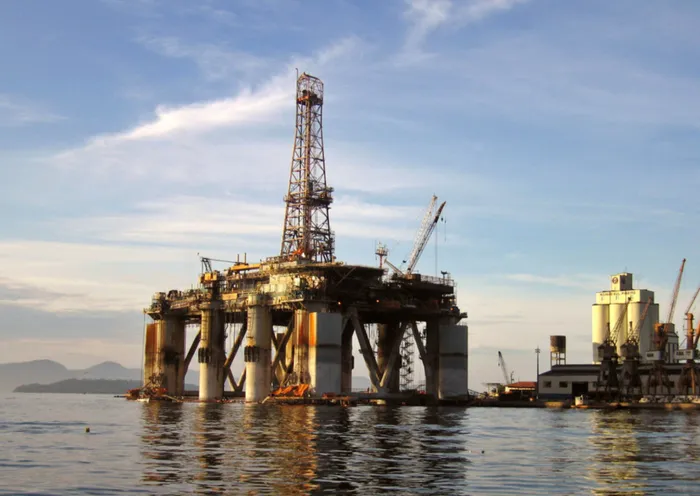
Economists warn that global geopolitical tensions, including the escalating conflict involving the United States, Israel and Iran, reduce household purchasing power and slow economic momentum.
Image: File
South Africa’s economic outlook for 2026 remains fragile after the country recorded weaker-than-expected growth in 2025, highlighting the persistent structural constraints holding back the economy.
Data released by Statistics South Africa on Tuesday showed that gross domestic product (GDP) expanded by 1.1% in 2025, the highest growth since 2022 when the economy grew 2.1%.
Thogh this was an improvement from the 0.5% recorded in 2024, it remained below both market expectations of about 1.3% and the 1.4% forecast by National Treasury.
The economy grew by 0.4% in the fourth quarter of 2025, slightly above analysts’ forecasts of 0.3%, marking the fifth consecutive quarter of expansion.
However, manufacturing remained a weak point, contracting by 0.6% and emerging as the largest drag on the quarterly performance.
The government welcomed the figures, noting that the economy has now recorded five consecutive quarters of growth despite a difficult global environment.
“The fourth quarter performance marks continued resilience in the economy,” government said, adding that reforms being implemented through Operation Vulindlela and partnerships between government and business are helping to support economic expansion.
While the modest uptick suggests the economy is gradually recovering, economists warned that the pace of growth remains far too slow to meaningfully reduce unemployment or ease fiscal pressures.
According to North-West University Business School economist Raymond Parsons, the latest GDP data confirms that South Africa’s recovery remains slow and uneven.
“The good news is that, compared with GDP growth rates of 0.8% and 0.5% in 2023 and 2024 respectively, growth improved to 1.1% in 2025,” Parsons said.
“However, the figures underline that South Africa is still struggling to generate the momentum needed to expand the economy more rapidly.”
Parsons noted that household spending continues to carry much of the burden of sustaining economic activity, while sectors such as manufacturing remain under pressure.
The weak outcome for 2025 also raises questions about the government’s growth projections for the coming year. The national budget anticipates GDP growth of around 1.6% in 2026, a forecast that may prove optimistic if structural reforms and investment do not accelerate.
“Budget revenue projections also depend on the anticipated economic growth rate being realised,” Parsons said, warning that slower growth could place additional strain on public finances.
FNB senior economist Thanda Sithole said the acceleration in growth from 2024 was encouraging but acknowledged that the 2025 outcome still fell short of expectations.
Sithole said growth above 1% is likely to continue in the near term, with the economy gradually improving as structural reforms take hold.
“Growth above 1% is expected to be sustained, rising closer to 2.0% by 2028, supported by ongoing structural reforms,” Sithole said
“We will continue to monitor recent global developments, including the Israel–US–Iran conflict, and their potential impact on the cyclical growth trajectory.”
Economists at Nedbank echoed similar concerns, describing the latest GDP figures as disappointing and reflective of long-standing structural challenges in the economy.
They noted that consumer spending remains relatively strong, supported by subdued inflation, lower interest rates and withdrawals from the retirement two-pot system, which have boosted household incomes.
Investment has also begun to recover, with improvements in electricity supply, easing logistics bottlenecks and stronger commodity prices supporting private sector spending.
However, several risks continue to cloud the outlook, including pressure on export volumes and stiff price competition from China in most export markets though lower US tariffs and the extension of Agoa could mitigate the impact.
“At this stage, we forecast GDP growth of 1.5% in 2026. However, the risks to our forecast reside to downside,” Nedbank said.
“Our key concern is that the war in Iran could again lead to a global supply side shock, potentially disrupting supply chains and driving up oil and other commodity prices, which, in turn, could stoke domestic inflation and force the central bank to reverse course.”
Economists warn that global geopolitical tensions, including the escalating conflict involving the United States, Israel and Iran, could push oil prices higher, stoking inflation and delaying further interest rate cuts.
Momentum Investments chief economist Sanisha Packirisamy said rising oil prices above $100 per barrel could reduce household purchasing power and slow economic momentum.
She added that infrastructure constraints, tariff uncertainties and volatile global conditions could also weigh on growth prospects.
“Looking ahead, we expect households to remain a keydriver of growth, together with a gradual recovery infixed investment. We expect growth to rise to 1.5% in 2026,” she said.
“With that said, risks to the outlook remain tilted to the downside, mainly from the external environment, including the ongoing Middle East conflict and uncertainty around the magnitude of future tariffs.”
BUSINESS REPORT