

The plan aims to provide a broad framework for the development of the cannabis industry while ensuring inclusive participation, particularly for rural communities that have historically cultivated the crop.
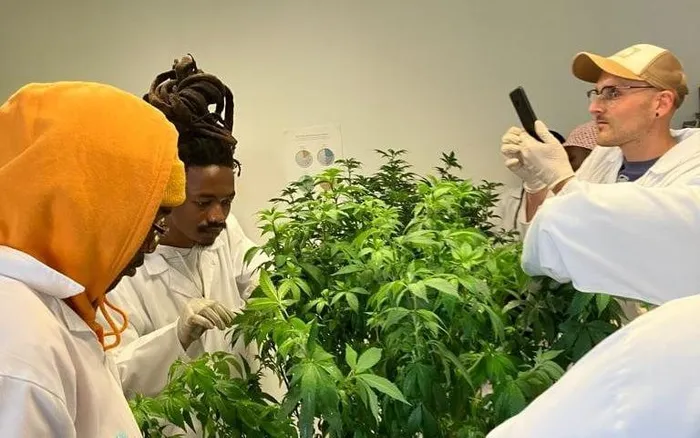
Image: Cheeba Cannabis & Hemp Academy
The government is accelerating efforts to develop a commercially viable cannabis and hemp industry, positioning the sector as a potential driver of economic growth, job creation and rural development.
This emerged during a parliamentary briefing on Friday where the Department of Trade, Industry and Competition (the dtic), alongside the departments of agriculture and health, outlined progress on the National Cannabis Master Plan and the Hemp and Cannabis Commercialisation Strategy.
The plan aims to provide a broad framework for the development of the cannabis industry while ensuring inclusive participation, particularly for rural communities that have historically cultivated the crop.
Trade, Industry and Competition Minister Parks Tau told the committee that the cannabis and hemp sector holds significant economic potential, but its growth depends heavily on resolving legislative and regulatory bottlenecks.
Tau said the work underway includes reviewing the National Cannabis Master Plan, addressing legislative gaps and developing regulatory frameworks that will support the industrialisation and commercialisation of the sector.
Among the key issues under review are the draft Cannabis for Private Purposes regulations, amendments to the Plant Improvement Act, and provisions under the Plant Breeders’ Rights Act.
Tau added that government is also considering regulatory developments related to indigenous knowledge systems to ensure that traditional knowledge associated with cannabis cultivation is properly recognised and protected.
“There has already been progress in permitting and licensing,” Tau said. “In excess of 1,400 hemp permits have been issued, while the medical cannabis industry has seen around 120 licences granted through the South African Health Products Regulatory Authority.”
These licences cover activities such as cultivation, manufacturing, extraction of oils and product packaging for medicinal cannabis. An interministerial committee has been established to coordinate work across departments, while a multi-stakeholder steering committee involving government, labour and the private sector meets quarterly to oversee implementation of the master plan.
Ncumisa Mcata-Mhlauli, chief director of agro-processing and forestry-based industries at the dtic, said the government is targeting 10% annual growth in the cannabis sector from an estimated R14 billion base, although the total market could be closer to R28bn, with roughly half of it currently operating within the illicit economy.
Despite the sector’s growth potential, the legal market remains relatively small.
Mcata-Mhlauli said the formal cannabis industry currently generates around R5.5bn in annual revenue, largely driven by medicinal cannabis and expanding recreational use.
Globally, demand for hemp products is rising rapidly, with the hemp market projected to grow by 17.3% annually between 2025 and 2032. South Africa’s own cannabis market could reach an estimated R40bn based on recent studies commissioned by the government.
“This shows that it is a very lucrative industry that government has to focus on, particularly when compared to South Africa’s economic growth rate, which is currently below 1%,” Mcata-Mhlauli said.
The dtic highlighted the diverse industrial uses of hemp as a key factor behind its strong growth prospects. Hemp fibres are increasingly used in textile manufacturing, while hemp-based oils and extracts are widely used in cosmetics and personal care products.
The crop is also being used in food and beverage production, including confectionery products, as well as in the automotive sector where hemp fibres are used to manufacture vehicle interior components.
In addition, hemp-based materials are gaining traction in the construction sector as sustainable building materials. The government believes these applications could support the development of new industrial value chains in South Africa.
However, the dtic acknowledged that the legal and regulatory environment governing cannabis remains complex and fragmented.
John Jeffery, project manager for the Hemp and Cannabis Master Plan, said the 2018 Constitutional Court ruling decriminalised the private use and cultivation of cannabis but did not legalise the buying and selling of the plant.
This has created a legal grey area where individuals may grow cannabis for personal use but cannot legally purchase or sell it.
“The legal situation is not desirable. It’s quite confusing,” Jeffery said.
Government is therefore considering both short-term regulatory amendments and a long-term overarching cannabis law to address these gaps.
One proposed solution involves introducing licensing frameworks for cannabis businesses through the Business Licensing Bill, which is currently before Parliament. Another proposal would allow provinces to recognise and license traditional cannabis growers, particularly in rural areas where cannabis cultivation has existed for generations.
The dtic said this would help bring informal growers into the legal market while protecting indigenous cultivation practices.
The Department of Agriculture has already issued more than 2,000 hemp cultivation permits, reflecting growing interest among farmers and cooperatives. The government is also supporting pilot projects across several provinces to expand cultivation and develop industrial applications.
The next phase of the strategy will focus on finalising regulations, expanding investment incentives and strengthening export opportunities. The government is particularly targeting markets in Europe, the Middle East and Africa, using existing trade agreements to boost exports.
“We want to ensure full-scale commercialisation and trade of cannabis products in both local and export markets,” Mcata-Mhlauli said.
“If the regulatory framework is finalised and the right support is provided, the cannabis industry could become a significant contributor to South Africa’s economic growth.”
BUSINESS REPORT