

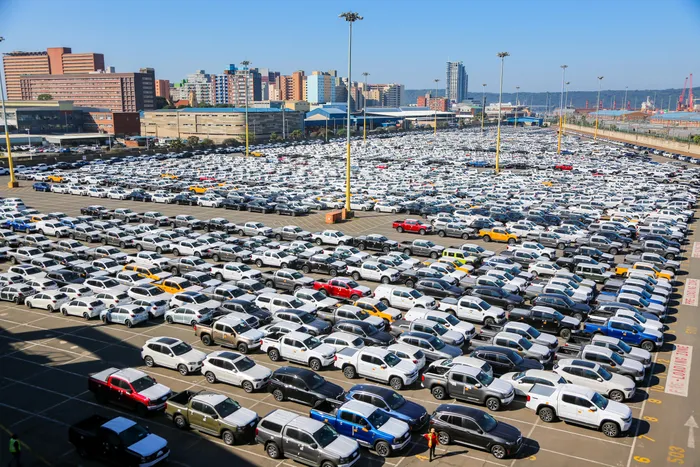
Export performance deteriorated sharply. Vehicle export sales fell to 24,221 units in February, a year-on-year decline of 9,463 units, or 28.1%, compared with the 33,684 vehicles exported in February 2025.
Image: Supplied
South Africa’s new vehicle market accelerated sharply in February, posting its strongest February performance in more than a decade, even as export volumes came under significant strain from rising global protectionism and tightening decarbonisation standards.
According to the National Association of Automobile Manufacturers of South Africa (Naamsa), aggregate domestic new vehicle sales reached 53,455 units in February — the best February showing since 2013. This marked an increase of 5,461 units, or 11.4%, compared with the 47,994 vehicles sold in February 2025.
Naamsa on Monday said the sustained domestic growth trajectory reflects more than a cyclical rebound, pointing instead to increasingly entrenched economic stabilisation.
Strengthening private sector credit extension, moderating inflation, improved fiscal credibility and incremental logistics reform have collectively underpinned consumer and business demand.
However, export performance deteriorated sharply. Vehicle export sales fell to 24,221 units in February, a year-on-year decline of 9,463 units, or 28.1%, compared with the 33,684 vehicles exported in February 2025.
Naamsa attributed the decline to heightened protectionism in key markets and increasingly stringent decarbonisation requirements that continue to weigh on the competitiveness of South African vehicle exports.
However, Naamsa said domestic demand fundamentals remain supportive.
"Private sector credit extension accelerated to 8.7% year-on-year in December, driven predominantly by robust corporate borrowing, while household credit growth improved gradually as cumulative interest rate reductions since late 2024 filtered into asset finance markets," said Naamsa.
"Vehicle asset finance activity has strengthened as cumulative interest rate cuts since late 2024 improve affordability and support buyer sentiment."
Macroeconomic conditions have also reinforced the supportive domestic backdrop. Headline consumer price inflation eased to 3.5% year-on-year in January, with core inflation contained at 3.4%, signalling manageable underlying price pressures.
Naamsa said the 2026 Budget further bolstered fiscal credibility, outlining a cautious but consistent consolidation path with gross debt projected to stabilise over the medium term.
Labour market indicators have also shown tentative improvement, and early signs of stabilisation in the middle-income housing market provide further support for passenger vehicle demand.
However, the upbeat domestic performance faces emerging headwinds from energy-related cost pressures.
The 2026 Budget confirmed fuel levy increases effective 2 April 2026, including higher general fuel levies, carbon fuel levies and an increase in the Road Accident Fund levy. Collectively, these adjustments will raise pump prices and increase the total cost of vehicle ownership for households and businesses.
Global oil markets have added further complexity. Brent crude prices have breached the $80 per barrel mark amid escalating geopolitical tensions in the Middle East, raising concerns that sustained disruptions around the Strait of Hormuz could embed a prolonged geopolitical risk premium into energy markets.
"Elevated crude prices, if maintained, would feed into international refined fuel costs and, ultimately, domestic pump prices," Naamsa said. "For South Africa, this will potentially dampen discretionary consumption - including new vehicle purchases."
At the same time, the rand, which had strengthened following the tabling of the 2026 Budget, has softened to around R16.16 to the US dollar amid global risk-off sentiment. A weaker currency increases the rand cost of crude oil imports and imported automotive inputs, amplifying fuel price pressures.
Brandon Cohen, the national chairperson of the National Automobile Dealers’ Association (NADA), said the new vehicle sales print for February was the most encouraging for a local industry, which has been in the doldrums for most of the post-Covid period.
“This good news comes at a time when the world enters a new period of uncertainty brought on by the war in the Middle East,” Cohen said.
“The regional unrest, which is reverberating globally, will be another factor to cause hardship, particularly in terms of higher transport and logistics costs and supply chain management.”
Cohen said that oil would be a cardinal player at this time of crisis and would have an effect on many aspects of life, pushing up both manufacturing and transport costs.
“Although the next few months will look to inflation, interest rate numbers, fuel costs and even local government elections, for now, consumer sentiment is strong, people are buying vehicles in the new and used space and they are protecting those assets with VAPS, which is also a good sign,” he said.
BUSINESS REPORT