

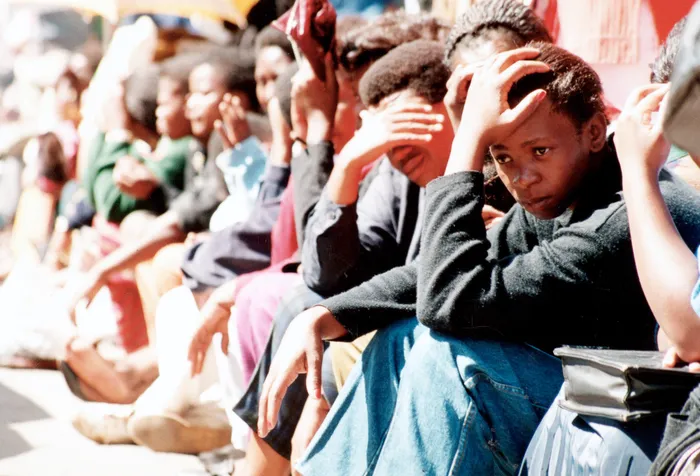
According to StatsSA, a growing pool of underemployed workers and millions more in the potential labour force who remain on the margins of economic activity.
Image: File
South Africa’s official unemployment rate declined by 0.5 percentage points to 31.4% in the three months to December 2025, signalling modest relief in a labour market long under strain.
This pushed the official unemployment rate down from 31.9% in the third quarter, marking the second consecutive quarterly decline from the 33.2% recorded in the second quarter of the year.
Yet beneath the headline improvement lies a deeper challenge: a growing pool of underemployed workers and millions more in the potential labour force who remain on the margins of economic activity.
According to the latest Quarterly Labour Force Survey released by Statistics South Africa on Tuesday, the working-age population (15–64 years) reached 42.1 million in the fourth quarter. Of these, 24.9 million were in the labour force — either employed or actively seeking work — while 17.1 million were outside it.
Employment increased by 44,000 to 17.1 million during the quarter, while the number of unemployed people fell sharply by 172,000 to 7.8 million.
However, a closer look reveals that the country’s labour market distress extends far beyond those officially counted as unemployed.
One of the most significant pressure points is time-related underemployment.
Statistician-General Risenga Maluleke said about 700,000 employed South Africans reported that they were working fewer hours than they desired and were available to work more. These individuals are technically employed, yet their labour is underutilised.
"These are people who are saying that they are not working enough hours if they could work a little bit more to deploy their availability to the labor force," Maluleke said.
"These are people who are saying they wish they could work more time and the time they are working doesn't give them enough space to utilize their labor availability."
When combined with the 7.8 million unemployed, the expanded measure of unemployment and time-related underemployment rises to 34.3%.
Even more telling is the size of the potential labour force: those who are not officially unemployed but are marginally attached to the job market.
"But when we come to outside the labor force, we have what we call the potential labor force, which talks to your discouraged work seekers, those that are not seeking but available, and those that are seeking but not available," Maluleke said.
This group totalled 4.6 million people in the fourth quarter, an increase of 82,000 from the previous quarter.
Maluleke said within this category are 3.7 million discouraged workseekers — individuals who want employment but have stopped actively looking, often due to repeated rejection or lack of opportunities.
He said a further 855,000 people were available for work but not seeking employment for various reasons, while 42,000 were seeking work but temporarily unavailable, such as students waiting to complete exams.
"Students may sometimes look for employment while they are writing exams. They started looking for employment while they were waiting to write exams. So they knew that they would not be available readily, but once they finished their exams, they would come and be available for employment," Maluleke said.
When the unemployed are combined with the entire potential labour force, the broader unemployment measure climbs to 42.1%, underscoring the scale of exclusion from productive activity.
The Motor Industry Staff Association (MISA) said employment statistics consistently show an increase toward the end of the year due to temporary work, only to fall again in the first quarter.
Martlé Keyter, MISA CEO, said this pattern does not reflect structural progress.
“The number of discouraged work seekers has increased, meaning more South Africans have stopped looking for work altogether. The youth unemployment rate increased by 0.1 of a percentage point to 43.8% in the fourth quarter of 2025," Keyter said.
"MISA sees this as a clear sign that the country remains far from resolving its unemployment crisis."
The most comprehensive measure, labour underutilisation, paints an even starker picture.
This composite indicator includes the unemployed, the potential labour force, and those in time-related underemployment.
Together, Maluleke said, these groups amount to 44.5% of the extended labour force, meaning nearly half of South Africa’s available human capital is either idle or insufficiently engaged.
"When we look at the labor force participation rate as well as the absorption rate, the labor force participation rate is a proportion of those of working age who are either employed or unemployed whereas the absorption rate is the proportion of those in working age that are employed," Maluleke said.
Encouragingly, all four key indicators — the official unemployment rate, unemployment plus time-related underemployment, unemployment plus potential labour force, and overall labour underutilisation — have been trending downward since the second quarter of 2025.
"The wider the gap between the two lines means that we still face a challenge. Of course, we can see that the gap is starting to move slightly lower than it was previously. It had gone as far as 20 percentage points. Now it's sitting at 18.7 percentage points difference with the labor force participation rate sitting at 59.3% and the absorption rate sitting at 40.6%."
Maluleke suggested this signals that the country may be gradually “turning the corner” after a difficult start to the year, when 291,000 jobs were lost in the first quarter.
While the gradual decline in unemployment offers cautious optimism, the expansion of the potential labour force and the scale of underemployment suggest that the recovery remains fragile.
"Much more needs to be done by the government, in particular to further capacitate the frontline public and municipal services that the working class and businesses depend upon, to inject additional stimulus needed to unlock economic growth including expediting the infrastructure investment programme, and to ramp up public employment programmes and relief for the poor and the unemployed," said Cosatu.
BUSINESS REPORT