

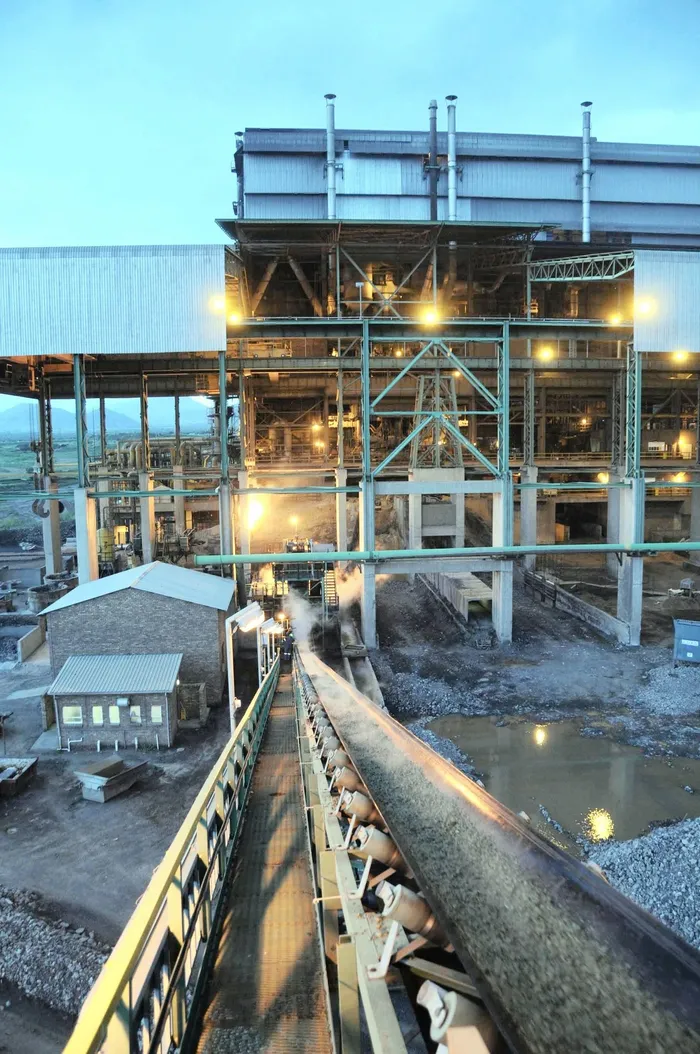
A section of the Glencore Merafe Chrome Venture. Challenges such as high energy costs and increased competition from China have led to the suspension of the group's smelting operations
Image: Supplied
An interim, lower electricity tariff approved by NERSA to ferrochrome smelters is insufficient for them to operate viably over the long term, and 3000 jobs remain at threat at the Glencore-Merafe Chrome Venture.
This was according to the directors of JSE-Listed Merafe, which is in a joint venture with global minerals group Glencore on the Glencore-Merafe Chrome Venture, one of the world's largest ferrochrome producers. Two of the joint ventures' five smelters, Boshoek and Wonderkop, both in North West Province, were closed late last year due to high power costs, with up to 3000 jobs affected.
Merafe's share price fell 3.39% on the JSE Wednesday morning to R1.14.
At the end of January, the National Energy Regulator of South Africa (NERSA) approved a 12-month interim electricity tariff of 87.74c per kWh, effective for one year from January 1, 2024. This tariff is less than half that charged to consumers, the base rate of which will be R2.18 per kWh in 2024, following the 8.76% tariff increase from April 1, 2024.
The Minerals Council South Africa said ferrochrome smelters would require electricity tariffs of about 60 cents per kWh to be financially viable, compared with the previous rate of almost R2 per Kwh. The council said the government's proposal in 2025 to boost the ferrochrome sector by imposing an export tax on chrome would not succeedl, as it was high electricity prices that were causing the smelters to close.
"While the interim tariff enables the Lion Smelter to return to full operational capacity in the short term, it remains insufficient to support sustainable operations over the long term. The same position applies to Boshoek or Wonderkop smelters," Merafe's directors said.
They said all three smelter operations would require a 62c per kWh tariff to operate on a commercially sustainable basis over the long term.
Earlier this year, Merafe and Glencore reached a Memorandum of Understanding with Eskom, with the aim of collaboration and engagement to identify a workable energy solution for the ferrochrome industry, by no later than February 28, 2026, which is the deadline for start of the retrenchment consultation process, affecting the Boshoek and Wonderkop smelters.
Merafe said the Lion Smelter in Steelpoort, Limpopo Province, had achieved its first ferrochrome production tap on February 16, 2026, following the successful recommissioning of 50% of its operating capacity.
"The Glencore-Merafe Chrome Venture anticipates that the Lion Smelter will return to full operational capacity by March 31, 2026," Merafe's dirctors said.
They said that while the interim tariff enabled the Lion Smelter to return to full operational capacity in the short term, it remained insufficient to support sustainable operations over the long term."The same position applies to Boshoek or Wonderkop smelters.
All three smelter operations would require a tariff of 62c per kWh to operate on a commercially sustainable and viable basis over the long term," they said.
Further engagements were taking place with stakeholders to secure a long-term solution "that supports the stability and viability of all smelters.The directors said they remained hopeful that a feasible tariff solution would be secured by February 28, 2026.
"In the interim, the venture will continue to implement its business restructuring, streamlining and right-sizing initiatives designed to strengthen its long-term operational viability against a very challenging global market environment," they said.
BUSINESS REPORT