

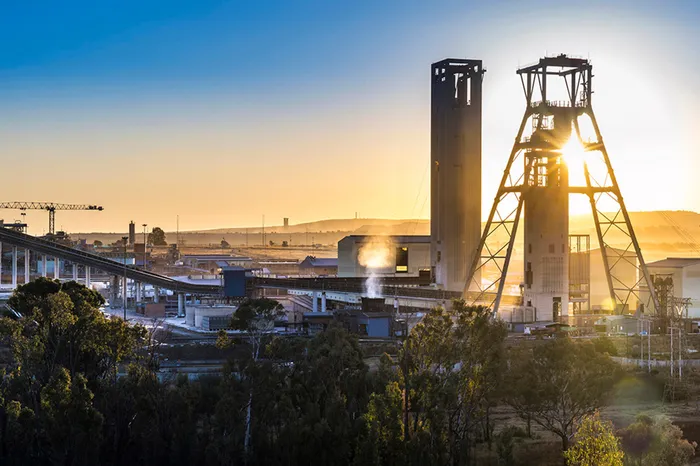
A gold mine in South Africa. Delegates at the Mining Indaba in Cape Town 2026 said there were, 41 mine related fatalities in 2025, a record low for the South African mining industry. The year before there were 42. 0 South Africa’s mining industry has set a new milestone on its road to “Zero Harm”, recording the lowest number of accidentals deaths among its workforce over the course of a calendar year in 2025. At 41 – compared with the previous record low of 42 in 2024
Image: Siupplied
A revised Mining Resources Development Amendment Bill (MRDAB), which the industry had expressed deep reservations about initially, is expected to be released by the government in the first three months of this year.
The first iteration of the bill that was released in May last year had raised concerns in the industry about policy certainty - mines take up up to ten years to develop at great cost and so require certainty in government policies on mining. The initial bill had also raised concerns about investor confidence in the sector, the potential for further bureaucratic burden, unclear implementation guidelines and ownership and governance implications.
Minerals Council South Africa President Paul Dunne said Monday at the Mining Indaba there had subsequently been lengthy engagements between the industry and government on aspects of the Bill, and the Mineral Council hoped the government would include some of the suggestions and recommendations that had come out of those engagements.
Ziyanda Ntshona, Partner, Herbert Smith Freehills Kramer, said Minerals Resources and Energy Minister Gwede Mantashe, in his address to the Mining Indaba, did not mention the upcoming revised Bill.
"However, from our insights, we are hopeful to see the revised Bill clarify long-standing grey areas, such as around residue stockpiles and beneficiation, prescribe time period for processing of applications, and bring alignment with matters regulated by other laws, such as BEE, labour relations, environmental matters and health and safety," said Ntshona.
"The government has been receptive to stakeholder comments and therefore we expect a Bill that encourages partnership among the industry players, through clear and transparent regulation. The Minister's speech was focussed on the responsibilities for African countries to collaborate and partner together, to protect their mineral resources," said Ntshona.
The Minerals Council South Africa said also that the plans by the government to implement a minerals export tax on chrome was misdirected, because the problem of the competitiveness of the chromium mining sector lay with electricity prices.
The organisation said the chrome sector was struggling to be competitive due to high electricity prices, and the platinum group metals (PGM) sector would also be impacted, because these mines also produced chrome as a by-product.
The PGM sector has become South Africa's biggest mining sector over time, making up 27.1% of total industry production. Gold was once South Africa's primary mined metal, making up 42.8% of total mined production in 1942, but last year it only contributed 10.5% of total production.
Nonetheless, it remained an important contributor to the economy, with the yellow metal contributing 20% to total sales earnings.
South Africa's mining production slipped by 2.7% in November 2023, but rain in late October and November had affected coal, gold and PGM production. The expectation was for total mine production to grow by 1% for the 2023 year.
As an indication of the volatility of commodity prices, the diamond industry reported a cumulative loss of R47.5 billion since 2017, with the diamond mining industry showing losses for seven of the eight years to 2024.
BUSINESS REPORT